
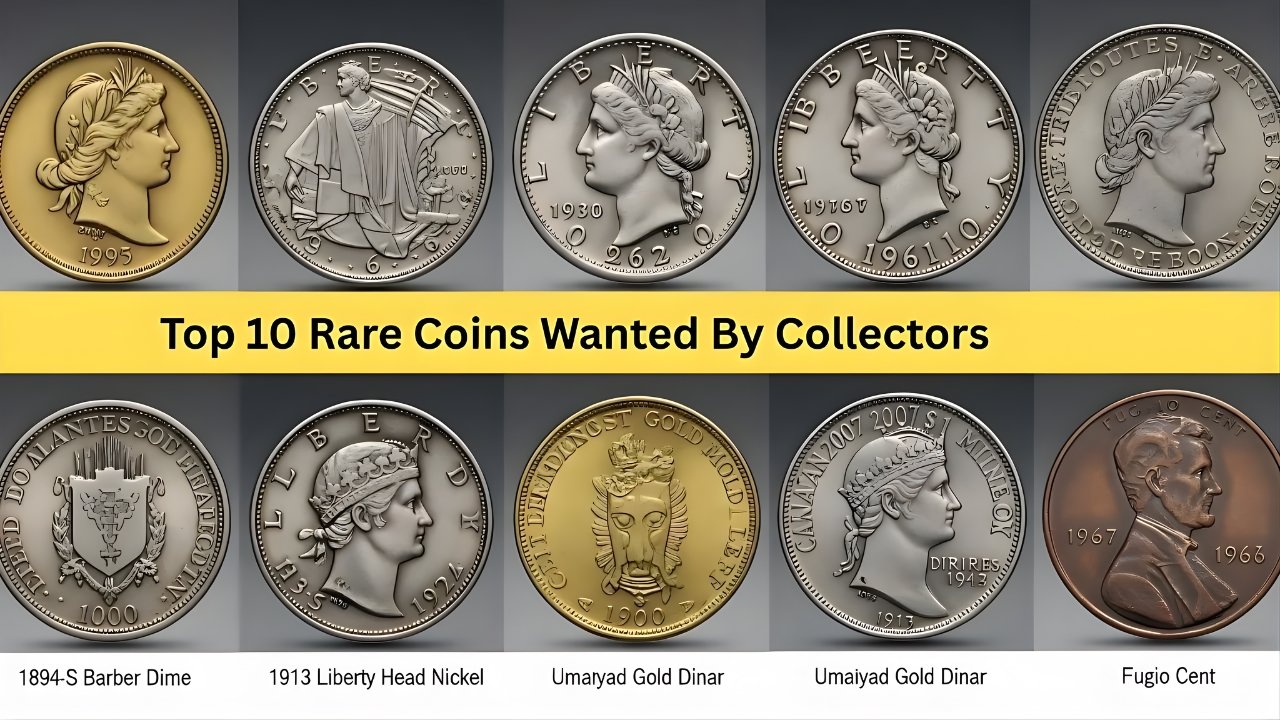
This guide highlights 10 rare coins that remain top targets for collectors in 2025. Each entry explains what makes the coin rare, what to check when buying, and realistic value guidance.
How to read this 2025 guide to rare coins
Use the short coin profiles below to prioritize which coins match your budget and collecting goals. For each coin you will find rarity factors, typical price ranges, and buying tips.
Top 10 Rare Coins Every Collector Dreams Of
1. 1933 Saint-Gaudens Double Eagle (US)

One of the most famous rarities, the 1933 Double Eagle was never legally circulated. A legal dispute makes authenticated pieces extremely valuable.
What to watch: provenance papers, PCGS/NGC certification, and clear re-strike marks are red flags. Price range: multi-million dollars for fully authenticated examples.
2. 1787 Brasher Doubloon (USA, EB punch)
Matthew B. Brasher’s hand-hammered gold coins predate official U.S. minting and are prized for historical significance. Variations exist by punch and metal weight.

What to watch: original toning, weight accuracy, and expert numismatic opinion. Price range: typically millions at auction.
3. 1794 Flowing Hair Silver Dollar (First US silver dollar)
Collectors value this coin as the first silver dollar struck for the United States. Survival numbers are low and condition matters greatly.
What to watch: strike details, edge lettering, and documented provenance. Price range: hundreds of thousands to over $10 million depending on condition.
4. 1804 Dollar Class I (The King of American Coins)

Despite the date, most 1804 dollars were struck later as diplomatic gifts. Known as the King of American Coins, only a handful of Class I pieces exist.
What to watch: classification (Class I vs II/III), documentation, and certified authenticity. Price range: over a million dollars for prime examples.
5. 1913 Liberty Head Nickel
Only five specimens are confirmed, and their history is full of intrigue. They are a must-have for serious U.S. type collectors.
What to watch: complete, crack-free surfaces and matching provenance. Price range: millions at auction.
6. 1870-S Seated Liberty Dollar (Proof)
This San Francisco proof issue has extreme rarity due to limited mintage and survival. Proof surfaces with original reflectivity are key.
What to watch: proof luster, hairlines, and signs of cleaning. Price range: high six to seven figures for top specimens.
7. 1343 Edward III Gold Coin (English Medieval)
Medieval gold coins with clear legends and minimal corrosion are exceptionally rare. These coins are prized by institutional and private collectors alike.
What to watch: metal composition, historical documentation, and expert medieval authentication. Price range: variable; often six figures or more.
8. 1797 Dr. William Mason’s Pattern Coin (Pattern/Unique)
Pattern coins and unique die trials were made in small numbers and can be worth far more than contemporary circulation issues.
What to watch: specialist research and comparison to pattern references. Price range: wide, often six figures for confirmed unique pieces.
9. 2007-P Saint-Gaudens Double Eagle (Ultra-Rare Mint Error)
Modern mint errors, when truly confirmed and rare, can attract huge interest. An authenticated, unaltered error from a modern mint can be surprisingly valuable.
What to watch: original mint documentation, certification, and independent error analysis. Price range: varies from tens of thousands to six figures.
10. 1822 Half Eagle (US Gold, Proof/Pattern)
Early 19th-century U.S. gold types with proof or pattern status are scarce. Condition and originality determine most of the value.
What to watch: strike quality, proof characteristics, and any signs of tampering. Price range: typically high five to seven figures for rare examples.
How to verify rare coins before buying
- Check third-party grading (PCGS, NGC) and read the full certification report.
- Ask for provenance and auction records; provenance can add value and certainty.
- Use specialist dealers and get independent expert opinions for high-value items.
Where to buy and store rare coins
Reputable channels include major auction houses, certified dealers, and insured private sales. Avoid unvetted online listings for high-value pieces.
Store rare coins in climate-controlled, insured storage and avoid adhesives or PVC flips that damage surfaces.
The most expensive coin ever sold at auction was a 1794 Flowing Hair Silver Dollar that reached over $10 million due to historical importance and exceptional condition.
Quick checklist for buyers of rare coins
- Documentation: certification, provenance, past auction listings.
- Condition: look for original surfaces, minimal cleaning, and sharp strikes.
- Authentication: get a second expert opinion for high-value purchases.
Real-world example: A collector’s purchase
Case study: In 2021 a private collector bought a lightly circulated 1933 Saint-Gaudens Double Eagle after three independent certifications confirmed its provenance. The buyer paid over $18 million, motivated by the coin’s legal history and rarity.
Lesson: major purchases require time, multiple experts, and verified documentation to protect your investment.
Final tips for collectors dreaming of rare coins in 2025
Focus on documented rarity and verified authenticity, not just price tags. Build relationships with trusted dealers and auction houses to access the best opportunities.
Start with attainable rarities and work toward top-tier pieces as your knowledge and budget grow. Careful research pays off in long-term value and enjoyment.