
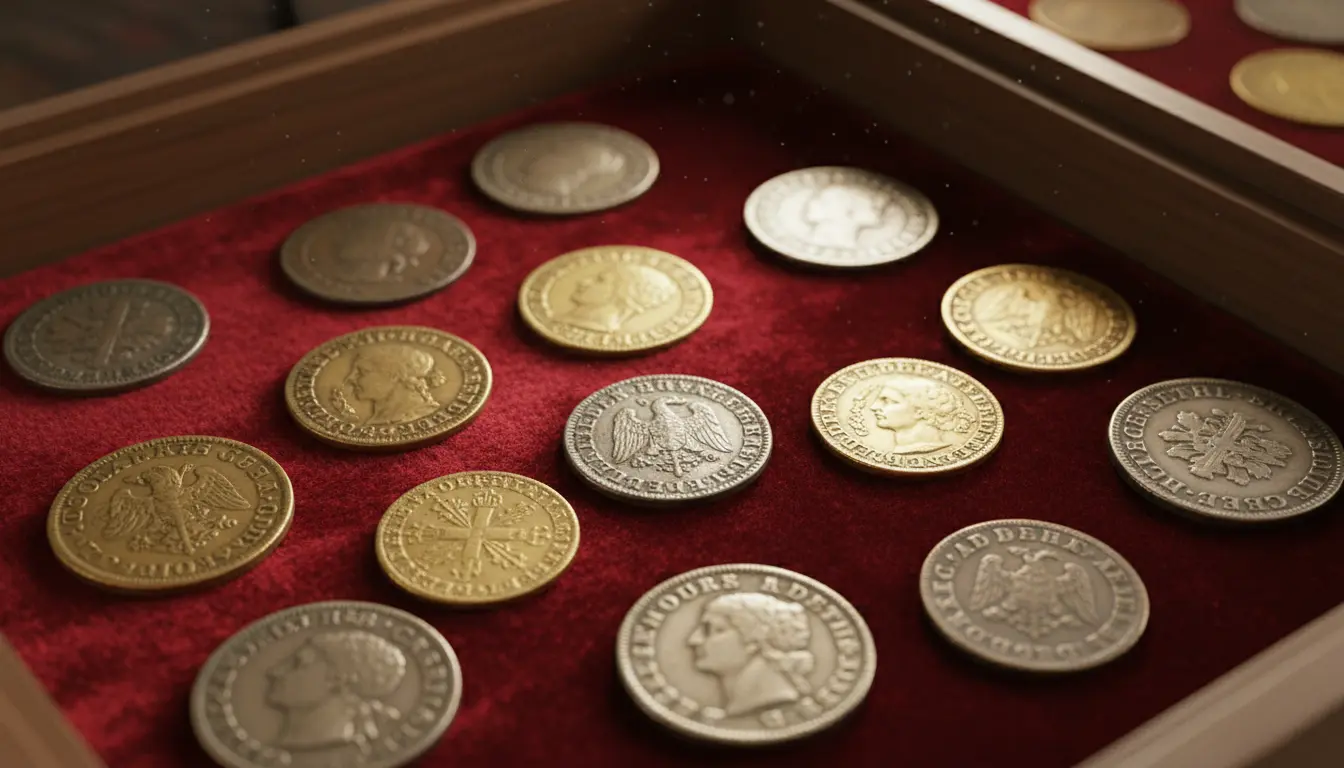
This guide lists 10 rare coins every collector dreams of and explains how to identify, value, and protect them. The focus is practical and neutral so collectors at all levels can apply the advice.
Top 10 Rare Coins Every Collector Dreams Of
Below are ten iconic rare coins from different eras and nations. Each entry includes a short identification note and why collectors prize it.
1. 1933 Saint-Gaudens Double Eagle (USA)

One of the most famous modern rarities, the 1933 Double Eagle has a dramatic legal and auction history. Collectors prize its rarity, design, and the story around its limited legal release.
2. 1794 Flowing Hair Dollar (USA)
Considered one of the earliest silver dollars, the 1794 Flowing Hair Dollar is sought for its historical importance. Condition and provenance dramatically affect value.
3. 1804 Draped Bust Silver Dollar (Class I)
Known as the “King of American Coins,” the 1804 dollar was actually struck later for diplomatic sets. Its rarity and myth make it a top collector dream.
4. 1913 Liberty Head Nickel (USA)

Only five specimens are known, and each has a unique story. This nickel is prized for provenance and extreme scarcity.
5. 1787 Brasher Doubloon (United States/Colonial)
One of the earliest gold coins related to American history, the Brasher Doubloon is a landmark for collectors of early American issues. Its rarity and gold content add intrinsic and historical value.
6. 1792 Birch Cent (USA)
A pattern coin from the earliest days of the U.S. Mint, the Birch Cent is rare and attracts enthusiasts who collect early struck patterns and mint experiments.
7. 1907 Saint-Gaudens Ultra High Relief Double Eagle (USA)

This striking high-relief pattern is admired for artistry and relative rarity among gold double eagles. It appeals to collectors of design and minting innovation.
8. 1822 6400 Reis (Brazil)
A notable world rarity, the Brazilian 6400 Reis of 1822 is valued for its historical context tied to Brazilian independence and rarity in fine condition.
9. Edward VIII Proof Sovereign (1937, United Kingdom)
Coins associated with Edward VIII are rare because his abdication halted many official issues. Proof sovereigns and patterns with his portrait are highly collectible.
10. 1870-S Seated Liberty Dollar (Pattern / Rare United States issues)
Pattern and restrike Seated Liberty dollars from the 19th century are prized when they are linked to rare minting experiments or limited restrikes.
Some coins considered the rarest were produced intentionally for sets or presentation, not circulation. Rarity can come from low mintage, recall, or a legal seizure.
How to Identify and Verify Rare Coins
Identifying a rare coin requires attention to detail and trusted verification. Look for known die markers, mint marks, and documented provenance when possible.
- Check professional grading agency numbers and labels (PCGS, NGC).
- Compare die markers and edge inscriptions against reference photos.
- Review auction records to confirm known specimens and price ranges.
Value Factors for Rare Coins
Value depends on several practical factors. Condition, rarity, provenance, and market demand are the leading drivers of price.
Collectors should track auction results and scientifically verified sales to form realistic expectations of value.
How to Buy and Protect Rare Coins
Buying with caution protects your investment. Use reputable dealers, request grading reports, and insist on a return policy for disputed authenticity.
- Buy from reputable dealers or established auction houses.
- Insist on third-party grading and full documentation.
- Use secure storage such as bank safe deposit boxes or insured vaults.
- Keep clear provenance and purchase records for insurance and future sale.
Small Case Study: 1933 Saint-Gaudens Double Eagle Sale
A noted real-world example shows the importance of provenance. A 1933 Saint-Gaudens Double Eagle sold at a major auction after years of legal dispute. The sale price reflected both its rarity and the verified chain of custody.
This case highlights that legal clarity and documented ownership often add millions to the realized price. When considering rare coins, factor in legal history and documented provenance.
Practical Tips for New Collectors of Rare Coins
Start with research and build relationships with specialists. Focus on a smaller collecting area to learn identification traits and market behavior.
- Read specialized catalogs and auction archives.
- Join local or online numismatic societies to access expert knowledge.
- Attend auctions and examine coins in person when possible.
Final Checklist Before Buying Rare Coins
- Confirm third-party grading and certification.
- Verify provenance and any legal or export restrictions.
- Check recent comparable auction prices and trends.
- Plan secure storage and insurance before finalizing purchase.
Collecting rare coins requires patience and careful verification. Use this guide as a starting checklist and build deeper research on any specific coin you pursue.