
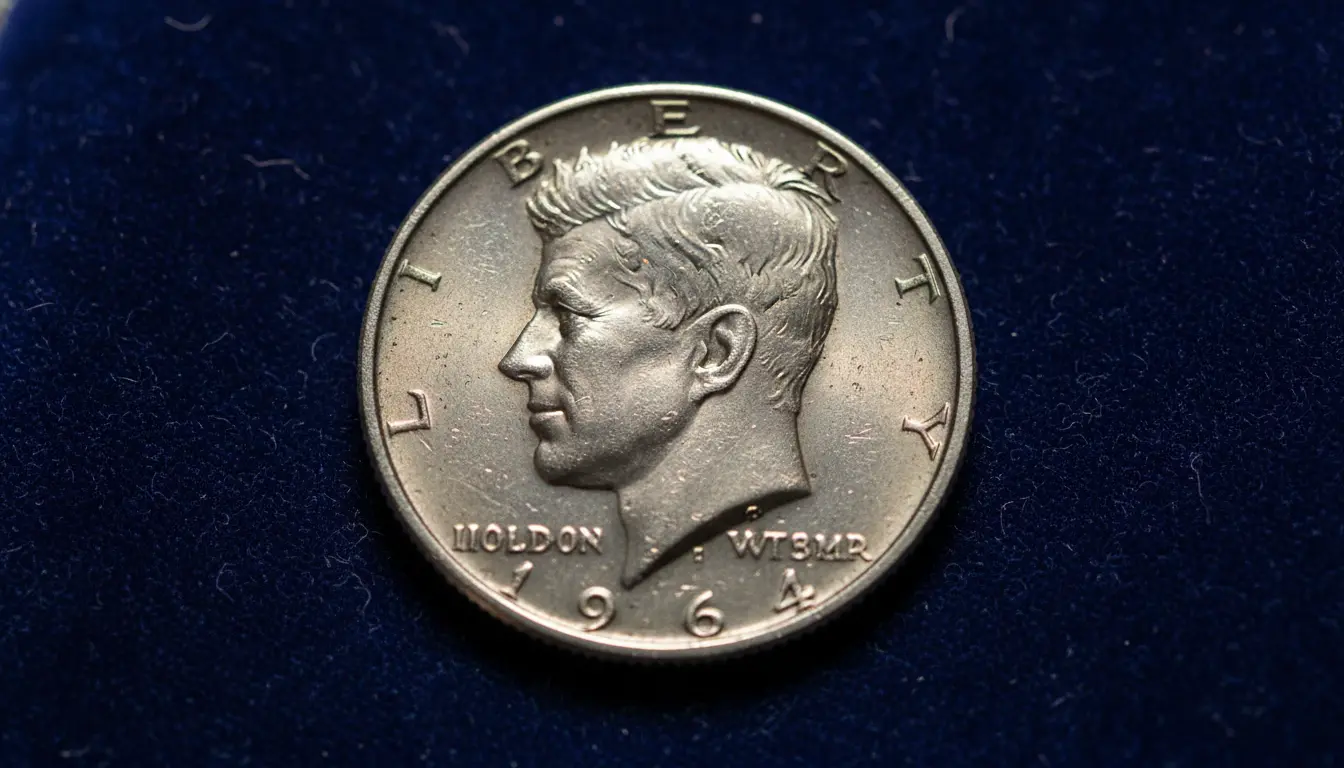
The Kennedy half dollar introduced in 1964 remains one of the most asked-about U.S. coins among collectors and beginners. This guide covers its history, silver content, mint marks, grading basics, and practical tips for buying and selling.
History of the 1964 Kennedy Half Dollar
The Kennedy half dollar was released quickly after President John F. Kennedy’s assassination in 1963 to honor his memory. The design replaced the Franklin half dollar and debuted in early 1964.

Collectors value the 1964 issue for its historical context and for being the only regular-issue Kennedy half struck in 90% silver. That silver content makes it both a numismatic and a bullion-interest coin.
Why 1964 Kennedy Half Dollar is Unique
1964 is unique because it is the only year the Kennedy half dollar was struck for general circulation with a 90% silver composition. That combination of high silver content and recent historic design sets it apart from later issues.
Physical Characteristics and Silver Content
The 1964 Kennedy half contains 90% silver and 10% copper. It has the same diameter and weight as previous silver halves, which makes it familiar in feel but distinct in intrinsic metal value.

Key features to inspect include the obverse portrait of Kennedy, the reverse presidential coat of arms, and the overall strike sharpness. High relief and full detail improve collector value.
Mint Marks and Production
1964 Kennedy halves were produced at multiple facilities. Mint marks identify where a coin was struck and can affect collector interest.
- No mint mark: Philadelphia (primary circulation strikes)
- D: Denver (circulation strikes)
- S: San Francisco (proofs intended for collectors)
Production numbers were large to meet demand, so most circulation examples are common. Proofs and high-grade specimens are scarce by comparison.
How to Grade and Value a 1964 Kennedy Half Dollar

Grading affects value more than the mint mark for this date. Most collectors follow standard grade categories such as Good, Very Fine, Extremely Fine, and Mint State (MS).
Follow these steps to assess condition:
- Examine high points on Kennedy’s cheek and hair for wear.
- Check for surface marks, bag marks, and toning that affect eye appeal.
- Compare to grading guides or submit to a third-party grading service for a professional grade.
Value factors include grade, mint mark (proofs often command premiums), eye appeal, and current silver spot price. Melt value sets a baseline because the coin contains actual silver.
The 1964 Kennedy half dollar is the only general-circulation Kennedy half struck with 90% silver. After 1964, silver content was reduced in later years.
Common Varieties and Errors
While 1964 is not known for many dramatic die varieties, collectors look for notable items such as doubled dies, off-center strikes, and planchet errors. These can raise a coin’s value if verified.
Always document suspected errors with clear photos and consult specialist resources or a grading service for confirmation.
Case Study: A Simple Collector Example
A local collector bought a mixed roll of half dollars at a coin shop and found a 1964 Kennedy with sharp details and attractive toning. The collector followed a methodical process: research, compare to grading references, and then get a second opinion online.
After submission to a grading service, the coin received a high circulated grade and was listed on a reputable auction platform. The listing emphasized grade, photos of obverse/reverse, and condition notes. The sale showed how careful documentation and modest investment in grading can improve buyer confidence.
Practical Tips for Buyers and Sellers
Whether you are buying or selling, follow these practical steps to reduce risk and maximize value.
- Research current silver spot prices—this sets a floor value for circulated coins.
- Inspect coins under magnification to identify wear and possible errors.
- Compare multiple listings and recent auction results for similar grade coins.
- Consider professional grading for high-grade or rare specimens to increase marketability.
- Keep documentation: photographs, receipts, and grading reports where applicable.
Where to Buy or Sell a 1964 Kennedy Half Dollar
Options include reputable coin dealers, local coin clubs, coin shows, and online marketplaces. Each channel has trade-offs between convenience, fees, and price transparency.
For higher-value coins, auctions and third-party-graded listings tend to attract serious buyers and can produce better prices if the coin is well-documented.
Final Practical Checklist
- Confirm the coin is a 1964 issue and note the mint mark.
- Assess grade and eye appeal; consider grading high-grade pieces.
- Track silver prices to set minimum acceptable value for sale.
- Use clear photos and full descriptions for selling listings.
With a clear understanding of its history, silver content, and grading principles, the 1964 Kennedy half dollar can be an accessible and rewarding item for collectors and investors alike.