
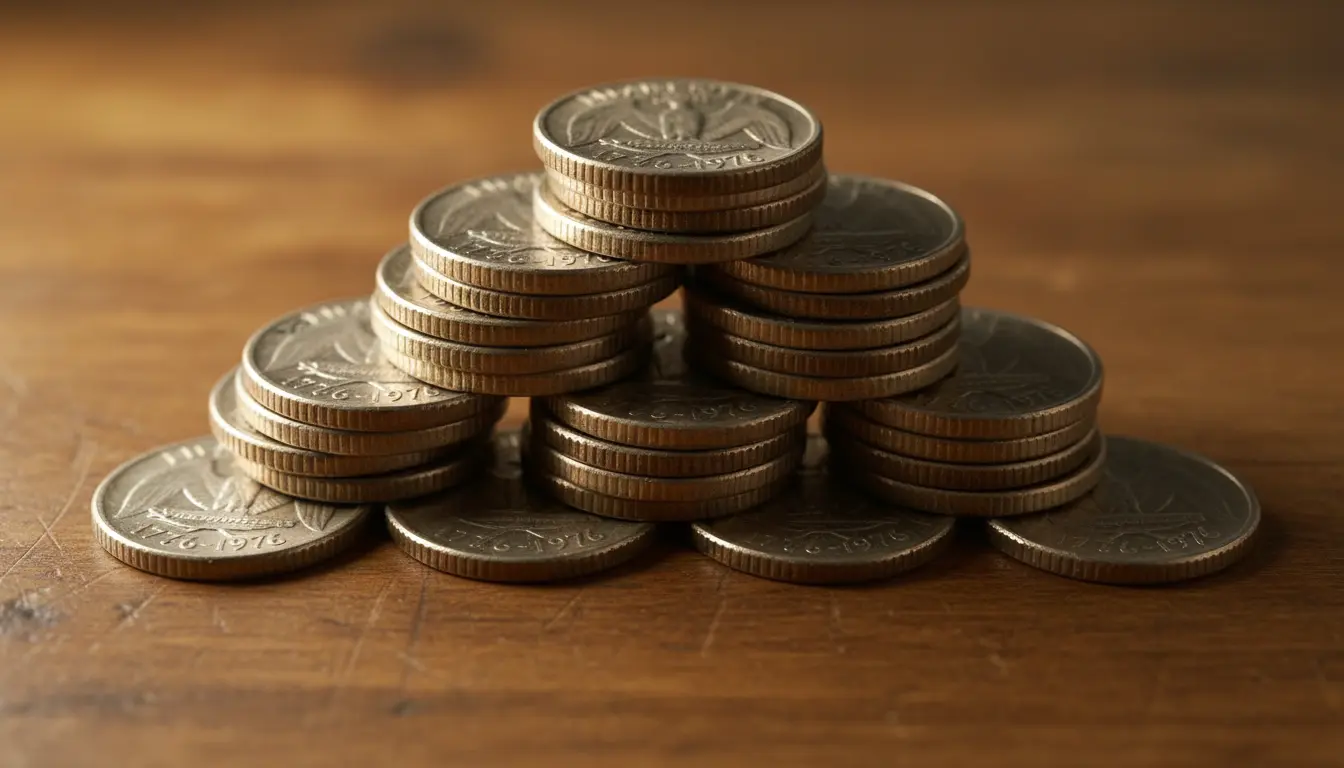
Overview of 1976 Bicentennial Quarter Prices
The 1976 Bicentennial quarter (bearing the dual date 1776–1976) was produced for circulation and collector sets. Most are common and worth face value, but certain types and conditions carry premiums.
This guide explains which 1976 Bicentennial quarter types are worth watching, realistic price ranges, and where you might still find valuable examples.
1976 Bicentennial Quarter Prices: Key Types to Know

There are three main categories that affect value: composition, mint mark, and condition. Errors and special strikes add another layer of potential value.
Clad Circulation Strikes (Philadelphia and Denver)
Most Bicentennial quarters in circulation are copper-nickel clad from Philadelphia (no mint mark) and Denver (D). These are abundant and generally trade at face value unless in high uncirculated grades.
High-grade uncirculated pieces (MS65 and above) may command modest premiums from collectors seeking flawless examples.
San Francisco Proofs and Silver Proofs (1976-S)

San Francisco struck proof Bicentennial quarters. Two notable proof types are common:
- Clad proof quarters in ordinary proof sets. These carry a small premium over face in high grades.
- 40% silver proof quarters issued in special silver proof sets. These 1976-S silver proofs are consistently more valuable because of their silver content and collector demand.
Errors and Varieties
Errors that increase value include off-center strikes, broadstrikes, clipped planchets, and major die errors like strong doubling. Some error coins sell for significant sums at auction depending on severity and market demand.
Minor doubling or weak doubling usually doesn’t add much value, so condition and documented rarity matter for error premiums.
Typical 1976 Bicentennial Quarter Prices by Category

Below are general price ranges to use as a starting point. Prices fluctuate, so always check recent sales and price guides before buying or selling.
- Circulated clad quarters: face value to $1.00 for average pieces.
- Uncirculated clad (MS63–MS65): $2–$25 depending on grade and eye appeal.
- High-grade clad (MS66–MS68): $25–$100+ for top-quality pieces from collectors.
- 1976-S Clad Proof: $5–$30 depending on grade and whether it’s in a sealed proof set.
- 1976-S 40% Silver Proof: $25–$200+, higher for PR67–PR69 examples and rare finishes.
- Major errors (off-center, broadstrike, large clipped planchets): $50 to several thousand dollars depending on severity and rarity.
Factors That Drive 1976 Bicentennial Quarter Prices
- Composition: Silver content increases intrinsic and collectible value.
- Condition: Grading and surface preservation are often the single biggest price driver.
- Rarity: Limited mintage varieties or documented die errors sell for more.
- Market demand: Collector interest and precious metal prices affect values.
How to Identify Valuable 1976 Bicentennial Quarters
Use a loupe (10x), good lighting, and a reliable price guide. Check the reverse for the Bicentennial design (flaming torch over a drum and crossing drumsticks) and the obverse for doubling or unusual die defects.
Look for an S mint mark on the reverse under the wreath for San Francisco strikes. If a coin is in a proof set or still in original Mint packaging, it usually retains more value.
Simple Steps to Authenticate and Grade
- Clean only by a professional—cleaning destroys value.
- Compare to certified coins on auction sites to match surface quality and strike.
- Consider third-party grading (PCGS, NGC) for coins you suspect are high-grade or error pieces.
The Bicentennial reverse by Jack Ahr was used on all quarters, half dollars, and dollars minted for the 1975–1976 celebrations, and most coins bear the dual date 1776–1976 instead of a single year.
Where You Can Still Find Valuable 1976 Bicentennial Quarters
Valuable specimens turn up in everyday places if you know where to look. Common sources include circulated change, bank rolls, estate lots, coin dealers, and online marketplaces.
Proof and silver pieces are often discovered inside old proof sets or estate collections. Error coins sometimes appear in circulated lots or at flea markets.
Tips for Hunting
- Inspect rolls from banks; unsearched rolls sometimes hold gem uncirculated pieces.
- Buy small lots of coins from estate sales and sort carefully under magnification.
- Follow completed eBay sales or auction records to learn real market prices.
Short Case Study: A Real-World Find
A collector bought an old proof set at a local estate sale for $30. Inside was a 1976-S 40% silver Bicentennial quarter in PR66 condition. After verifying its grade and selling on an auction site, the coin fetched about $120, netting a tidy profit after fees.
This example underscores how silver proofs and preserved pieces in original sets can still be profitable finds for patient collectors.
Final Practical Tips on 1976 Bicentennial Quarter Prices
Do basic research before you buy or sell. Use up-to-date auction results and reputable price guides. When in doubt, get a third-party opinion or grade for high-value candidates.
Keep expectations realistic: most Bicentennial quarters are common, but silver proofs, high grades, and dramatic errors are the types that justify higher prices.
With careful inspection and a bit of luck, you can still find 1976 Bicentennial quarters that are worth more than their face value.