
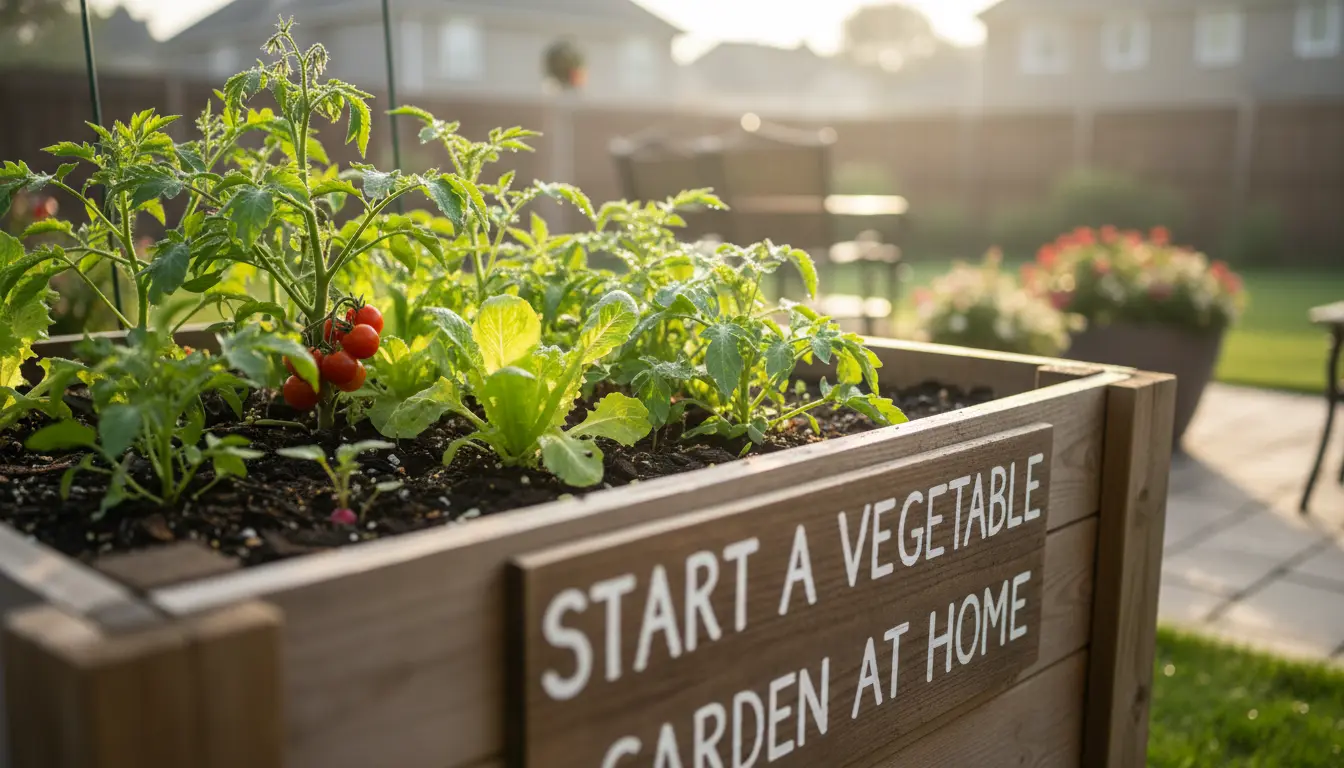
How to Start a Vegetable Garden: Overview
Starting a vegetable garden at home is achievable with basic planning and a few tools. This guide explains step-by-step what to do from choosing a spot to harvesting your first crops.
Choose the Right Location for Your Vegetable Garden
Pick a location that gets at least 6 hours of direct sunlight each day for most vegetables. Good drainage and easy access to water are essential.

Also consider proximity to your kitchen for convenient harvesting and observation.
Key site checklist
- Sun exposure: 6–8 hours daily
- Soil drainage: no standing water after rain
- Water access: hose or rain barrel nearby
- Protection from strong winds and pests
Prepare Soil and Raised Beds
Vegetables need fertile, well-draining soil. If your yard soil is poor, raised beds are an efficient solution. Beds warm faster and allow control over soil mix.
Mix compost and a balanced organic amendment into topsoil to improve structure and nutrients.
Soil preparation steps
- Clear weeds and grass from the planting area.
- Loosen soil to 8–12 inches with a fork or tiller.
- Incorporate 2–4 inches of compost and a handful of granular organic fertilizer per square foot.
- Rake smooth and water to settle the mix before planting.
Choose Vegetables for Your Climate and Skill Level

Start with easy, high-reward crops like tomatoes, lettuces, radishes, green beans, and herbs. Check your USDA hardiness zone or local extension recommendations.
Consider season length: cool-season crops versus warm-season crops will determine planting timing.
Beginner-friendly vegetable list
- Leaf lettuce and spinach (fast harvest, cool weather)
- Radishes (quick 3–4 week harvest)
- Green beans (low maintenance, high yield)
- Tomatoes (indeterminate or bush varieties for containers or beds)
- Basil and parsley (useful and easy herbs)
Planting: Seeds vs. Transplants
Decide whether to sow seeds directly or buy transplants (young plants). Direct seeding works well for root crops and lettuces. Transplants give a head start to tomatoes and peppers.

Follow seed packet instructions for depth and spacing, and label rows to avoid confusion.
Planting tips
- Water newly planted seeds gently to keep soil moist until germination.
- Harden off transplants by exposing them gradually to outdoor conditions for a week.
- Use mulch to retain moisture and suppress weeds after seedlings establish.
Watering and Maintenance
Consistent watering is critical. Most vegetables need about 1 inch of water per week, more during hot spells. Water early in the day to reduce evaporation and disease risk.
Hand watering or drip irrigation at the soil line is better than overhead sprinkling.
Routine tasks
- Weekly weeding and light cultivation to prevent competition
- Monitor for pests and diseases; use physical controls or organic treatments first
- Support vining plants with stakes, cages, or trellises
Adding a 2–3 inch layer of organic mulch can reduce watering needs by up to 50% and keep soil temperatures steadier for roots.
Fertilizing and Soil Health
Feed vegetables with balanced nutrients during the growing season. Compost tea or low-dose organic fertilizers work well. Avoid excess nitrogen for fruiting crops like tomatoes, which benefit from additional phosphorus and potassium.
Rotate crops annually to prevent disease build-up and preserve soil fertility.
Pest Management and Common Problems
Inspect plants weekly for signs of pests such as slugs, aphids, and caterpillars. Encourage beneficial insects by planting flowers and providing habitat.
Use row covers for early-season protection and remove heavily infested plants to limit spread.
Simple pest controls
- Handpick large pests like beetles and caterpillars
- Introduce or attract predatory insects such as ladybugs
- Apply insecticidal soap or neem oil for soft-bodied pests
Harvesting and Storage
Harvest vegetables at their peak for best flavor and nutrition. For most crops, regular harvesting encourages more production. Store produce cool and dry, or preserve by freezing, canning, or fermenting.
Label jars or packages with dates and use older items first to avoid waste.
Small Real-World Example: One-Season Raised Bed Case Study
Case: Sarah, a city apartment renter, used a 4×8 ft raised bed on a sunny balcony. She filled it with a 60:40 mix of topsoil and compost, planted determinate tomatoes, bush beans, lettuces, and basil.
Results: By following a weekly watering schedule and adding compost midseason, Sarah harvested tomatoes and beans from July to October. Her initial investment of seeds and soil amendments paid off with fresh produce and seed savings for next year.
Quick Start Checklist
- Select sunny spot and prepare soil or raised bed
- Choose beginner-friendly vegetables and schedule planting dates
- Plant seeds or transplants, mulch, and set up watering
- Monitor, fertilize lightly, and control pests as needed
- Harvest regularly and preserve excess
Final Tips on How to Start a Vegetable Garden
Start small and expand as you gain confidence. Keep a simple garden journal to track planting dates, varieties, and yields. Learning by doing is the fastest way to improve.
With consistent care and a few seasonal adjustments, your home vegetable garden can provide fresh produce and satisfaction year after year.