
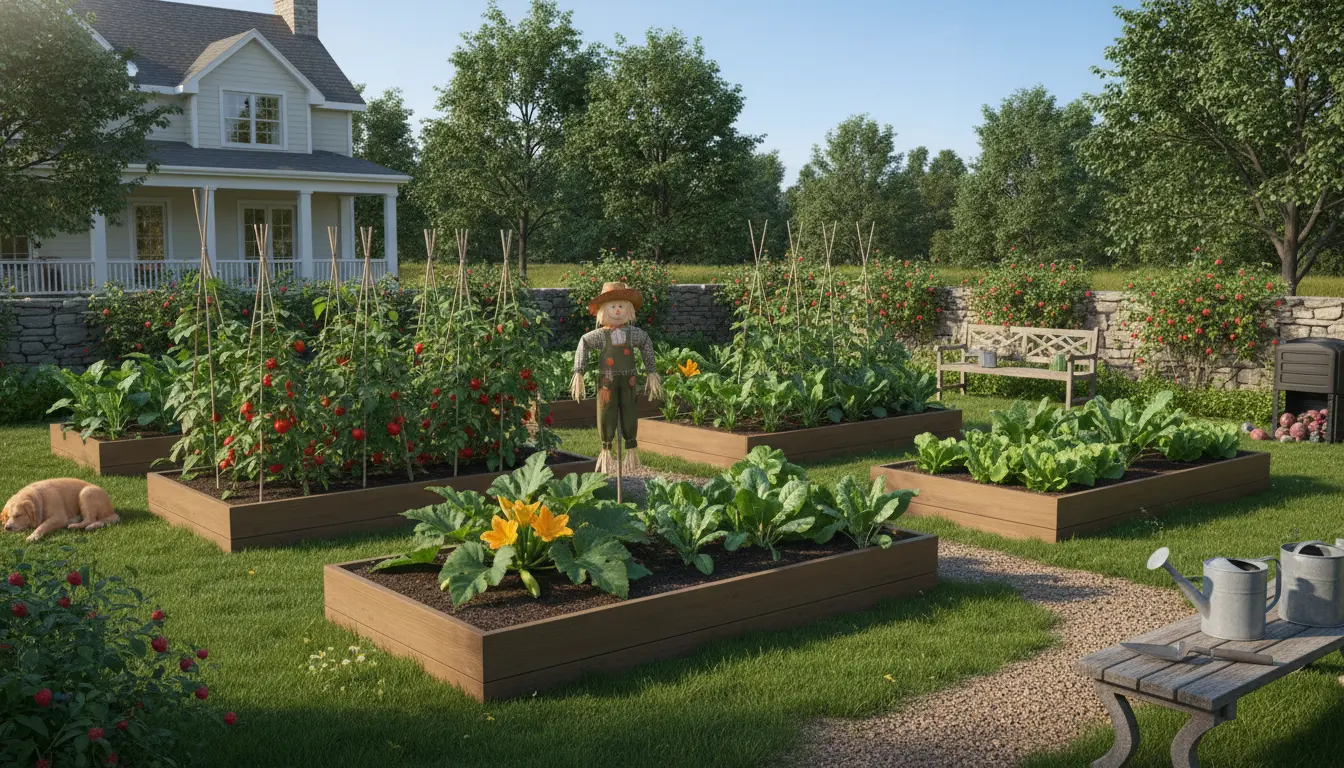
Planning Your Vegetable Garden
Starting a vegetable garden begins with clear planning. Consider space, sunlight, time available, and what you want to grow.
List the vegetables you and your family eat most and check their light and space needs before you commit.
Choose a Site to Start a Vegetable Garden

Pick a location that gets at least 6 hours of direct sunlight for most vegetables. Avoid low spots that collect cold air or water.
Good drainage and easy access to water are essential. If you lack ground space, containers or raised beds work well.
Site Checklist
- Sun: 6+ hours daily for tomatoes, peppers, and beans.
- Water: Close to a hose or irrigation source.
- Soil: Avoid compacted or contaminated areas.
- Access: Easy to reach for planting and harvesting.
Prepare Soil Before You Start a Vegetable Garden
Healthy soil is the most important factor. Test pH and nutrients with a simple kit from a garden center or extension service.

Improve soil by adding organic matter like compost, well-rotted manure, or leaf mulch. Aim for a loose, crumbly texture.
Soil Preparation Steps
- Clear weeds and debris from the area.
- Spread 2–4 inches of compost over the soil.
- Work compost into the top 6–8 inches with a fork or tiller.
- Adjust pH if needed: most vegetables prefer pH 6.0–7.0.
Choose Plants and Layout to Start a Vegetable Garden
Start small to stay consistent. Choose fast-growing, forgiving crops such as lettuce, radishes, bush beans, and cherry tomatoes.
Use companion planting and proper spacing so plants don’t compete for light and nutrients.
Layout Tips
- Plant tall crops on the north side to avoid shading smaller plants.
- Group plants by water needs to simplify irrigation.
- Mix quick harvests (radishes) with longer ones (carrots) to maximize yield.
Watering and Mulching When You Start a Vegetable Garden

Consistent moisture is critical for seed germination and fruit set. Water deeply rather than lightly to encourage strong roots.
Mulch reduces weeds and keeps soil moisture steady. Use straw, shredded leaves, or wood chips around established plants.
Watering Schedule Example
- Seedlings: keep soil moist daily until established.
- Established plants: 1–2 deep waterings per week, more in hot weather.
- Use drip irrigation or soaker hoses for efficient water use.
Common Pests and Basic Pest Control
Expect some pests. Early detection and simple measures often prevent large losses.
Handpick larger pests, use row covers for young plants, and encourage beneficial insects like ladybugs and lacewings.
Organic Pest Management Options
- Hand removal and traps for slugs and beetles.
- Neem oil or insecticidal soap for soft-bodied insects.
- Crop rotation and sanitation to reduce disease risk.
Harvesting and Ongoing Care
Harvest vegetables when ripe to encourage continued production. Regular pruning and removing spent plants improves airflow and reduces disease.
Keep a simple journal of planting dates and harvest amounts to refine timing in future seasons.
Case Study: A Small Backyard Success
Maria used a 10×4 foot raised bed to start a vegetable garden in spring. She chose tomatoes, lettuce, bush beans, and herbs to match her family’s needs.
After preparing soil with compost and using mulch, Maria watered deeply twice weekly and added a simple trellis for tomatoes. By late summer she harvested weekly salads and enough tomatoes for canning.
Her keys to success were modest goals, consistent watering, and choosing varieties labeled as ‘disease resistant.’
Quick Starter Checklist to Start a Vegetable Garden
- Select a sunny site and confirm water access.
- Test and amend soil with compost.
- Choose 4–6 easy crops for your first season.
- Plant using proper spacing and add mulch after establishment.
- Water deeply, watch for pests, and harvest promptly.
Starting a vegetable garden is a practical project that pays off with fresh produce and more understanding of your microclimate. Begin small, learn each season, and scale up as you gain confidence.