
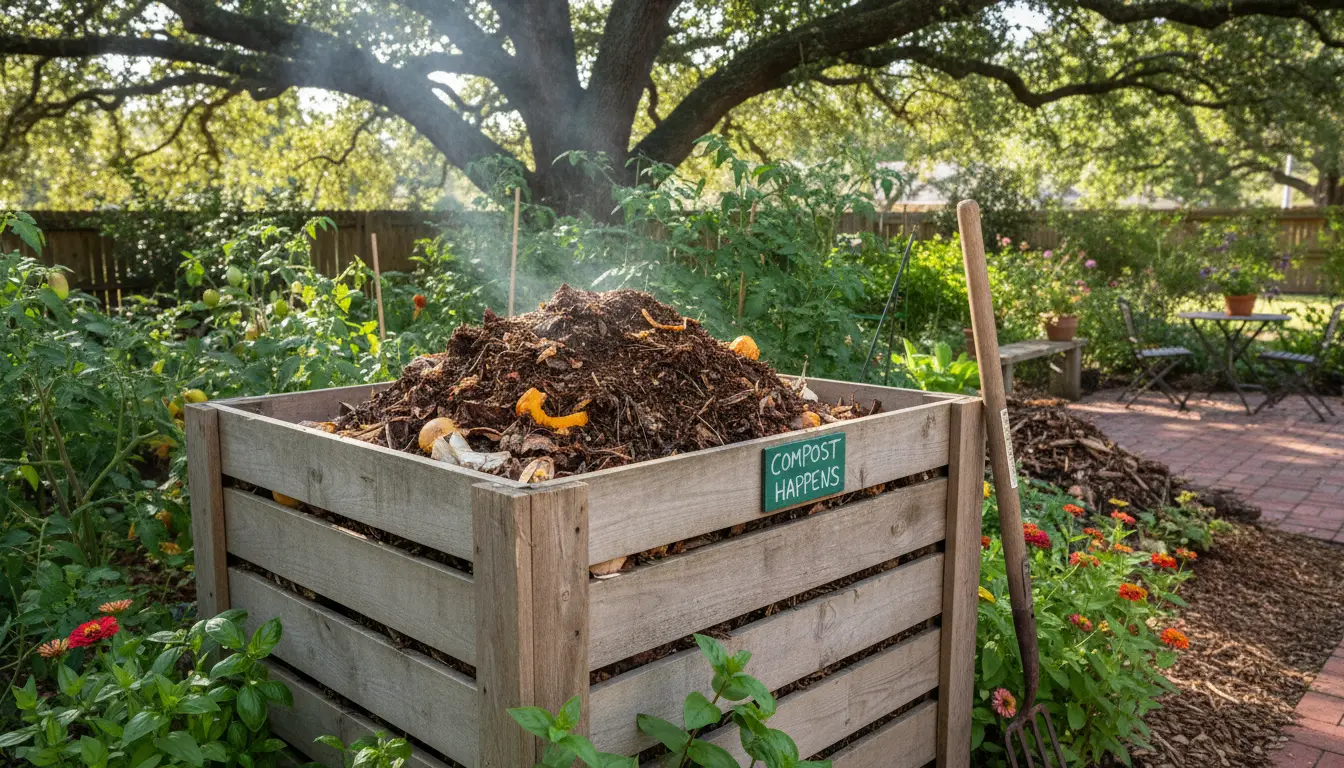
Start Composting at Home: What You Need to Know
Home composting turns kitchen scraps and yard waste into rich soil. This guide gives clear steps and simple rules you can follow right away.
How Home Composting Works
Composting is a natural process where microbes break down organic matter. The main inputs are carbon rich materials (browns) and nitrogen rich materials (greens).

Maintaining the right balance, moisture, and airflow helps microbes work efficiently. A steady mix and occasional turning speeds up the process and reduces odors.
Key Components for Successful Home Composting
- Greens: vegetable peels, coffee grounds, fresh grass clippings.
- Browns: dried leaves, shredded paper, straw, cardboard torn into pieces.
- Air: keep the pile loose or turn it to let oxygen in.
- Water: keep materials damp, similar to a wrung-out sponge.
Getting Started with Home Composting
Choose a spot that is convenient and drains well. You can use a simple bin, a tumbler, or a pile depending on space and preference.
Start by layering browns and greens in a roughly 3:1 ratio by volume. Add kitchen scraps in small amounts and cover with browns to avoid attracting pests.
Step-by-Step Setup for a Small Bin
- Place a 10–20 gallon bin with drainage holes on bare soil or a tray.
- Add a 2–3 inch base layer of coarse browns like twigs or straw.
- Alternate layers of greens and browns, aiming for more browns than greens.
- Moisten each layer so it is damp but not dripping.
- Stir or turn the contents every 1–2 weeks to add oxygen.
Common Problems and Practical Fixes

Smelly compost usually means too much nitrogen or lack of air. Fix it by adding dry browns and turning the pile to introduce oxygen.
Slow decomposition can be due to low moisture, cold temperatures, or large particle size. Chop materials finer, moisten the pile, and keep it insulated in winter if needed.
Adding a handful of finished compost or garden soil when you start a new pile introduces beneficial microbes that speed breakdown.
How to Know When Compost Is Ready

Finished compost is dark, crumbly, and smells earthy. Most home systems produce usable compost in 3–9 months depending on conditions and management.
Screen or sift the compost to remove large pieces and return those pieces to the bin for further decomposition.
Using Finished Compost
- Topdress vegetable beds with a 1–2 inch layer to improve soil structure.
- Mix compost into potting soil at 10–30% by volume for potted plants.
- Use as mulch around shrubs and trees to retain moisture and suppress weeds.
Small Real-World Case Study
Maria, a city apartment gardener, used a 15-gallon tumbler on her balcony. She added kitchen scraps and shredded cardboard in a 2:1 browns to greens mix, turned the tumbler twice weekly, and kept the pile damp.
After five months she harvested about 15 liters of dark compost. She mixed 20% compost into potting soil for her tomato plants and saw stronger growth and earlier fruiting the following season.
Tips to Speed Up Home Composting
- Chop or shred materials to increase surface area.
- Maintain warmth by keeping the pile insulated or placing the bin in sun.
- Use a compost starter or add garden soil to introduce microbes.
- Turn or tumble regularly to keep air flowing.
What Not to Compost in a Home System
Avoid meat, dairy, oily foods, diseased plants, and pet waste in small home systems. These materials can cause odors, pests, or pathogens.
Wood treated with chemicals and invasive weeds that spread by roots or seeds should also be excluded.
Final Checklist for Home Composting Success
- Balance greens and browns (more browns than greens).
- Keep materials moist but not waterlogged.
- Provide airflow by turning or using a breathable bin.
- Be patient—decomposition takes time but improves soil health.
Home composting is a low-cost, effective way to reduce waste and enrich your soil. Follow these steps and adjust for your space and climate to get consistent results.