
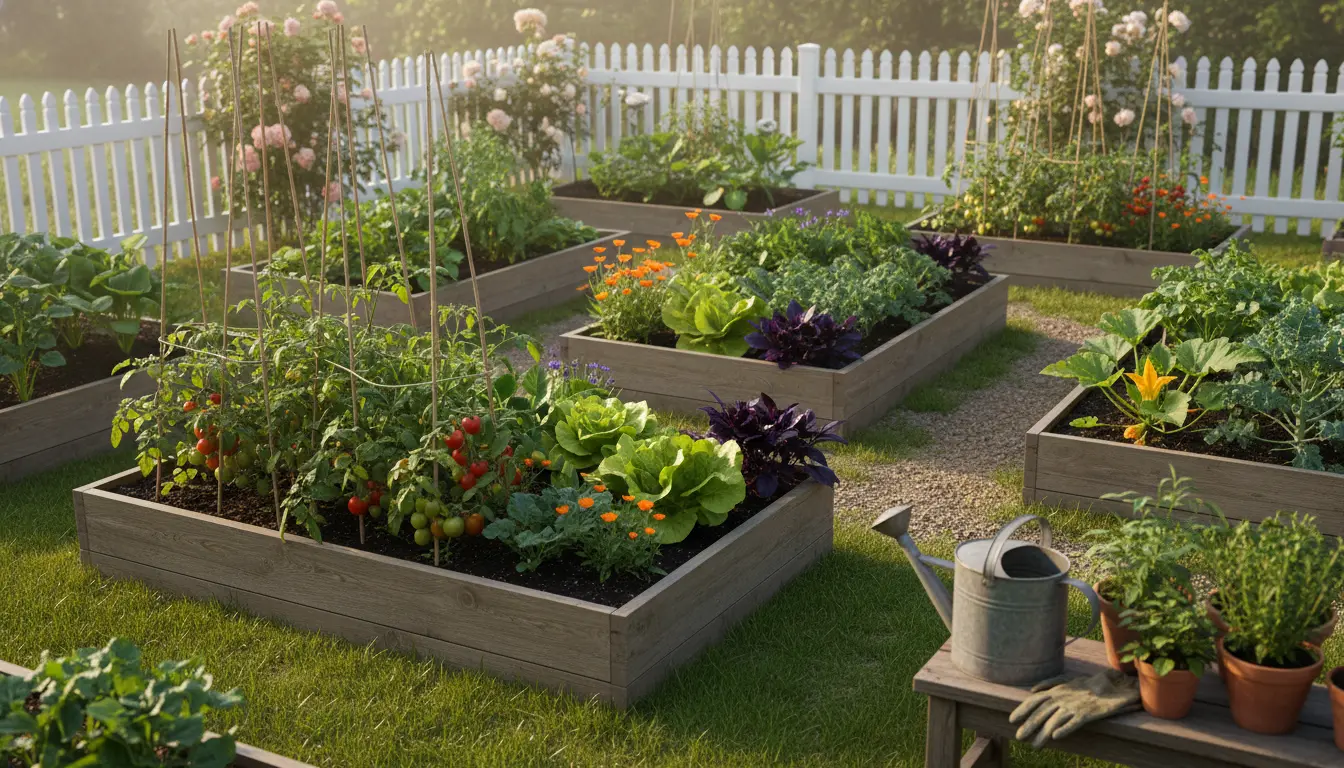
Get Ready to Start a Small Vegetable Garden
Starting a small vegetable garden is practical for beginners and apartment dwellers with a balcony or yard. This guide shows step-by-step actions to plan, plant, and care for a productive small garden.
Plan Your Small Vegetable Garden
Good planning sets the foundation for success. Choose a spot that gets at least 6 hours of direct sun each day and has easy access to water.

Decide on the garden type: containers, raised beds, or a small in-ground plot. Each option suits different spaces and budgets.
Choose What to Grow
Pick vegetables that match your space and climate. Focus on high-yield, space-efficient crops if your space is limited.
- Containers: cherry tomatoes, peppers, herbs, lettuce.
- Raised beds: carrots, beets, beans, small squash varieties.
- In-ground: potatoes, onions, brassicas if you have more space.
Measure and Map
Sketch a simple layout and measure available space. Mark where each bed or container will go to ensure proper spacing and sun exposure.
Prepare Soil and Containers for a Small Vegetable Garden

Healthy soil is the most important factor for strong plants. For containers and raised beds use a loose, well-draining mix with added organic matter.
Test your garden soil if planting in-ground. You can buy an affordable soil test kit or send a sample to a local extension service.
Amend and Improve
Add compost to improve structure and fertility. For heavy clay, mix in coarse sand and organic matter to improve drainage and root growth.
- Compost: 2–3 inches spread over beds before planting.
- Mulch: 2–3 inches around plants to retain moisture and suppress weeds.
- Slow-release granular fertilizer: follow package rates for vegetables.
Planting Steps for a Small Vegetable Garden

Planting at the right time and depth ensures strong seedlings. Use seed packets or plant tags as a guide for spacing and depth.
Start slow with a few crops the first season to learn what performs best in your spot.
Succession Planting and Companion Tips
Use succession planting to extend harvests—plant a new row of lettuce every 2–3 weeks. Pair compatible plants to maximize space and deter pests.
- Companions: basil with tomatoes, radishes with carrots, marigolds near almost anything to deter pests.
Watering and Maintenance
Consistent watering matters more than frequent shallow waterings. Aim for deep, infrequent watering to encourage strong roots.
Install a simple drip irrigation or soaker hose to save time and water. Check soil moisture with your finger: if the top 1–2 inches are dry, water deeply.
Routine Care Checklist
- Weed weekly to reduce competition for nutrients.
- Monitor for pests and diseases and remove affected leaves early.
- Stake or cage tall plants like tomatoes to maintain airflow.
- Harvest regularly to encourage continued production.
Harvesting and Storing
Harvest vegetables at their peak for best flavor and nutrition. Regular harvesting often increases yield and prevents plants from going to seed.
Store produce appropriately: leafy greens in the fridge, root crops in a cool, dark place, and tomatoes at room temperature until ripe.
Many common vegetables can be grown in as little as a 2×4 foot raised bed. Efficient crops include lettuce, radishes, and bush beans.
Small Vegetable Garden Example: One-Season Case Study
Case Study: A 4×4 foot raised bed in a suburban yard produced enough salad greens and tomatoes for a family of two over a summer. The gardener used compost-rich soil and two tomato cages.
Results: Weekly harvests of mixed greens, 15–20 cherry tomatoes per week in peak months, and continuous basil for pesto. Minimal pest issues after adding beneficial insects like ladybugs.
Common Problems and Quick Fixes for Small Vegetable Gardens
Pest pressure and inconsistent watering are the two most common issues for small gardens. Early detection and simple changes solve most problems.
- Yellowing leaves: check water and nutrient levels; add compost tea or balanced fertilizer.
- Slugs and snails: use beer traps or handpick at dusk.
- Powdery mildew: improve air circulation and remove affected leaves.
Final Tips to Keep Your Small Vegetable Garden Productive
Start small, learn from each season, and expand gradually. Keep a garden notebook with planting dates, varieties, and harvest volumes to refine your plan each year.
Enjoy the process: growing food is rewarding and gives practical skills that improve with practice.