
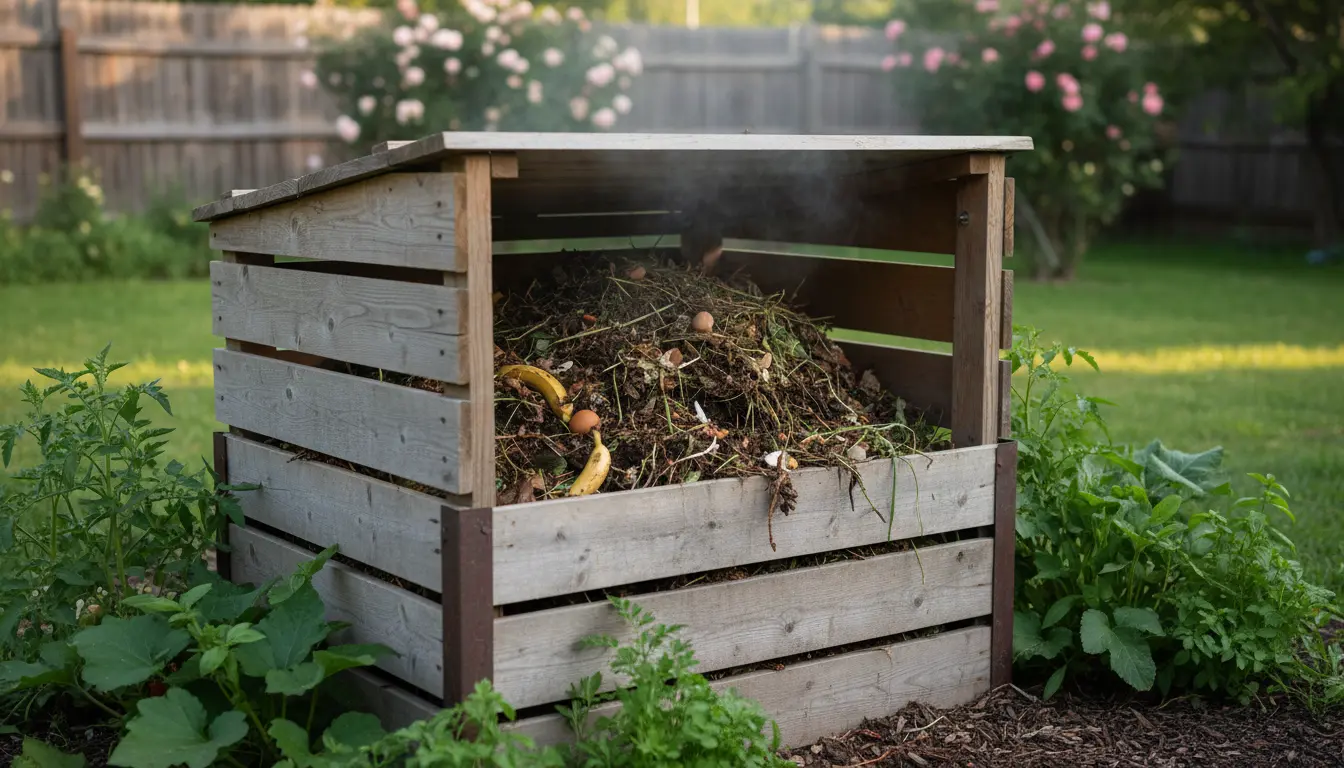
Getting Started with Home Composting for Beginners
Home composting turns kitchen scraps and yard waste into valuable soil amendment. This guide gives clear, practical steps you can use whether you have a small balcony or a backyard.
Composting reduces household waste and improves garden soil. Follow the basics below to start a reliable system that fits your space and schedule.
Why Home Composting for Beginners Works

Composting relies on natural decomposition by microbes and invertebrates. When you provide the right balance of materials, air, moisture, and time, organic matter breaks down into humus.
Beginners benefit from simple systems: they are low cost and forgiving. You don’t need special tools to get useful compost for potted plants or vegetable beds.
Choosing a Compost System
Types of Bins for Home Composting for Beginners
Pick a system that matches your space, climate, and effort level. Common options include:
- Tumbler bins: Easy to turn for faster decomposition, good for small yards.
- Open bins or piles: Cheap and scalable, best for larger yards and gardeners.
- Bokashi or worm bins: Indoor-friendly choices for apartments or cold climates.

Consider odor control, access for turning, and how much material you’ll process when choosing a bin.
Essential Materials and Ratios
Greens and Browns
Home composting for beginners succeeds when you balance nitrogen-rich “greens” and carbon-rich “browns.” Greens heat the pile and feed microbes, while browns add structure and absorb moisture.
- Greens: fruit and vegetable scraps, coffee grounds, fresh grass clippings.
- Browns: dry leaves, shredded cardboard, straw, paper (non-glossy).
A simple rule is about 2 to 3 parts browns to 1 part greens by volume. Adjust if the pile is too wet or too slow to heat.
How to Build a Compost Pile

Start with a layer of coarse browns to promote airflow at the base. Add alternating layers of greens and browns about 2 to 4 inches thick.
Keep the pile moist like a wrung-out sponge and turn it every 1–2 weeks if you want faster results. Turning supplies oxygen and helps control temperature.
Maintaining Your System: Practical Tips
- Moisture: If the pile is dry, add water and greens. If it smells, add browns and turn.
- Temperature: A hot pile (120–160°F or 50–70°C) decomposes faster; cool piles still work but take longer.
- Particle size: Chop or shred large materials to speed breakdown.
- Location: Place the bin in a partly shaded spot to keep moisture consistent.
Troubleshooting Common Problems for Home Composting for Beginners
Bad Odors
Bad smells usually mean the pile is too wet or lacks oxygen. Turn the pile and add dry browns like shredded paper or leaves.
Pests
Avoid adding meat, dairy, or oily foods. Use closed bins or bury food scraps in the middle of the pile to minimize pests.
Slow Decomposition
If the pile is inactive, add more greens to increase nitrogen, chop materials into smaller pieces, and turn more often. Ensuring proper moisture also helps.
Finished Compost and Use
Compost is ready when it is dark, crumbly, and smells earthy. This can take 2 months to a year depending on your method and management.
Use finished compost as a soil conditioner, top dressing for lawns, or to enrich planting mixes. A small amount goes a long way—mix 1–3 inches into garden beds or use as potting mix amendment.
Simple Checklist for Home Composting for Beginners
- Choose a bin type that fits your space.
- Collect greens and browns separately to balance layers.
- Keep moisture at sponge-like levels and turn occasionally.
- Monitor smell and pests; adjust with browns and turning.
- Sift or cure finished compost before use for best texture.
Composting can reduce household waste by up to 30 percent. Backyard compost improves soil structure and water retention while reducing the need for chemical fertilizers.
Real-World Example: Small Yard Success
Case study: A two-person household in a rowhouse started a 40-gallon tumbler. They collected kitchen scraps and dry leaves, turning the tumbler every 5–7 days.
After four months they harvested dark, crumbly compost and used it to top-dress container tomatoes. Their weekly trash volume dropped, and plant health improved noticeably.
Quick Start Plan for Your First Month
- Week 1: Select a bin and gather basic browns and a small bucket for scraps.
- Week 2: Build your first layers and ensure moisture. Place bin in partial shade.
- Week 3: Turn or rotate the pile. Check for odors and adjust browns if needed.
- Week 4: Monitor progress and keep adding balanced materials. Expect slow decomposition at first.
Final Notes on Home Composting for Beginners
Start simple and adapt as you learn. Most mistakes are easy to fix with a handful of dry leaves or a quick turn.
Composting is a practical step toward reducing waste and improving garden health. With consistent simple actions, anyone can make usable compost at home.