
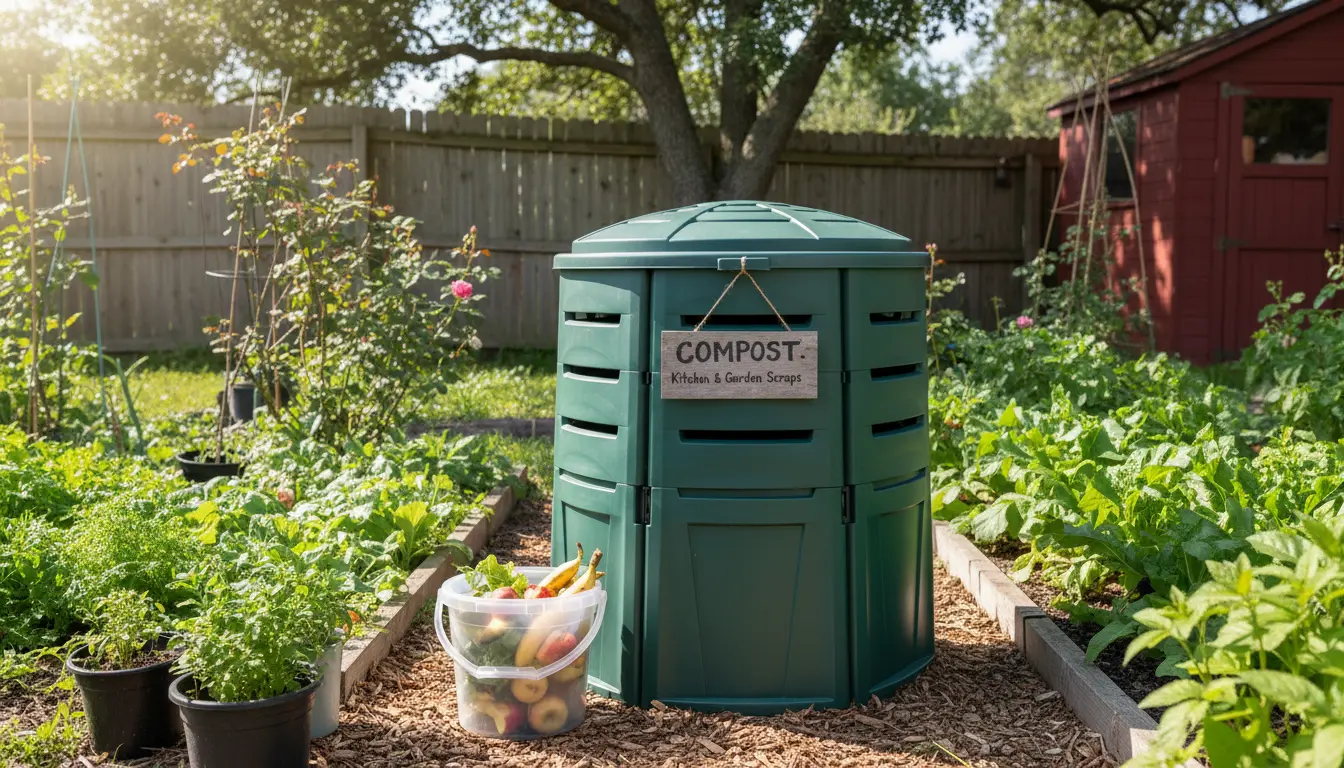
Home composting converts kitchen scraps and yard waste into nutrient-rich material you can use in the garden. This guide for beginners explains the basic steps, common problems, and tips to get usable compost within months.
Why Choose Home Composting for Beginners
Composting reduces landfill waste, lowers household emissions, and improves soil structure. For beginners, it’s a low-cost, effective way to recycle organic matter at home.

Start small and scale up as you learn. Even an apartment balcony can support a simple compost setup.
Essential Materials for Home Composting
To build a working compost pile, gather two main material types: greens and browns. Balance is the key to a healthy composting process.
What to Include
- Greens (nitrogen): fruit and vegetable scraps, coffee grounds, fresh grass clippings.
- Browns (carbon): dry leaves, shredded newspaper, cardboard, wood chips.
- Water: keep the pile as moist as a wrung-out sponge.
What to Avoid
- Meat, dairy, oils, and bones — these attract pests and slow decomposition.
- Diseased plants or invasive weeds — they can survive the process and spread.
- Pet waste from carnivores — it may contain harmful pathogens.
Basic Steps: How to Start Home Composting
Follow these practical steps to set up your first compost bin or pile. Adjust based on space and material availability.
- Choose a location: pick a well-drained, partially shaded spot near water access.
- Pick a container: use a tumbling composter, a stationary bin, or a simple pile with a wire enclosure.
- Build layers: start with coarse browns for drainage, then add alternating layers of greens and browns.
- Maintain moisture and aeration: water lightly and turn the pile every 1–2 weeks to add oxygen.
- Monitor progress: the pile should heat up in the center. Finished compost is dark, crumbly, and smells earthy.
Temperature and Turning: Key Composting Actions

Heat speeds decomposition. A hot compost pile reaches 131–160°F (55–70°C). For beginners, aim for a moderately warm pile by balancing materials and turning regularly.
Turning mixes oxygen and redistributes heat. If you use a tumbler, rotate it every few days. For open piles, a pitchfork turn every 1–2 weeks works well.
Signs Your Compost Is Working
- Warm center and steam in cool weather.
- Reduced volume as materials break down.
- Earthy smell — not sour or rotten.
Composting can divert up to 30% of household waste from the trash stream. Small changes reduce pickup volume and landfill methane emissions.
Troubleshooting Common Problems in Home Composting

Beginners often face issues like bad odor, slow decomposition, or pests. Solve each with simple adjustments.
Bad Smell
Cause: too many greens or excess moisture. Fix by adding dry browns, turning the pile, and letting it aerate.
Slow Breakdown
Cause: lack of nitrogen, too large particles, or low moisture. Fix by adding fresh greens, chopping materials into smaller pieces, and moistening the pile.
Pests
Cause: meat, dairy, or food scraps on the surface. Fix by burying scraps deeper, using a closed bin, or adding a layer of browns after each addition.
Using Finished Compost
Finished compost benefits lawns, flowerbeds, and vegetable gardens. Mix it into planting holes or top-dress around established plants.
Application examples:
- Vegetable beds: mix 1–2 inches into the top 6–8 inches of soil before planting.
- Established trees and shrubs: apply a 1–3 inch layer under the drip line and water in.
- Pots and containers: blend 10–20% compost into potting mixes for extra nutrients.
Small Real-World Case Study
Case: A two-person household in a suburban backyard started a 50-gallon tumbler in spring. They added weekly kitchen scraps and yard trimmings in a 2:1 brown-to-green volume ratio and turned the tumbler twice a week.
Results: In 3 months they harvested usable compost, reduced their weekly trash by one bin, and reported healthier vegetable yields the following season.
Quick Checklist for Composting Success
- Keep a balance of greens and browns (approximately 1:2 by volume).
- Shred or chop large pieces to speed decomposition.
- Maintain moisture like a wrung-out sponge.
- Turn regularly to provide oxygen.
- Avoid meat, dairy, and diseased plants.
Home composting for beginners is a practical, low-cost way to manage organic waste and improve garden soil. Start with a simple setup, learn by doing, and adjust as your materials and space change. With routine care, you can produce rich compost in a single gardening season.