
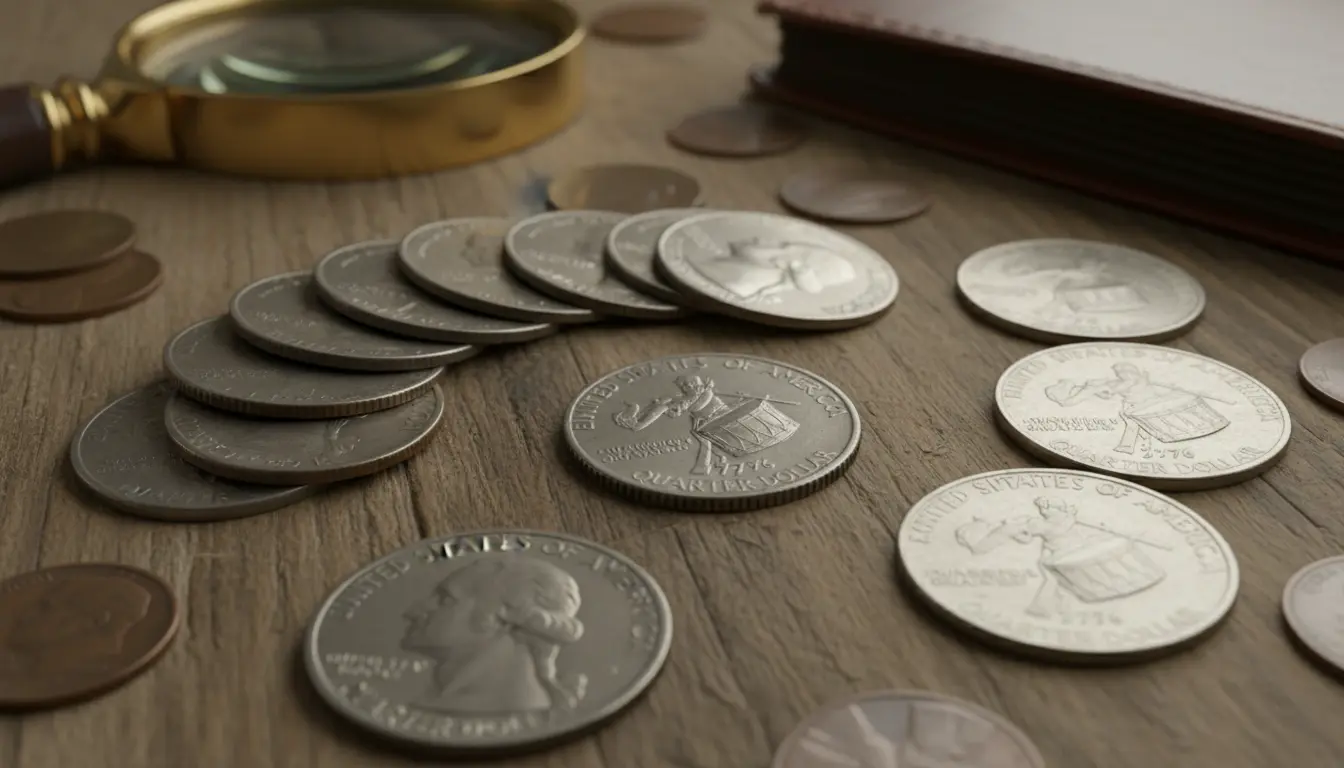
The 1976 Bicentennial quarter is one of the most recognized modern U.S. coins. Most were used in everyday transactions, but a few varieties and conditions have become collectible. This guide explains which 1976 Bicentennial quarters still circulating can be valuable and how to identify them.
Why some 1976 Bicentennial quarters gain value
The Bicentennial quarter was issued in huge quantities to mark the United States’ 200th anniversary. Value today depends on rarity, condition, metal content, and visible errors. Circulating examples that show uncommon features or unusually high grades are the ones collectors prize.

Typical factors that raise value include mint errors, proof or silver strikes, deep cameo proof finishes, and exceptional uncirculated grades. Knowledge and careful inspection are key when assessing a coin you find in circulation.
Top types to look for among 1976 Bicentennial quarters
Below are the most collectible and valuable varieties you might still spot in pockets or rolls.
- 1976-S Proof 40% Silver Quarters — Issued in mint sets and proof sets, these coins have a higher collector value because of the silver content and proof strike quality.
- High-grade Business Strikes (MS65+) — Uncirculated coins from Philadelphia or Denver that escaped wear can command premiums from collectors who focus on grade.
- Error Coins — Off-center strikes, broadstrikes, clipped planchets, and double die varieties can be significantly more valuable than typical pieces.
- Deep Cameo or Prooflike Finishes — Proofs with strong contrast (frosted devices against mirrored fields) are sought after by proof collectors.
- Attractive Toning or Unusual Surfaces — Some collectors pay a premium for eye-catching, natural toning when it enhances the coin’s appearance.
1976-S 40% Silver Proofs
The San Francisco mint produced special 40% silver proof Bicentennial quarters for collectors. These coins are easier to identify in sets, but finding one loose in circulation is rare and valuable to buyers who pay for silver content and proof grade.
Error types that add value

Error coins can appear in circulation because they escaped the mint or were later released. Examples include significant off-center strikes, dramatic die cracks, and clipped planchets. The more dramatic and verifiable the error, the higher the potential market value.
How to identify valuable 1976 Bicentennial quarters in circulation
Start with visual checks before using tools. Many valuable features are visible with the naked eye or a 10x loupe. Follow a simple step-by-step approach to avoid costly mistakes.
- Inspect the reverse for the Bicentennial design—a colonial drummer and dual date 1776-1976. Look for sharp, un-worn details on the drum and lettering.
- Check the mint mark (P, D, or S). An S typically indicates a proof or special strike, which may be silver if from a proof set.
- Examine the surfaces for unusual devices: doubled dies show doubling on letters or dates, while die cracks appear as raised lines.
- Use a loupe to confirm prooflike mirrors or cameo contrast. Proofs have frosted devices and mirrored fields under magnification.
- When in doubt about metal content, consult a dealer or use a non-destructive electronic tester; avoid heavy-handed tests that can damage the coin.
Practical grading tips
Accurate grading is essential to understanding value. Grades from MS60 to MS70 describe uncirculated business strikes, while PR or PF grades apply to proofs. Small differences in grade can mean large differences in market price.

Common grading signs include luster, strike sharpness, surface marks, and overall eye appeal. If a coin looks nearly flawless with strong luster, consider professional certification for best sale results.
How to sell or get a price estimate
Before selling, gather good photos from multiple angles and note any errors or unusual features. Use reputable price guides and recent auction results as a baseline. For higher-value pieces, professional grading and certification will typically increase buyer confidence and sale price.
Local coin shops can give a quick appraisal, while online auction sites and forums help gauge demand. Always compare offers and consider consignment through a specialist for rare or high-grade examples.
The 1976 quarter bears the dual date 1776-1976 on the reverse to celebrate the U.S. Bicentennial. That reverse, featuring a colonial drummer, was used on quarters, half dollars, and dollars that year.
Case study: Finding value in circulation
A casual collector who regularly checks change found a sharply struck 1976 quarter with mirror-like fields and strong luster. After photographing and researching the coin, the collector had it graded and confirmed as a high-end MS65 business strike. Certification increased buyer interest and led to a successful sale through an online auction platform.
This example shows how routine attention to detail and using professional services can turn a common date into a collectible item.
Quick checklist before you buy or sell
- Verify mint mark and strike type (business vs proof).
- Look for obvious errors or unusual toning.
- Compare to current price guides and recent auction results.
- Get a professional opinion for coins you believe are high value.
- Use secure, documented sale channels for higher-value coins.
Most 1976 Bicentennial quarters remain common in circulation, but careful inspection can reveal coins with premium value. Focus on silver proofs, high uncirculated grades, and compelling error coins when evaluating finds. With patience and the right verification, a valued 1976 Bicentennial quarter may still be waiting in everyday change.