
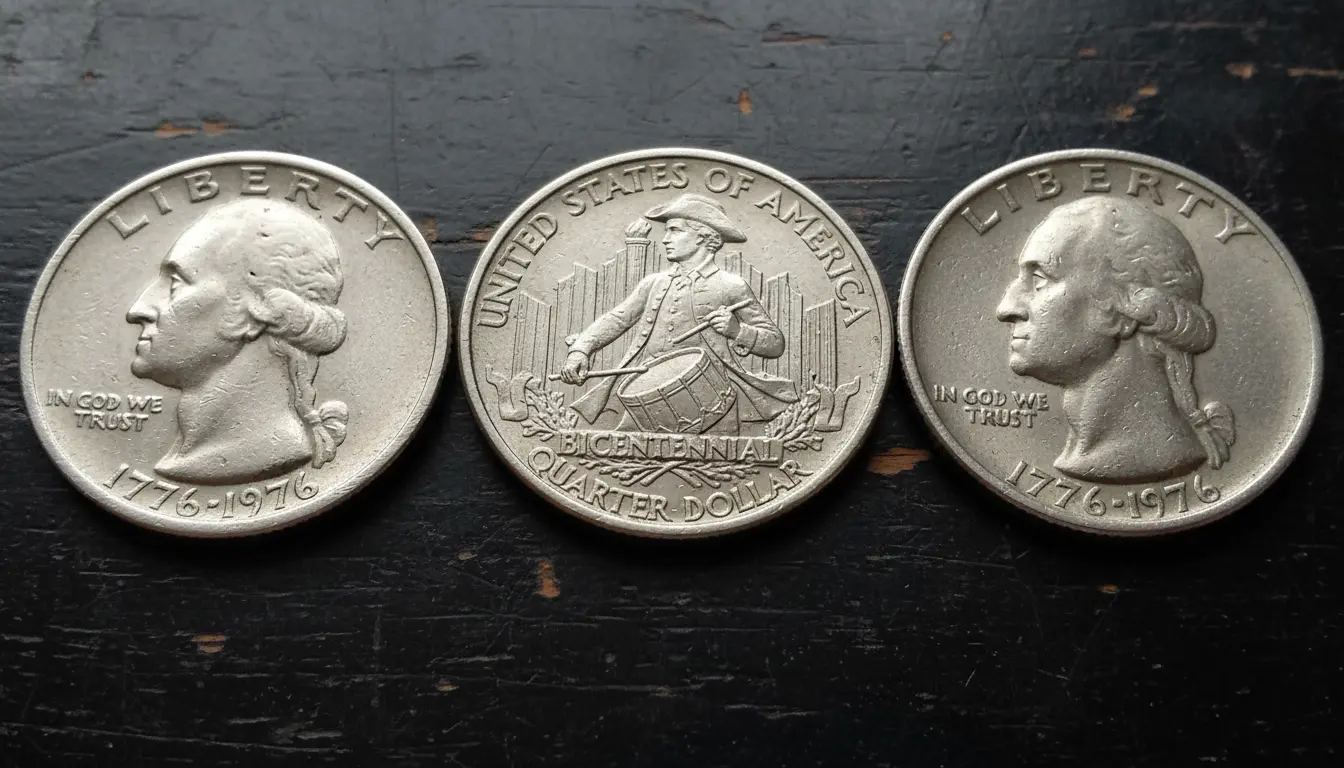
Overview of 1976 Bicentennial Quarters
The 1976 Bicentennial quarter was issued to celebrate the 200th anniversary of the United States. The reverse features a colonial drummer and a dual date 1776-1976, while the obverse retains the portrait of George Washington.
The majority of these quarters are common, but certain varieties and errors can be scarce and valuable. Knowing what to look for helps collectors separate ordinary pieces from rare finds.
How to Identify Rare 1976 Bicentennial Quarters

Start with simple checks: mint mark, edge, weight, and condition. These initial steps help narrow down coins that may require deeper inspection or grading.
Key identifiers include mint marks (D for Denver, S for San Francisco, and no mint mark for Philadelphia on struck business strike pieces), proof versus circulation strikes, and any visible die defects or unusual features.
Look for Errors and Varieties
Some common error types for the 1976 quarter include doubled dies, repunched mint marks, off-center strikes, die cracks, and planchet issues. Any of these can elevate a coin’s value if they are clear and significant.
- Doubled Die Obverse or Reverse: Look for doubling of letters, dates, or design elements.
- Repunched Mint Mark (RPM): Look closely at the mint mark under a loupe for evidence of re-punching.
- Off-Center Strikes: Measure how far the design is shifted from center; larger shifts are usually more valuable.
- Planchet Flaws: Missing metal or lamination problems can produce collectible examples.
Exchange Between Proof and Business Strikes

Proof coins (usually with an S mint mark) have mirror-like fields and frosted devices. Business strikes are matte and made for circulation. Proof errors and high-grade proofs can command premiums compared to similar business-strike errors.
Factors That Affect Value of Rare 1976 Bicentennial Quarters
Value depends on rarity, demand, condition, and documented provenance. Grading by a reputable service adds buyer confidence and often increases realized prices.
Market conditions and recent auction results influence value too. A coin in gem condition with a dramatic error will fetch more than a lightly flawed specimen of the same variety.
Condition and Grading

Use the 70-point grading scale: higher grades are exponentially more valuable for common dates, and even more so for rare varieties. Toning can be attractive or detrimental depending on buyer preference.
- Uncirculated (MS60–MS70): Look for luster and absence of wear.
- Proof (PR60–PR70): Mirror fields and frosted devices indicate a true proof.
- Certified vs Raw: Certification by PCGS, NGC, or ANACS usually increases liquidity and price.
How to Inspect and Authenticate a Rare 1976 Bicentennial Quarter
Work in good light with a 10x loupe and digital scale. Note the date, mint mark, edge, weight, and any visible anomalies on both sides of the coin.
Document findings with clear photos and, if the coin looks promising, consider third-party grading. Grading will confirm authenticity and preserve the coin.
Step-by-Step Inspection Checklist
- Check the date and mint mark position and style.
- Examine for doubling, planchet flaws, and die cracks.
- Weigh the coin to rule out altered or counterfeit planchets.
- Compare against reference images in specialist guides or online databases.
- If it matches a known variety or shows a novel error, photograph both sides for records.
The 1976 quarter was struck in clad composition for circulation and in special silver-clad for some proof sets. Silver-clad proof pieces are heavier and have a different look than the common copper-nickel coins.
Real-World Example: Finding Value in a Flea Market Find
A collector purchased a small lot of mixed change at a flea market and discovered a 1976-D quarter with a clear die crack and attractive luster. The coin was lightly circulated but the error was obvious.
After submitting the coin to a grading service, the specimen was authenticated and sold online to a specialist dealer. The case shows how basic inspection and certification can turn a low-cost find into a saleable collectible.
Where to Buy, Sell, or Get Graded
Good options include reputable auction houses, specialist dealers, coin shows, and established online marketplaces. For high-value or unusual coins, prioritize dealers with positive reviews and transparent policies.
Use certified grading services such as PCGS, NGC, or ANACS for authentication. Also consult dedicated reference books and online databases for up-to-date census and population reports.
Practical Tips for Sellers
- Get a professional grade before listing high-value coins.
- Provide high-quality photos with consistent lighting and scale.
- Disclose any known damage, cleaning, or alterations.
- Price using recent auction results for similar graded examples.
Conclusion: Smart Collecting of Rare 1976 Bicentennial Quarters
Focus on careful inspection, documentation, and realistic valuation. Not every 1976 quarter is rare, but a small share of errors and high-grade proofs can be rewarding to collectors.
Use reputable references, verify with grading services, and keep records of provenance to maximize the potential of any rare 1976 Bicentennial quarters you encounter.