
What to Expect from This Rare Coins Guide
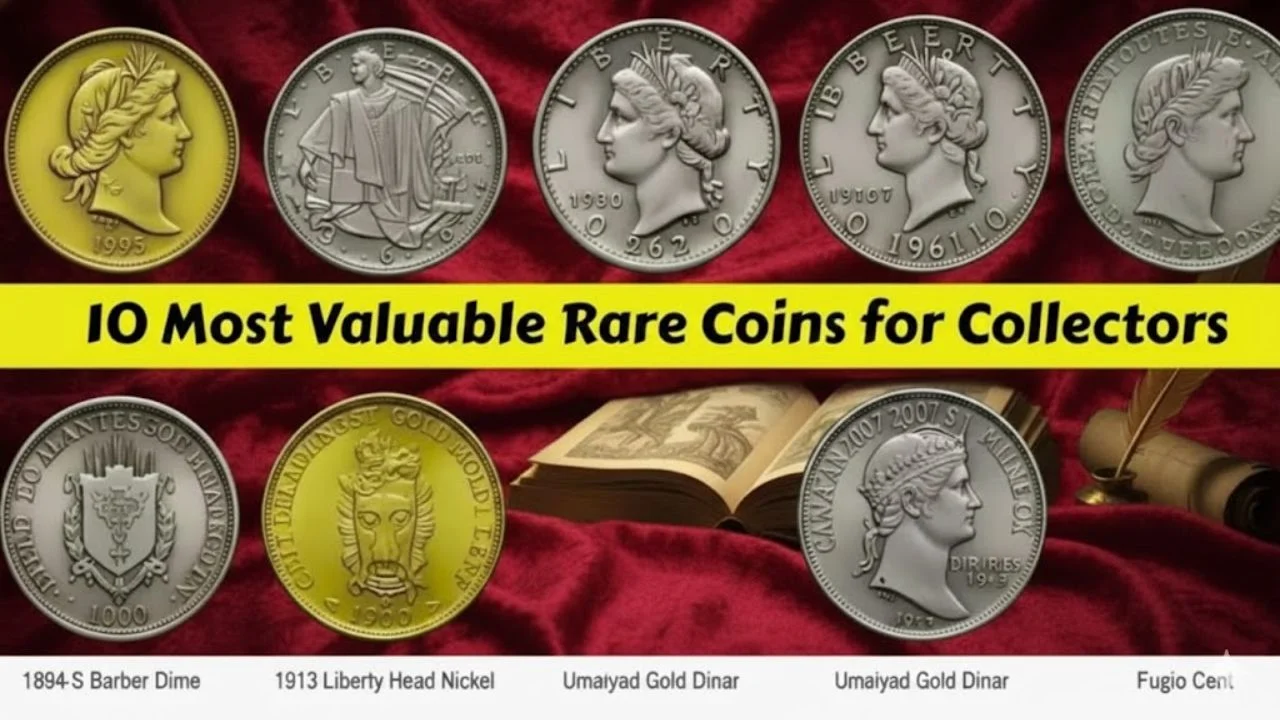
This guide lists 10 rare coins every collector dreams of and explains why they matter in 2025. It focuses on practical details collectors need: rarity factors, authentication steps, and storage tips.
Use the list to prioritize research, condition checks, and budgeting. Short sections make it easy to reference while buying or grading coins.
10 Rare Coins Every Collector Dreams Of

Below are ten historically significant and highly collectible coins. Each entry explains the rarity, what to look for, and how they appear on the market.
1. 1933 Saint-Gaudens Double Eagle — Rare Coin
One of the most famous 20th-century rarities, known for its beauty and legal history. Most 1933 Double Eagles were melted, making surviving examples extremely scarce.
- Key traits: brilliant surfaces, detailed relief.
- Market notes: highly regulated provenance and legal paperwork required for sale.
2. 1794 Flowing Hair Silver Dollar — Rare Coin
Considered by many as the first U.S. silver dollar struck for circulation. Extremely limited surviving specimens and wide value swings based on condition.

Look for original surfaces and clear strike detail around the eagle and lettering.
3. 1804 Silver Dollar (Class I) — Rare Coin
Produced as diplomatic gifts rather than regular issues. Known as the “King of American Coins” among numismatists because of its scarcity and history.
- Authentication is critical; many later restrikes exist.
4. 1913 Liberty Head Nickel — Rare Coin
Only five examples are known and each commands major attention at auction. Condition and provenance drive value more than seen on typical coins.
5. 1787 Brasher Doubloon — Rare Coin

A privately made gold coin from New York, tied to early U.S. monetary history. Very few pieces survive, often in institutional collections.
6. 1894-S Barber Dime — Rare Coin
Just 24 were struck at San Francisco in 1894, and even fewer survive today. High-grade pieces are among the most desired U.S. small-denomination rarities.
7. 1937-D Three-Legged Buffalo Nickel — Rare Coin
A striking error that produced a variant with significant collector interest. Less rare than gold rarities but highly sought in quality grades.
8. 1907 Ultra High Relief Double Eagle — Rare Coin
Early Saint-Gaudens pattern with dramatic relief. Original high-relief strikes are scarce and command premium prices compared to later restrikes.
9. Edward VIII Pattern Florin (1937) — Rare Coin
Patterns struck during Edward VIII’s brief reign are extremely limited. Collectors of British coins prize these for historical significance and rarity.
10. 1792 Birch Cent — Rare Coin
A transitional early U.S. cent, sometimes called a pattern. Surviving pieces are held by museums and top collectors, making market appearances rare.
How to Authenticate Rare Coins in 2025
Authentication combines visual inspection, measurement, and paperwork. Use a loupe, digital calipers, and weigh the coin to check against known standards.
Third-party grading services (PCGS, NGC) add credibility. For extremely high-value pieces, request provenance records and prior auction catalogs.
Where to Buy and What to Avoid
Buy from reputable dealers, auction houses, and certified online marketplaces. Ask for a written return policy and authentication guarantees.
Avoid private sales without documentation or coins offered at prices that look too good to be true. Scams and counterfeits are common with high-value rarities.
Storing and Insuring Rare Coins
Proper storage preserves value. Use inert holders, archival flips, or sealed slabs from grading services to protect surfaces.
- Temperature and humidity control reduce corrosion risk.
- Consider a safe deposit box or home safe for high-value pieces.
- Insure rare coins under a collectibles policy with appraised values.
Practical Tips for New Collectors of Rare Coins
Start by specializing: era, denomination, or country. Specialization helps you learn spotting details and market trends faster.
Keep a buying checklist: provenance, grade, photographic condition, seller reputation, and return policy. This reduces impulsive purchases.
The 1933 Saint-Gaudens Double Eagle reached nearly $19 million at auction in 2021, setting one of the highest prices for a single U.S. coin. Legal and provenance issues around that coin make it unique among high-value sales.
Small Real-World Case Study: The 1933 Double Eagle Sale
In a high-profile auction, a certified 1933 Saint-Gaudens Double Eagle sold for approximately $18.9 million. The sale required extensive provenance documentation and legal clearance.
Takeaway: Even if you find a rare coin, expect lengthy verification steps and possible legal paperwork before the piece can be sold or exported.
Final Checklist for Collecting Rare Coins in 2025
- Verify provenance and grading certificates.
- Use reputable dealers and auction houses.
- Store in archival holders and insure high-value items.
- Specialize to learn a market segment thoroughly.
- Keep records of purchases, photos, and appraisals.
Collecting rare coins is rewarding but requires careful research and risk management. Use this guide as a practical starting point for prioritizing pieces and making informed purchases in 2025.