
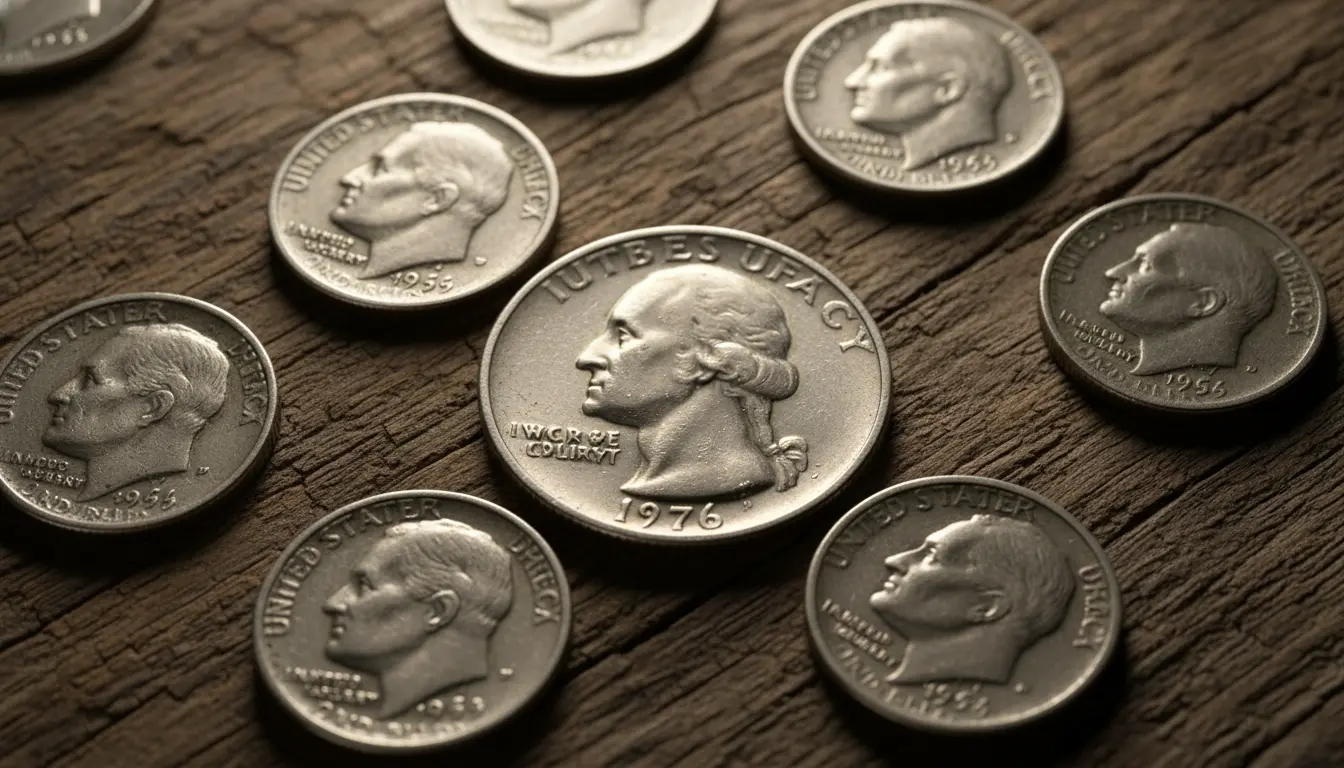
Understanding Rare Dimes
Rare dimes can be valuable because of age, mint errors, low mintage, or unique varieties. Collectors look for condition, strike quality, and any anomalies that make the coin stand out.
Common series that produce rare dimes include Barber dimes (1892–1916), Mercury dimes (1916–1945), and Roosevelt dimes (1946–present). Each series has specific dates and mintmarks to watch for.
Key dime varieties to check
- Early mint dates and low mintage years (example: early Barber dimes)
- Well-known mintmarks like S (San Francisco) and CC (Carson City)
- Error coins: doubled die, off-center strikes, clipped planchets
- Prooflike or deep cameo finishes on proof issues
Identifying a Bicentennial Quarter

The Bicentennial quarter was struck in 1975–1976 to celebrate the United States Bicentennial. These quarters have a dual date (1776–1976) and a special reverse design featuring a colonial drummer.
Though common in circulation, some Bicentennial quarters are collectible because of errors, special minting issues, or proof finishes. Knowing what to look for helps separate common pieces from valuable examples.
Common Bicentennial Quarter features and errors
- Dual date 1776–1976 on the obverse
- Reverse with a colonial drummer and 13 stars
- Error types: double die obverse, doubled rims, off-center strikes, and planchet defects
- Proof and silver-clad collector pieces (40% silver proofs) are more valuable than clad circulation strikes
How to Inspect and Grade Your Coins
Start with a careful visual inspection under good light and 10x magnification. Look for contact marks, luster, and strike detail. Avoid cleaning coins, as cleaning usually lowers value.

Use a consistent grading guide to assign a preliminary grade. For serious valuation, consider third-party grading services like PCGS or NGC for high-value coins or potential errors.
Simple inspection checklist
- Identify the year and mintmark
- Check for obvious errors or doubling
- Assess surface condition and luster
- Compare with reference images or price guides
Valuing Rare Dimes and a Bicentennial Quarter
Value depends on rarity, condition, and demand. A common worn dime might be worth face value, while a rare date in high grade can fetch significant premiums.
For Bicentennial quarters, typical circulated examples are common, but errors and silver proof quarter sets are in demand among collectors.
Practical steps to estimate value
- Consult up-to-date price guides and auction records
- Search completed sales on auction sites for similar grades
- Get a professional opinion for unusual errors or high-grade coins

Many Bicentennial quarters were produced in both clad and 40% silver proof formats. The silver proofs were sold in special mint sets and are more valuable than the common circulation-clad strikes.
When to Get a Coin Graded
Submit a coin for grading when the coin may be worth significantly more sealed in a holder, or when you have an error or an unusually high-grade piece. Grading provides authentication and can increase buyer confidence.
Consider the submission cost versus expected increase in value. For most common coins under $50, grading may not be cost-effective.
Tips before sending a coin to grading
- Document the coin with good photos and notes
- Do basic research to ensure the coin is a candidate for grading
- Choose a reputable service and the appropriate service level
Case Study: Finding Value in Pocket Change
A collector checked a jar of mixed coins and found a 1976 Bicentennial quarter with a strong doubled die on the obverse. The coin looked unremarkable at first glance, but under 10x magnification the doubling was clear.
After researching similar errors and submitting the coin to a grading service, the slabbed doubled die quarter sold at auction for several times the typical value of a circulation Bicentennial quarter. Small effort in inspection and research turned an everyday coin into a valuable find.
Practical Selling and Buying Tips
If you plan to sell, get multiple opinions: local dealers, online auction platforms, and specialist forums. Describe the coin precisely and include clear photos.
When buying, insist on return policies, third-party grading for high-value purchases, and transparent provenance for rare pieces.
Checklist for safe transactions
- Ask for grading certificates for expensive coins
- Get multiple price quotes from different sources
- Use trusted platforms or dealers for high-value trades
Understanding rare dimes and a Bicentennial quarter comes down to careful inspection, researching known varieties, and choosing when to grade or sell. With basic tools and reliable references, hobbyists can identify promising coins and make informed decisions.