
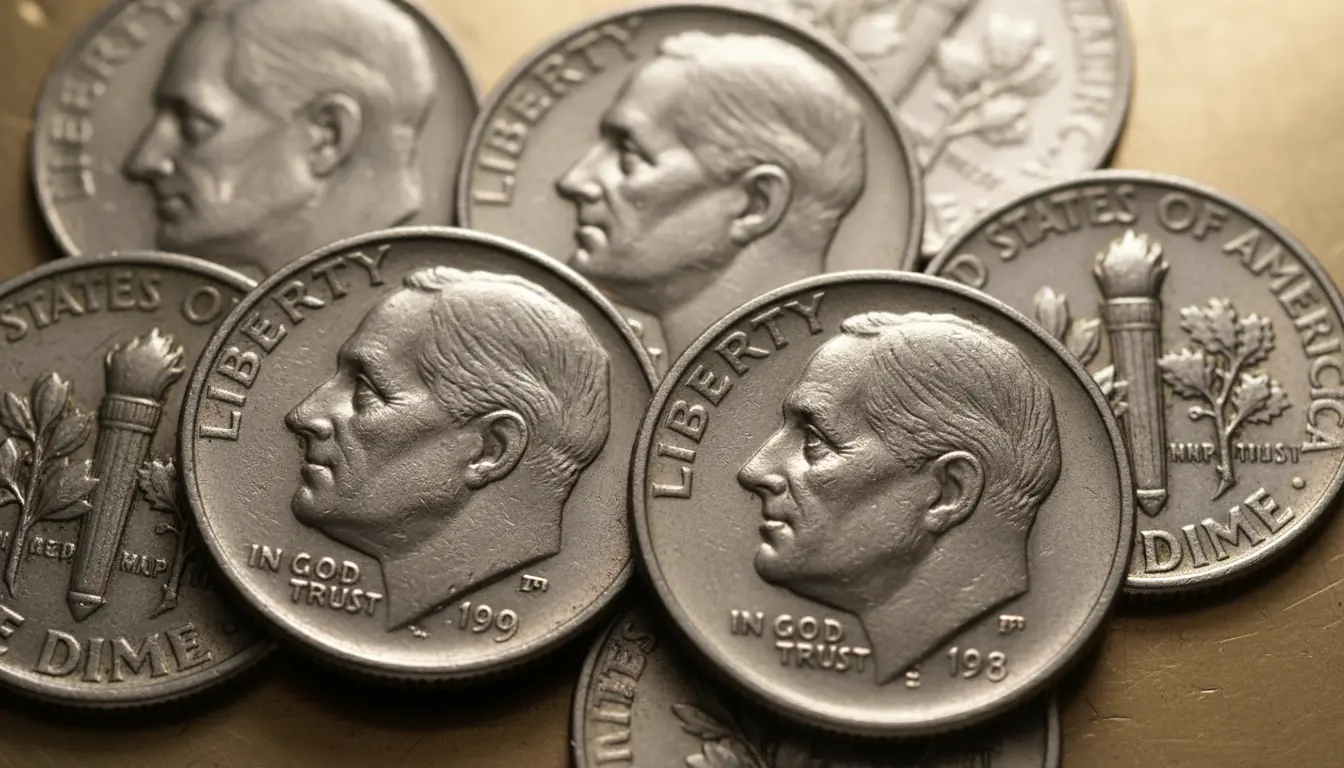
Why some Roosevelt dimes are worth more than face value
Roosevelt dimes were issued beginning in 1946 and continue to circulate today. Most dimes are worth face value, but some carry extra value due to metal content, low mintage, high condition, or striking errors. Knowing what to look for lets you spot potential finds in pocket change or at the bank.
Categories of the most valuable Roosevelt dimes still in circulation
When hunting for valuable Roosevelt dimes, focus on four broad categories. Each category affects how dealers and collectors value a coin.
- Pre‑1965 silver dimes (90% silver) — intrinsic metal value provides a baseline worth above face value.
- Low mintage dates and specific mint marks — scarcity at certain mints raises collector interest.
- High grade or uncirculated specimens — sharp detail and original luster can multiply value.
- Error coins and varieties — doubled dies, repunched mint marks, and off‑center strikes often attract premiums.
Key dates and mint marks to watch in Roosevelt dimes

Many valuable Roosevelt dimes are collectible because fewer were produced or because surviving coins in good condition are rare. Commonly watched dates include mid‑20th century issues from certain mint locations.
Examples of what to inspect on any dime:
- Date legibility — the date should be clear and unabraded.
- Mint mark — look for small letters near the torch (D, S). These can dramatically affect rarity.
- Surface condition — scratches, wear, and cleaning reduce value.
Pre‑1965 silver dimes
All Roosevelt dimes dated 1946 through 1964 contain 90% silver. Even common circulated silver dimes have value at or above the silver melt price, which fluctuates. For collectors, high‑grade silver dimes or those with low mintages are especially desirable.
Errors and varieties that increase value

Error coins and notable varieties often command collector premiums. Look closely for doubling, misalignment, clipped planchets, or repunched mint marks. Even small errors can be worth tens to hundreds of dollars depending on rarity and eye appeal.
- Doubled die obverse — doubling shows a shadowed repeat of letters or numbers.
- Repunched mint mark (RPM) — evidence the mint mark was punched more than once.
- Off‑center strikes — portions of the design missing from the rim can be collectible.
Roosevelt dimes from 1946–1964 are 90% silver. That silver content alone often makes these coins worth more than ten times face value when silver prices rise.
How to examine a Roosevelt dime without damaging it
Handle coins by the edges and use a loupe or a smartphone macro to inspect detail. Avoid cleaning coins — cleaning destroys collector value. If you think a coin might be valuable, put it in a soft flip or coin capsule for protection.
Quick checklist for a potential find
- Is the date between 1946 and 1964? If yes, it is 90% silver.
- Is there a mint mark (D or S) and is the date clear?
- Do you see doubling, repunching, or off‑center strikes?
- Does the coin have strong detail and original luster?
What to do if you find a rare Roosevelt dime

First, don’t clean or scrub the coin. Take good photos with a neutral background and use a loupe to record identifying features. Next, get a preliminary opinion from a reputable coin dealer or local coin club. For high‑value finds, consider professional grading from a major service before selling.
Remember that professional grading adds cost, so reserve grading for coins that a dealer estimates are worth significantly more than the grading and shipping fees combined.
Where to sell or get a Roosevelt dime graded
Options include local coin shops, online auction platforms, and professional grading services such as PCGS or NGC. Each option has tradeoffs: local shops pay faster but may give lower prices, while auctions and grading can reach collectors willing to pay top dollar.
- Local coin shop — quick sale, immediate cash, negotiate but expect dealer margin.
- Online auction — reach collectors worldwide; account for seller fees and shipping.
- Professional grading — best for high‑value coins; increases buyer confidence.
Case study: A small real‑world find
A collector cleaned out an old coin jar and pulled a 1950s dime with a clear S mint mark and unexpected sharp detail. They took photos and visited a local dealer who confirmed it was a silver Roosevelt dime in above‑average condition. After submitting photos to an online forum and getting a second opinion, the collector sold the coin to a buyer who pays premiums for nicer circulated silver dimes. The seller used the proceeds to buy more coin books and supplies for the hobby.
Final tips for finding valuable Roosevelt dimes in circulation
- Always check pocket change and old coins from banks for 1946–1964 dates.
- Learn to spot common errors and mint marks with a loupe or phone camera.
- Join a local coin club or online community to get quick feedback on finds.
- When in doubt, get a professional appraisal before selling or cleaning.
With some practice and the right eye for mint marks, dates, and errors, you can spot Roosevelt dimes that are worth far more than ten cents. Protect interesting finds, document them, and seek professional advice for high‑value coins.