
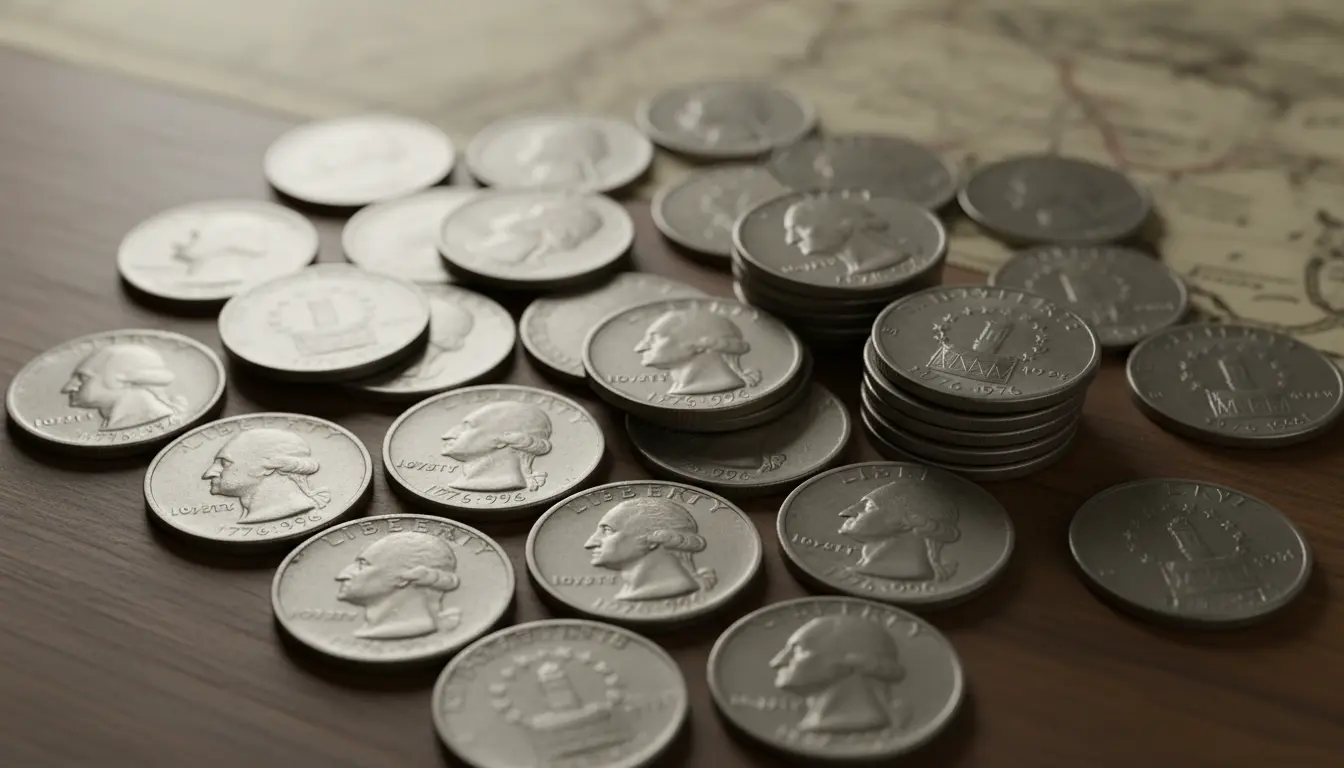
Why 1976 Bicentennial Quarters Still Circulate in 2026
Millions of Bicentennial quarters were struck for the 1976 U.S. Bicentennial, so many remain in pockets and coin rolls. Most are worth face value, but certain varieties and conditions attract premiums from collectors.
This guide explains which 1976 Bicentennial quarters are most valuable in 2026, how to spot them, and what to do if you find one.
Most Valuable 1976 Bicentennial Quarters in 2026

Value depends on mint, finish, grade, and errors. These categories describe the types of 1976 Bicentennial quarters that typically bring higher prices.
- 1976-S 40% Silver Proof Quarters — Issued for proof sets, these contain 40% silver and generally fetch higher prices than clad circulation pieces.
- High-Grade Mint State Coins (MS65 and above) — Uncirculated examples with strong luster and minimal contact marks can be worth significantly more than face value.
- Proof Coins with Deep Cameo — Proofs that display a strong contrast between devices and fields are popular with collectors.
- Error Coins (off-center, broadstrike, clipped planchet) — Dramatic errors can be rare and desirable. The degree of the error influences price.
- Notable Variety Strikes — Any documented doubled die or die break that has collector interest can increase value.
1976 Bicentennial Quarters: Which Mint Marks Matter
The bicentennial quarters were struck at Denver (D), San Francisco (S), and Philadelphia (no mint mark for circulation coins). San Francisco issued the silver proofs, which are the most valuable by metal content and collectible interest. Always check the small mint mark on the coin to identify origin.
Key Errors and Varieties of 1976 Bicentennial Quarters
Error coins are often the easiest way to get above-average value from a circulating Bicentennial quarter. Common error types include off-center strikes, broadstrikes, clipped planchets, and striking doubling.
- Off-Center Strikes — The more off-center, the rarer and more valuable the coin can be. Moderate off-center strikes may sell for tens to a few hundred dollars.
- Broadstrikes — Coins struck without the normal collar can appear larger and are collectible.
- Clipped Planchets — Missing a curved section of the edge; value depends on size and appeal.
- Struck Through or Doubled Die — Subtle doubled die varieties are harder to spot but can add value to the right collectors.
How to Spot the Most Valuable 1976 Bicentennial Quarters

Use a magnifier and good light when examining quarters. Look for mint marks, unusual edges, misalignments, and differences in metal color. A silver quarter will have a different ring test sound than a clad quarter.
Key inspection steps:
- Check the date area and obverse for a small mint mark (D or S) near Washington’s bust.
- Examine the edge: full reeding should be consistent; missing reeding suggests an error or heavy wear.
- Use a 10x loupe to inspect for doubled dies, die cracks, or contact marks.
- Weigh the coin if you suspect a silver proof — the 40% silver proofs have slightly different weight characteristics than clad pieces.
Grading Basics for 1976 Bicentennial Quarters
Professional grading adds market confidence. Look for surface luster, strike quality, and absence of marks. Coins graded MS65 or higher, or proofs graded PF65 or higher, generally attract the most interest for standard modern issues.
Protecting and Selling Valuable 1976 Bicentennial Quarters

Never clean a coin; cleaning lowers value. Place suspected valuable coins in soft flips or coin holders and avoid handling by the face. If you believe a coin is rare, consider having it authenticated and graded by a reputable service before selling.
- Reputable grading services: NGC, PCGS, ANACS.
- Sell through: auction houses, specialist dealers, or established online marketplaces with buyer protections.
- Get multiple opinions if a coin looks unusual before sending it for grading.
Real-World Case Study: Finding Value in Circulation
A small-town cashier found a 1976-S proof quarter mixed into a box of circulated coins. It appeared slightly silver and sharper than surrounding coins. After sending it to a local dealer for authentication, it was confirmed as a 40% silver proof and graded PF63.
The coin later sold to a collector for several times face value. The key lesson: small signs like silver tone and sharper detail often point to higher value and justify further investigation.
Practical Tips for Everyday Searches
If you search change or rolls, focus on these practical tips. Handle coins gently and use a loupe or smartphone macro lens to check details quickly.
- Check rolls from banks and coin dealers — errors and proofs occasionally slip into circulation.
- Listen for a different ring — silver coins often sound brighter.
- Join local clubs or online forums to compare notes and learn about recent sales and values.
Final Steps If You Find a Potentially Valuable Quarter
1) Record the coin (photos, notes). 2) Protect it from further handling. 3) Get a professional opinion before selling. These steps maximize value and reduce the risk of missed opportunity.
1976 Bicentennial quarters remain common, but with attention and a little knowledge, circulating finds can still yield surprises in 2026.