
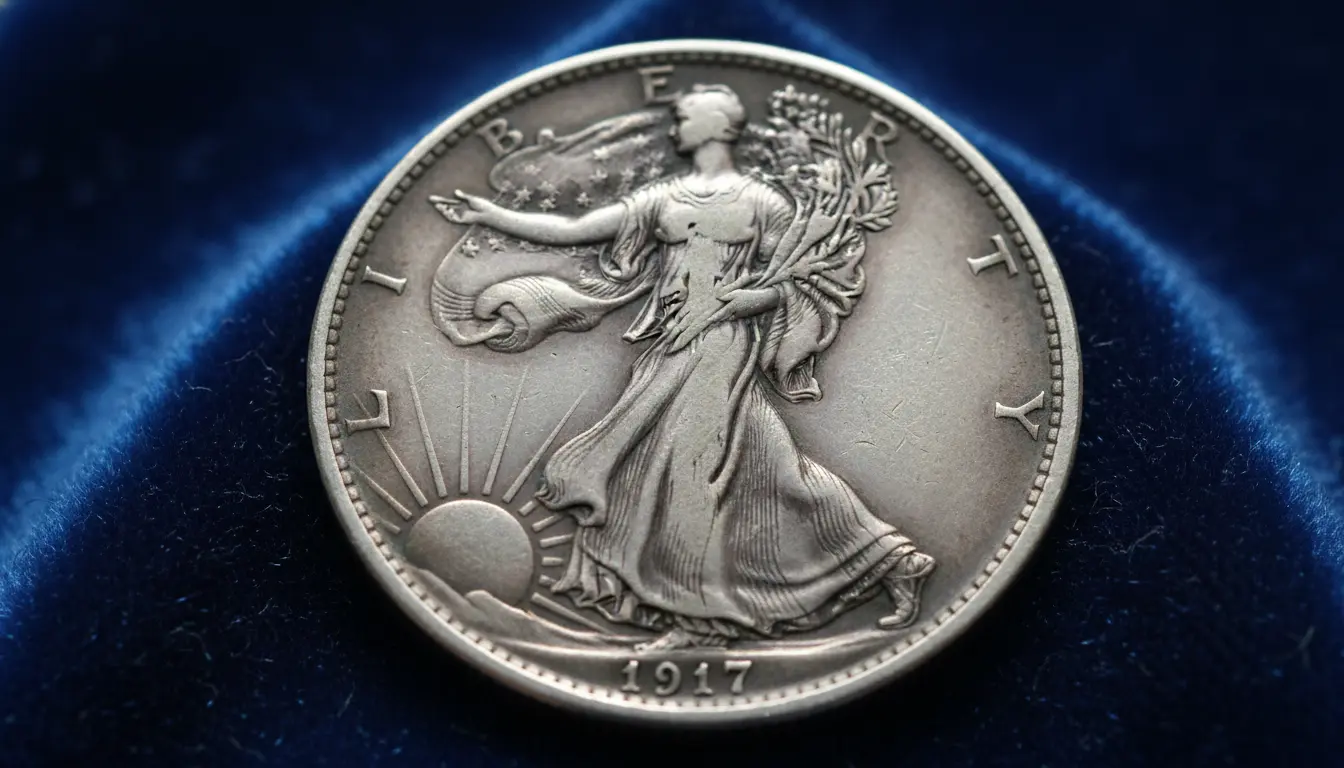
How much is a 1917 Walking Liberty Half Dollar worth?
The 1917 Walking Liberty Half Dollar is a key early coin in the Walking Liberty series. Values vary widely depending on mint, grade, and whether the coin has any rare varieties or exceptional eye appeal.
What affects 1917 Walking Liberty Half Dollar value
Three main factors determine value: mintmark and mintage, condition (grade), and rarity or variety. Certified grades from PCGS or NGC strongly influence auction prices.
1917 Walking Liberty Half Dollar values by mint

In 1917 the U.S. struck Walking Liberties at Philadelphia (no mintmark), Denver (D), and San Francisco (S). Typical value ranges for 1917 coins look like this.
- 1917 (Philadelphia, no mintmark): Circulated examples commonly trade for $20–$60. Choice AU and low uncirculated grades range $100–$600. High-end certified MS65 specimens can reach several thousand dollars.
- 1917-D (Denver): Often slightly scarcer in higher grades than Philadelphia. Circulated pieces sell for $20–$80. Higher mint state coins (MS63–MS65) can go from $500 to several thousand dollars depending on strike and luster.
- 1917-S (San Francisco): The 1917-S can command a premium in top grades. Circulated values are similar to other mints, but exceptional mint-state or prooflike coins can reach much higher prices.
Where six-figure prices come from
Most 1917 halves sell for modest sums, but exceptional certified specimens or rare varieties can command much more. Ultra-high grades (MS67 or better) and pieces with outstanding eye appeal or extreme rarity may reach six-figure prices. In the marketplace, top examples have been known to reach prices up to about $175,000.
How to identify valuable 1917 Walking Liberty halves
Start by checking the mintmark on the reverse near the rim. San Francisco coins will show an “S” and Denver coins show a “D”. Philadelphia coins have no mintmark.
- Look for sharp strike and full details on Liberty’s gown and the eagle’s feathers. Strong strikes and full detail increase value.
- Check for original luster. Unimpaired, attractive surfaces fetch higher prices than cleaned or scratched coins.
- Watch for rare die varieties or prooflike surfaces. These are often noted by graders and increase auction interest.
Authentication and grading

Have high-value candidates slabbed by a reputable grading service like PCGS or NGC. Certification verifies grade and protects buyers and sellers. Slabbed coins are easier to sell and command higher, more consistent prices.
Buying and selling tips for 1917 Walking Liberty Half Dollars
Whether you are buying to collect or invest, follow pragmatic steps to reduce risk and preserve value.
- Buy slabbed coins when possible. Certification avoids many disputes about condition.
- Request high-resolution images or examine coins under magnification before purchase.
- Insure shipments and use tracked, signature-required delivery for high-value coins.
Storage and care
Do not clean coins; cleaning damages surfaces and reduces value. Store coins in inert holders or airtight capsules and keep them in a stable, dry environment away from direct sunlight.
Common price examples
Below are reasonable, illustrative price bands to help you set expectations. These are general ranges and individual coins may trade above or below them depending on specifics.
- Good to Fine (circulated): $20–$80
- About Uncirculated to Low Uncirculated (AU to MS60): $80–$800
- Mid to High Mint State (MS63–MS65): $800–$10,000
- Exceptional Mint State / Rare Variety (MS66+ or rare die state): $10,000–$175,000
Case study: Small real-world example
A private collector bought an unattributed 1917-D in an estate lot for $125. The coin appeared about AU50 and had attractive remaining luster. The collector submitted it to an independent grader.
After certification as AU58 with good eye appeal, the collector listed it with clear photos and sold it for $1,250 within a month. The grading and better listing presentation increased the realized price nearly tenfold.
Lessons from the case study
Accurate grading and good images matter. Small investments in proper authentication and marketing can produce outsized returns for collectible coins with the right characteristics.
Final checklist before buying or selling
- Confirm mintmark and inspect for strike quality.
- Avoid coins with obvious cleaning, scratches, or rim nicks unless priced accordingly.
- Consider third-party grading for coins you expect to be valuable.
- Keep realistic expectations: only a tiny fraction of 1917 halves will reach five- or six-figure values.
If you suspect you own an especially high-grade or unusual 1917 Walking Liberty Half Dollar, seek advice from a reputable dealer or submit the coin to a grading service. With careful identification and proper presentation, you can maximize the coin’s market potential.