
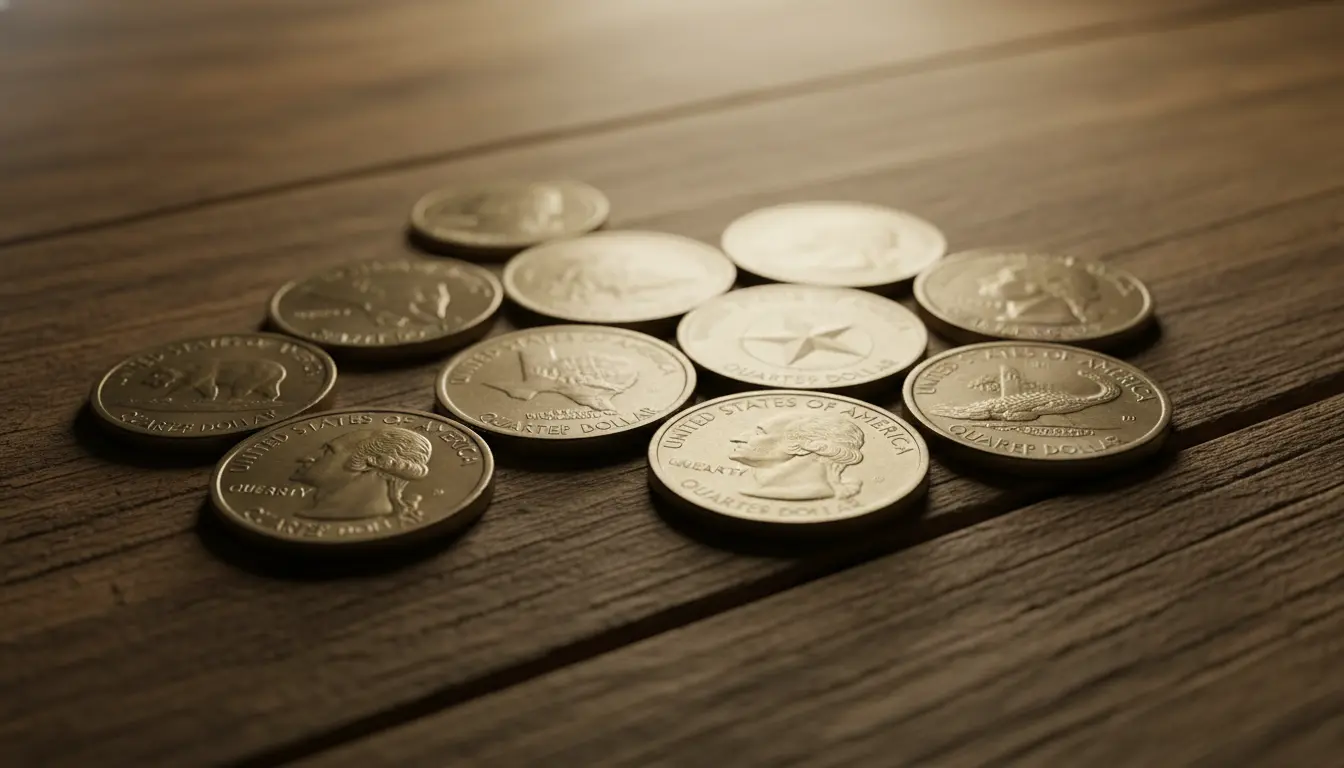
The State Quarters program (1999–2008) reshaped modern U.S. coin collecting. Over an 11-year span collectors and dealers watched values rise and fall as supply, demand, and market conditions changed.
Why State Quarters Became Popular
State Quarters were the first circulating coins to combine a consistent obverse with changing reverse designs for each state. The program invited casual collectors and families to collect a set of 50 designs.

Low face value, broad publicity, and easily recognizable designs created immediate demand. That demand pushed some coins above face value in aftermarket sales and on online platforms.
Tracking 11 Years of Value Changes for State Quarters
Values over the 11-year market window showed three broad phases: initial hype and premiums, normalization and correction, and steady niche interest. Understanding those phases helps set realistic expectations for collectors.
Phase 1: Hype and Premiums
Early releases often sold at small premiums to eager collectors. Special releases such as mint sets and silver proofs carried higher prices because they were marketed as limited or special.

Retail premiums were strongest in the first months after release, and online auction prices sometimes spiked for uncirculated rolls or proof sets.
Phase 2: Market Correction
As supply increased and many collectors completed sets, prices normalized. Circulating examples returned to near-face values for most dates and mintmarks.
Specialty items — errors, low-mintage issues, and high-grade examples — retained or increased value. The general market settled into realistic pricing based on condition and rarity.
Phase 3: Long-Term Niche Interest

Over the longer term a stable collector base drove consistent interest in high-grade and unusual pieces. Key factors included the coin’s condition, provenance, and specific design popularity.
Some state issues that had lower mintages or recognized errors appreciate modestly over time compared with common circulation strikes.
What Drives State Quarter Values
Several specific factors determine the market value of any State Quarter. Collectors should evaluate coins against these criteria before buying or selling.
- Mintage and survival rate — fewer coins and lower availability increase value.
- Condition/grade — high-grade uncirculated coins command premiums.
- Errors and varieties — striking errors, doubled dies, or unique planchet issues are sought after.
- Type and finish — proof and silver proof versions are more valuable than circulation strikes.
- Demand and trends — collector interest can change with media attention or anniversaries.
How to Track and Evaluate Market Trends
Collect accurate sale data from several sources to spot trends. Combine auction results, dealer price guides, and marketplace listings for a full view.
Keep these practical steps in mind:
- Use completed sales data rather than listed prices to see real market values.
- Track prices by grade — an MS65 sale tells a different story than an MS68 sale.
- Follow specialty forums and trusted coin dealers for emerging interest in specific varieties.
- Watch economic indicators — collector hobby spending can tighten in downturns.
Real-World Example: A Small Case Study
In 2001 a regional release coin saw immediate interest. Early on, uncirculated rolls sold for 10–20% above face value on auction sites. By 2005, circulating strikes were widely available and rolled back to near face value.
However, registered high-grade examples and a handful of verified doubled-die error coins continued to sell at 2–3 times the price of standard uncirculated pieces. A dealer who bought error examples early and held them for five years realized a significant percentage gain compared with common pieces.
Practical Tips for Collectors and Investors
If you collect State Quarters for value, follow a disciplined approach. Decide whether you collect by state, design type, grade, or errors and stick to that plan.
- Buy the best condition you can afford — condition is a primary value driver.
- Document provenance and any certification to help future resale.
- Avoid paying hype prices for common dates; compare multiple sources first.
- Consider storage and conservation — proper holders preserve grade and long-term value.
Some State Quarter proof and silver proof coins were struck with special finishes that can make them worth many times a circulation strike of the same date and design.
Examples of Common Pitfalls
New collectors sometimes buy based on emotion or limited information. Common mistakes include overpaying for circulated coins, assuming all errors are valuable, and ignoring certification and grading standards.
To avoid these errors, verify sales history, consult price guides, and when possible buy from reputable dealers or auctions that provide return policies.
Conclusion: Long-Term View on State Quarters
Over 11 years the State Quarters market showed that mass-marketed series can generate initial excitement but long-term value is concentrated in condition, rarity, and verified varieties.
Collectors who research, track market data, and focus on quality are most likely to see appreciation or at least preserve value. Treat State Quarters as both a hobby and a market where information and discipline produce the best results.