
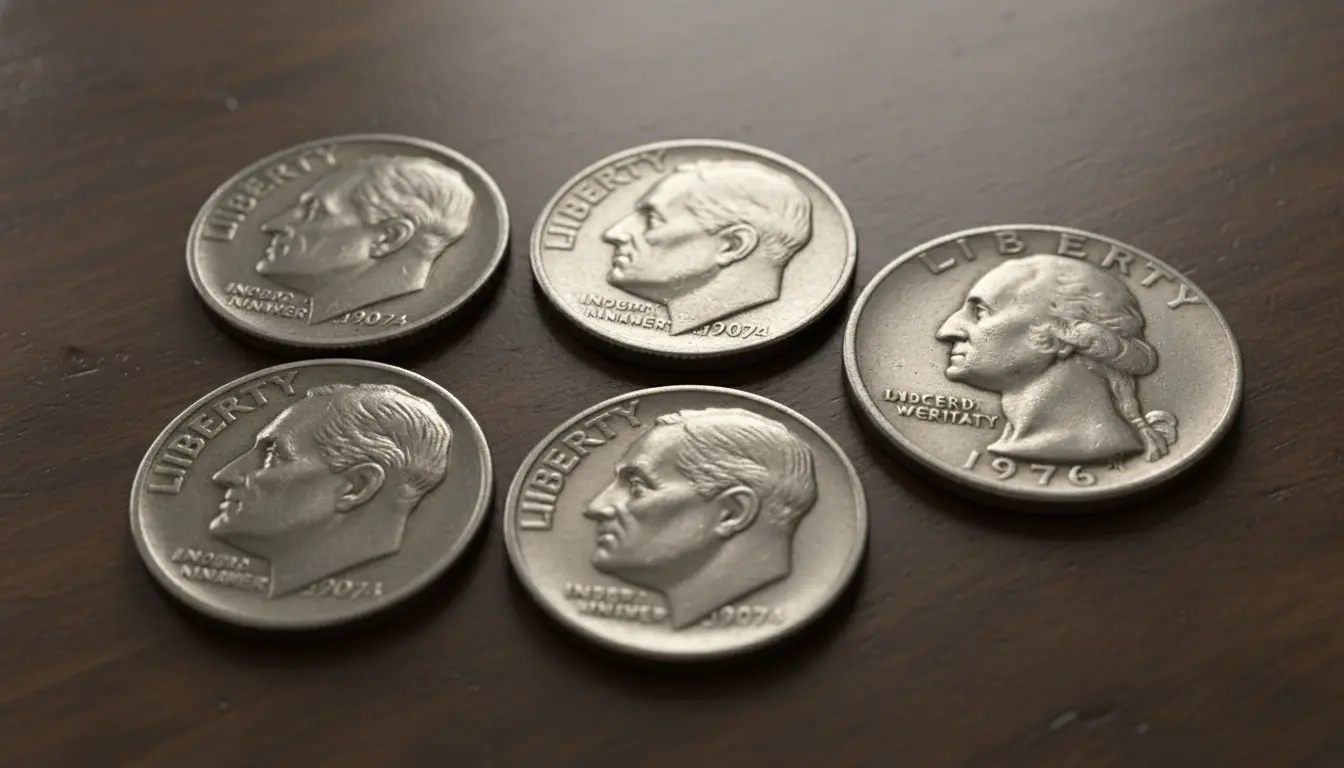
How to read claims about rare dimes and a Bicentennial quarter
When you read headlines about a multi‑million or even 93 million dollar coin find, start by asking for proof. Auction records, certified grading reports, and clear provenance are the only evidence that supports very high values.
This article explains five types of rare dimes, what to look for in a Bicentennial quarter, and why sweeping dollar totals are usually exaggerated or require exceptional conditions.
5 Rare Dimes to Watch

Collectors prize dimes for low mintage, key dates, and mint errors. Below are five dime types that commonly appear in serious collections and auctions.
1. 1894‑S Barber Dime
The 1894‑S Barber dime is a classic rarity due to very low mintage. Only about two dozen were made and even fewer survive in collectible condition.
What to check: strike quality, wear patterns, and professional grading. Uncertified examples should be authenticated before assigning a high value.
2. 1916‑D Mercury Dime

1916‑D is a key date in the Mercury dime series. Low survival rates make high‑grade examples valuable to collectors.
What to check: full head details and absence of excessive wear. Grading will strongly affect price.
3. Early Draped Bust and Capped Bust Dimes
Dimes from the late 1700s and early 1800s (Draped Bust, Capped Bust) are often rare because many specimens are well worn or lost. Key dates and mint marks matter a lot.

What to check: date legibility, mint marks (if present), and common restoration signs.
4. Seated Liberty Dime Varieties
The Seated Liberty series produced many varieties and alterations over long production runs. Some years and mint marks have tiny surviving populations.
What to check: planchet quality, mint device alignment, and any doubling or repunched mintmarks.
5. Modern Error and Proof Varieties (20th Century)
Unexpectedly valuable dimes can be modern coins with dramatic mint errors or rare proof varieties. These are not always old coins, but they can still command high prices.
What to check: off‑center strikes, double dies, and proof vs. business strike differences.
Bicentennial Quarter: What to Look For
The 1976 Bicentennial quarter (dated 1776‑1976) was struck for circulation and as special proofs. Most are common, but a few features increase value.
Key items to inspect include silver proof Struck in San Francisco (40% silver), mint errors, and exceptionally high grade specimens.
- Silver proof (S mint) examples in high grade can be worth more than face value to precious metal buyers and collectors.
- Error coins — such as doubled dies, wrong planchet, or dramatic off‑center strikes — may carry premium values if authenticated.
- PR69/70 or MS68+ examples graded by major services are especially valuable to type and date collectors.
Truth Behind the 93 Million Dollar Claim
Large dollar totals attached to a mixed coin find almost always depend on several assumptions. Those include every item being rare, all pieces grading near perfection, and buyer demand at auction.
Realistic valuation steps look like this:
- Identify key coins individually and separate common from rare.
- Authenticate and grade coins through a reputable service (PCGS, NGC, or similar).
- Use recent auction records for comparable pieces to estimate market value.
Without grading and provenance, a headline number like 93 million is speculative. Even a handful of top pieces rarely reaches such totals unless several ultra‑rare items are present and sold at peak auction performance.
How to evaluate a potential high‑value find
Follow a step‑by‑step approach if you or someone you know discovers an old coin hoard or unusual coins in circulation.
- Handle coins carefully by the edges and avoid cleaning them.
- Photograph coins clearly and note any mintmarks, dates, and visible errors.
- Consult a reputable local coin dealer or an online forum with good documentation.
- If you suspect high value, send coins to a professional grading service for authentication.
- Get multiple opinions before listing items for sale at auction or privately.
Case Study: Estate Lot That Revealed a Key Date
A small estate sale included a tin of mixed coins sold as bulk copper and silver. A buyer noticed a lightly worn 1916‑D dime among the lot and submitted it for grading.
After authentication and PCGS grading, the coin qualified as a collectible example and sold at auction for a price far above melt value. The buyer paid a modest sum at the estate and later recovered a large profit after grading and sale fees.
Practical tips for everyday collectors
Keep realistic expectations. Most circulated coins are worth face value or slightly more unless they have clear rarity factors.
Focus on documentation and grading before believing viral price totals. Auction records and graded comparables are the best indicators of true market value.
Final checklist before accepting a sensational valuation
- Has every important coin been authenticated and graded?
- Are the auction comparables recent and from reliable houses?
- Have experts confirmed mint errors or rare varieties?
When these boxes are checked, you can make a confident estimate. Otherwise, treat claims of 93 million dollars or similar large amounts as promotional until proven by documentation.
For ongoing learning, join local coin clubs, follow major auction houses, and read numismatic publications. Accurate valuation combines knowledge, documentation, and market timing.