
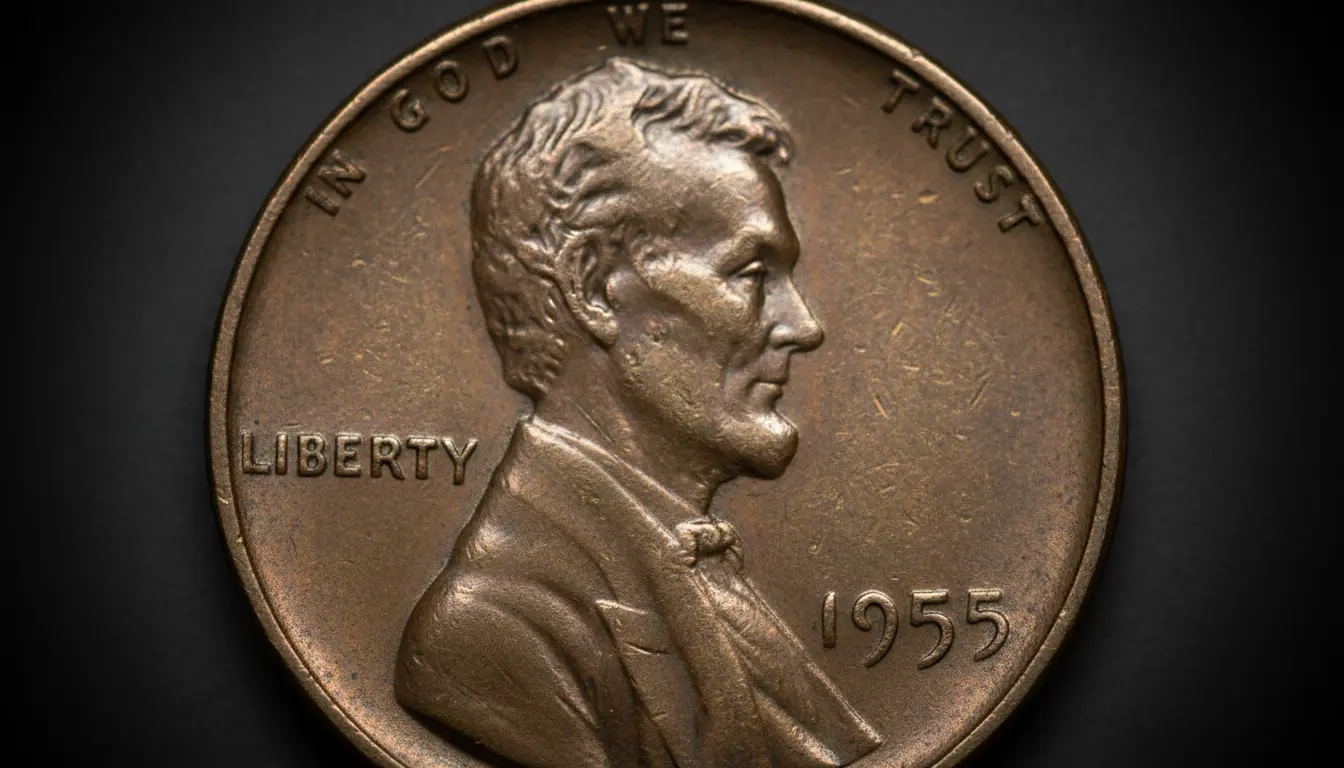
Why a childhood penny can be a collectors goldmine
Some pennies we dropped in jars as kids are now highly sought by collectors. One coin in particular, the 1955 doubled die Lincoln cent, often shows dramatic doubling on the obverse and can command significant prices.
This article explains how to identify that childhood penny, what drives its value, and how to sell or protect one if you find it.
How to identify the 1955 doubled die penny

Identification is the first step before you get excited. The 1955 doubled die shows clear doubling on the obverse elements, not from a re-punched die but from an actual doubled die error during hubbing.
- Look for doubled letters in LIBERTY and IN GOD WE TRUST.
- Check the date 1955 for doubling—digits often show a shadowed second image.
- Doubling is most obvious on the rim, letters, and date; it is not a doubling caused by a shifted strike.
Visual checklist
- Strong doubling on the first D in GOD or the T in TRUST.
- Doubling on the right side of date numerals, especially on the 5s.
- No mintmark at the right of the date (1955 cents were mostly Philadelphia).
Why this childhood penny gained value
Collectors prize clear, dramatic errors. The 1955 doubled die is famous because the doubling is bold and easy to spot, so it has become a classic error coin in U.S. collecting circles.
Rarity and condition matter. A heavily worn doubled die has modest value, while an uncirculated example with sharp doubling can be worth thousands.
Factors that affect value
- Grade: Higher grades (mint state) multiply value significantly.
- Strike quality: A sharp strike highlights doubling and increases desirability.
- Market demand: Iconic errors attract steady buyer interest.
How to verify authenticity and avoid fakes

Because the 1955 doubled die is famous, fakes and altered coins exist. Authentication by a reputable grading service is the safest path.
- Use PCGS or NGC for professional grading and encapsulation.
- Compare images from trusted references and auction records.
- Beware of mechanical doubling or doubling from die wear—those do not have the same value.
Common red flags
- Inconsistent doubling across letters and numerals.
- Doubling that looks like a thin ghost line—this may be machine or strike doubling.
- Obvious tooling marks or signs of cleaning and polishing.
What to do if you find one in your jar
If you find a 1955 doubled die among pocket change, follow a few practical steps to preserve value.
- Do not clean the coin. Cleaning can reduce its value dramatically.
- Store in a soft, inert holder to prevent scratches and further wear.
- Document where and how you found it—provenance can help in some sales.
Selling options
- Submit to a professional grading service (PCGS/NGC) for authentication.
- Sell through a reputable dealer who specializes in error coins.
- Use auction houses or online platforms with buyer protections for higher-grade pieces.
The 1955 doubled die is one of the most famous Lincoln cent errors, and its high-profile status means collectors recognize it quickly. Even worn examples can attract interest for educational or display purposes.
Case study: A childhood jar turned surprise sale

A simple example shows how this plays out. A person cleaning out an old jar found a 1955 penny with clear doubling. They avoided cleaning it and submitted it to a grading service.
After authentication and a modest grade, the coin sold through a dealer for a price far above face value. The keys were correct identification, professional grading, and selling through trusted channels.
Examples of value ranges
Values vary widely based on condition. Below are general ranges to give perspective, not exact offers.
- Heavily worn, minor doubling visibility: low hundreds of dollars or less.
- Clear doubling but circulated: mid hundreds to a few thousand dollars.
- Uncirculated with strong doubling: several thousand to tens of thousands depending on grade.
Final tips for collectors and finders
Take a cautious, methodical approach: identify, protect, and authenticate. That sequence preserves or increases value.
Learning basic coin grading and using reputable references will save you time and money in the long run.
If you think you found a 1955 doubled die or another significant error, reach out to a local coin club, a trusted dealer, or a grading service for guidance. A childhood penny can become a collectors goldmine with the right steps.