
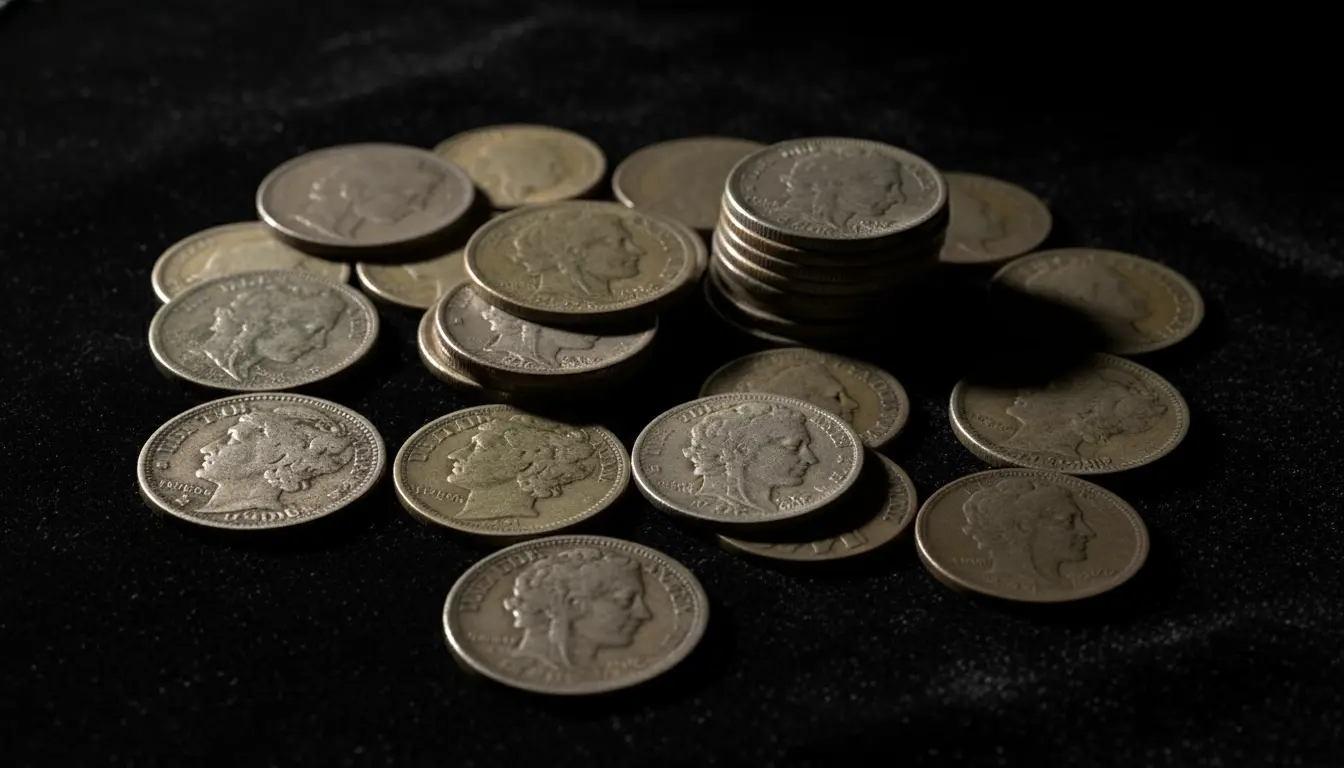
Quick answer: Rare American Coins Worth Over $25 Million
No commonly documented U.S. coin has a clear public auction record exceeding $25 million. Top-selling American coins have reached high single-digit or low double-digit millions, but $25 million-plus sales are not the norm in public records.
This article explains which coins reach top prices, why the Bicentennial Quarter is not one of them, and what steps collectors should take if they think they own something valuable.
Which rare American coins approach the highest values

A small group of important early U.S. coins dominate headline auction values. These coins combine rarity, superb condition, and strong provenance.
- Early silver dollars and pattern coins (late 1700s and early 1800s) — prized for their age and historical significance.
- Famous rarities like 1913 Liberty Head Nickels and select early gold pieces — collectors seek these for completeness and rarity.
- Unique or near-unique examples with documented provenance — a single specimen with strong provenance can command top prices.
These items have brought very high prices at auction, sometimes setting records. Still, headline sales are rare, and the market for ultra-high-end coins is specialized and limited.
Examples of high-value U.S. coins
Public auction houses and private sales have recorded multi-million-dollar transactions for a handful of U.S. coins. These are frequently highlighted in numismatic news because they are exceptional.
- Early Flowing Hair and Draped Bust dollars — prized for age and condition.
- Selected gold issues and doubloons with unique maker marks or restricted survivors.
- Notable pattern coins and mint-state specimens with near-perfect grades.
Why most coins do not reach $25 million

Three core factors limit how many coins ever approach multi-million-dollar prices:
- Rarity: There are very few unique or near-unique U.S. coins with documented authenticity and provenance.
- Condition: High-grade survivors are rare; a coin must often grade at the top of the scale to reach the highest prices.
- Collector demand: Only a narrow collector base competes at the extreme top end, so prices depend on a handful of buyers willing to pay exceptional sums.
How experts value rare coins
If you suspect a coin might be extremely valuable, follow a step-by-step approach so you get realistic information and avoid mistakes.
- Get professional authentication and grading from an established grading service (PCGS, NGC, ANACS).
- Research auction records for the exact date, variety, and grade of the coin.
- Consult reputable dealers and specialized auction houses that handle high-end numismatics.
- Document provenance and any historical context to support value claims.
Is the Bicentennial Quarter one of the coins worth over $25 million?
Short answer: No. The 1976 Bicentennial Quarter, issued for the United States bicentennial, is a modern commemorative circulating coin. Millions were produced, and even high-grade specimens are common by modern numismatic standards.

Most Bicentennial quarters are worth face value to a few dollars in circulated condition. Uncirculated and certified high-grade examples sell for more, but values typically range from a few dollars to a few hundred dollars depending on grade and variety. Error pieces can fetch higher sums, but they do not approach tens of millions.
Common Bicentennial Quarter varieties to know
- Circulated clad quarters — common and generally worth face value or modest premiums.
- Uncirculated mint state (MS) coins — value increases with grade, but high grades are not extremely rare.
- Proof and silver proof issues — proof coins and special silver sets are more valuable than circulating pieces.
- Mint errors (double die, off-center, missing clad layer) — these can be collectible and command premiums, sometimes thousands, but not millions.
The Bicentennial Quarter reverse features a colonial drummer design created specifically for the 1976 celebration. The obverse kept the Washington portrait but continued the regular composition for circulating clad coins.
Real-world example: A practical case study
A collector found a Bicentennial quarter in a box of old coins and suspected it might be rare. They took these steps:
- Examined the coin for obvious errors and mint marks.
- Submitted the coin to a reputable local dealer for a preliminary opinion.
- If valuable, had the coin slabbed and graded by a professional service before exploring auction options.
Outcome: The coin proved to be a high-grade uncirculated example and later sold in a private sale for several hundred dollars. It was a good result for the owner, but far from the multi-million-dollar range some laypeople imagine.
Practical advice if you think you own a rare coin
- Do not assume extreme values based on online anecdotes or headlines.
- Get professional grading and authentication before marketing a coin.
- Check multiple auction records and speak to specialized numismatic auction houses for realistic estimates.
- Preserve provenance: receipts, previous certifications, and documented discovery increase buyer confidence.
In short, while a handful of American coins have fetched very large sums, the Bicentennial Quarter is not among the coins that reach tens of millions. Accurate grading, specialist consultation, and realistic expectations are the best path to understanding any coin’s true market value.