
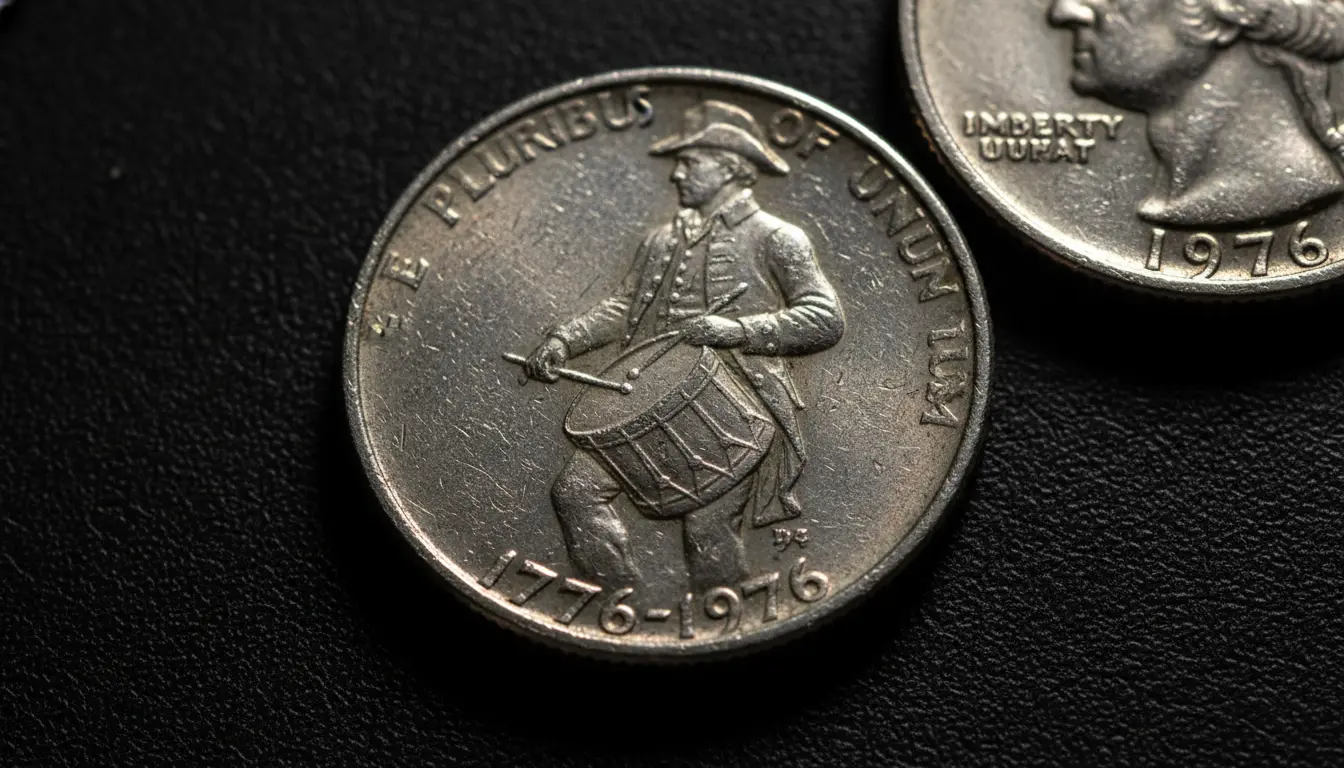
The U.S. Bicentennial quarter (dated 1776–1976) is common in pocket change, but some examples are worth far more than face value. This guide explains which Bicentennial quarters experts say carry the most value in 2025 and why.
Which Bicentennial Quarters Are Worth the Most in 2025
Experts point to three main categories that drive top value: silver proofs, high-grade mint state pieces, and notable error or variety coins. If you find a Bicentennial quarter, check which category it fits into before assuming it’s just another 25-cent piece.
Silver Proof 1976-S Quarters

Silver proof quarters struck at San Francisco are consistently among the most valuable Bicentennial quarters. These coins were produced for collectors and typically exhibit sharp detail, mirror-like fields, and strong contrast.
Condition matters: proof coins graded PR69 or PR70 by major services command the highest prices. Lower graded proofs still sell better than circulated examples.
High-Grade Uncirculated (MS65 and Above)
Most circulation-strike Bicentennial quarters are common, but survivors in mint state grades (MS65-MS68+) are scarce enough to be worth more.

Look for full luster, no wear on high points, and attractive eye appeal. Certified coins from PCGS or NGC are easier to market and generally fetch higher prices.
Major Error and Rare Variety Coins
Dramatic errors such as off-center strikes, severe double strikes, large clipped planchets, and major die breaks can be lucrative. These are priced case-by-case by collectors and auction houses.
Minor die cracks or weak strikes are common and usually do not add much value. Only bold, documented errors attract significant premiums.
How Experts Value Bicentennial Quarters

Experts use a combination of condition, rarity, provenance, and market demand to set value. A certified grade often makes the difference between a modest sale and a high auction result.
Key Value Factors
- Condition (grade): Higher grades equal higher value.
- Type: Silver proof versus circulation strike.
- Mint mark: San Francisco proofs (S) are often more desirable than Denver (D) or Philadelphia pieces.
- Errors and varieties: Only major errors typically bring significant money.
- Certification: Coins graded by PCGS or NGC are easier to sell and reliably priced.
What to Look For When Inspecting Bicentennial Quarters
Use a loupe or magnifier and a good light source. Check both obverse and reverse for these signs:
- Sharp strike and full detail on eagle feathers and Monticello ribbon area.
- Mirror-like fields on proofs with frosted devices.
- Obvious errors: off-center, clipped planchet, double strike, broadstrike.
- Toning and surface marks that affect eye appeal.
Authentication Tips
If a coin looks unusually nice or shows an extreme error, consider professional grading. Grading authenticates the coin, assigns a market-accepted grade, and protects both buyer and seller.
The Bicentennial reverse design (a colonial drummer) appears only on quarters, half dollars, and dollars dated 1776–1976. Millions were made, so most Bicentennial quarters are common — but specific proofs and errors remain collectible and valuable.
Real-World Case Study: Finding Value in a Dealer Roll
A collector buying a dealer roll of unsearched Bicentennial quarters found a near-perfect specimen with full luster and no contact marks. After sending it to a grading service, it returned as MS67 and sold at a small regional auction for a several-hundred-dollar premium over face value.
This example shows the two-step pattern: find an eye-catching coin, get it certified, then sell to an audience that pays for grade and eye appeal.
Realistic Price Ranges to Expect in 2025
Values vary by condition and type. Typical ranges experts mention include:
- Circulated common Bicentennial quarters: face value to a few dollars.
- Uncirculated MS60–MS64: $5–$50 depending on eye appeal and mint mark.
- Higher mint state (MS65+): $50–$500 or more if the coin is exceptional.
- Silver proofs and high-grade proofs: hundreds to low thousands depending on grade.
- Major errors and dramatic varieties: values from a few hundred to several thousand, set by rarity and collector interest.
Practical Steps for Sellers and Buyers
If you think you own a valuable Bicentennial quarter, follow these steps:
- Handle coins with clean hands and hold by the edges.
- Document photos under good light before sending to graders.
- Choose an established grading service (PCGS, NGC) for high-value candidates.
- Compare recent auction results for similar grades and varieties.
- Work with reputable dealers or auction houses for high-value sales.
Final Thoughts on Bicentennial Quarters Worth the Most in 2025
Most Bicentennial quarters are common, but silver proofs, high-grade uncirculated coins, and bold errors are what experts say are worth the most. Certification and market timing often make the biggest difference in realized price.
Check your coins carefully, document anything unusual, and when in doubt, get a professional opinion. A single certified example can turn a pocket-finder into a serious sale.