
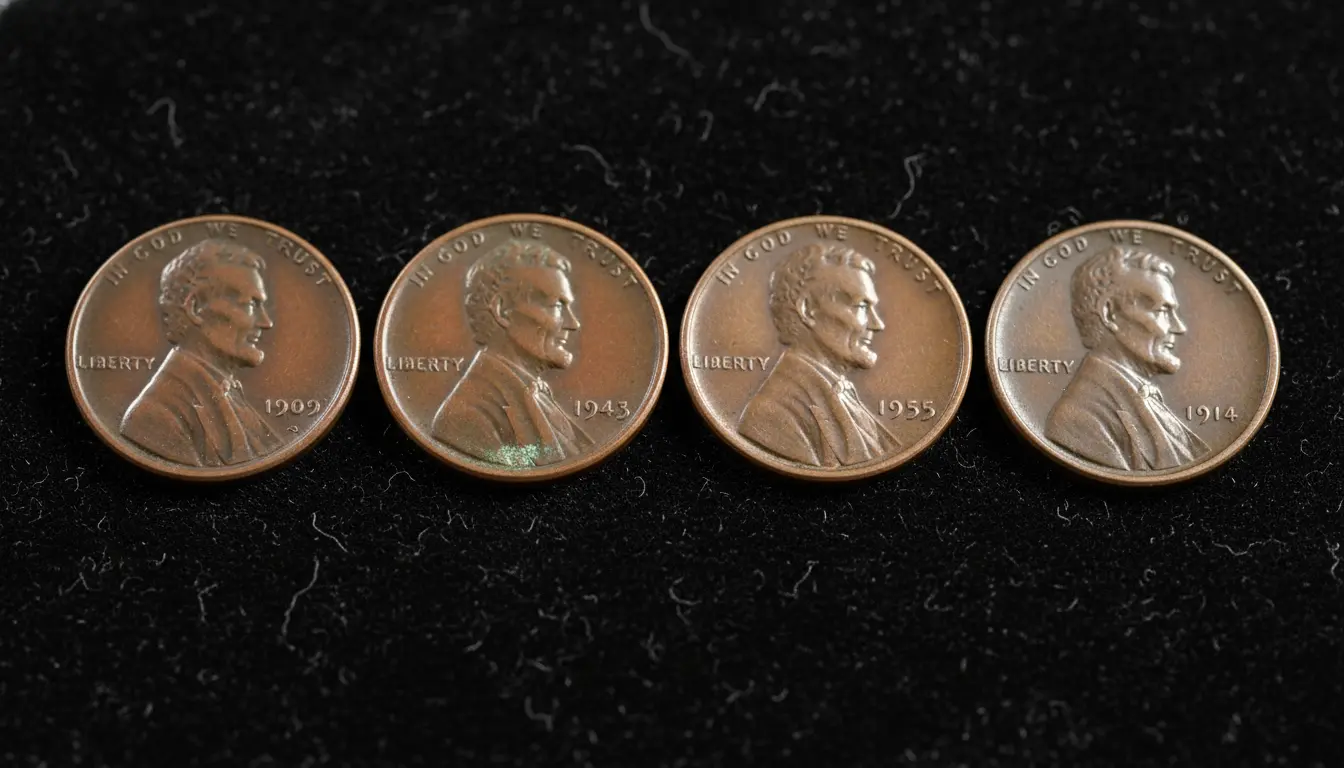
Lincoln cents are everyday coins that sometimes hide big surprises. A few dates and errors are highly sought after, and knowing how to spot them helps buyers and sellers avoid mistakes.
How collectors value rare Lincoln pennies
Collectors assess rarity by mintage, survival rates, condition, and noticeable errors. Condition is graded on a scale from Poor to Mint State, and small differences can change value significantly.

Key things to check are mint marks, design anomalies, and metal composition. A quick visual check and a magnifier can reveal whether a coin needs expert grading.
Top 4 Rare Lincoln Pennies Wanted By Collectors
Below are four Lincoln pennies that consistently attract attention from collectors and dealers. Each entry includes identification tips, approximate value ranges, and why the coin is rare.
1. 1909-S VDB Lincoln Cent
Description: The 1909-S VDB was struck at the San Francisco Mint and is one of the first Lincoln cents. The initials VDB (for designer Victor D. Brenner) appear on the reverse and were removed in later 1909 issues.

Identification tips:
- Look for the VDB initials at the base of the reverse, below the wreath.
- Check for a small “S” mintmark on the obverse below the date.
Why it’s rare: Low mintage and high demand from early-date Lincoln series collectors make well-struck examples scarce.
Typical values: In low grades this coin is collectible but valuable examples in high grade can be worth thousands.
2. 1914-D Lincoln Cent

Description: The 1914-D was produced at the Denver Mint and is prized for being a low-mintage issue with strong collector demand.
Identification tips:
- Check carefully for the small “D” mintmark below the date; some wear can hide it.
- Examine strike quality—strong strikes in high grade command higher prices.
Why it’s rare: Only a small number were minted and fewer survive in high condition, making it a key date for series collectors.
Typical values: Mid-grade examples sell for hundreds to low thousands; high-grade pieces can be significantly more.
3. 1955 Doubled Die Obverse Lincoln Cent
Description: The 1955 doubled die shows strong doubling of the date and lettering on the obverse. It is one of the most famous U.S. mint errors from the 20th century.
Identification tips:
- Look for thick, shadowed doubling on IN GOD WE TRUST, LIBERTY, and the date.
- Use a magnifier and compare to a normal 1955 cent to confirm obvious doubling.
Why it’s rare: The error was caused by a misaligned hubbing and only a limited number entered circulation, making it highly collectible.
Typical values: Values range from a few hundred dollars for worn examples to tens of thousands for high-grade, certified specimens.
4. 1943 Bronze (Copper) Lincoln Cent
Description: In 1943 most cents were steel with zinc coating due to wartime copper needs, but a few bronze planchets were mistakenly struck, producing 1943 bronze cents.
Identification tips:
- Bronze 1943 cents are heavier and have a brown color rather than the silver-gray of steel cents.
- Do not attempt to clean suspected examples; handling and cleaning drastically reduces value.
Why it’s rare: The wrong planchet mix-up was limited and most were identified and removed, leaving very few to survive in private hands.
Typical values: Even worn examples can command five-figure prices at auction; high-grade certified examples sell for much more.
Identification checklist for rare Lincoln pennies
When inspecting pennies, follow a consistent checklist to avoid mistakes. A calm, methodical approach reduces the risk of overlooking important details.
- Examine the mintmark location and clarity.
- Look for doubled dies or repunched mintmarks with magnification.
- Check metal color and weight for composition errors like 1943 bronze.
- Compare suspected coins to high-quality reference photos or dealer guides.
Authentication and grading
If you find a potential rarity, consider third-party grading from a reputable service. Grading provides authentication, assigns a grade, and often increases buyer confidence.
Costs and turnaround times vary, so balance potential value against grading fees. For extremely rare finds, professional grading and a written provenance can significantly improve resale opportunities.
Real-world example: A regional sale and what it teaches collectors
At a regional coin show, a collector sold a circulated 1955 doubled die for about $3,200. The seller had checked for doubling with a loupe and verified the pattern using online images before offering the coin to dealers.
The buyer still had the coin certified by a grading service afterward and resold it later for a higher price. The case shows that basic verification, plus grading when appropriate, can unlock real value.
Practical tips before buying or selling
- Always inspect coins under magnification and good light.
- Use reputable price guides and recent auction results to set expectations.
- Get coins authenticated if you suspect a major rarity—don’t rely on photos alone.
- Keep coins in proper holders; avoid cleaning or polishing which reduces value.
Following these practical steps will help you identify the top 4 rare Lincoln pennies wanted by collectors and take appropriate actions whether you are buying, selling, or holding for investment.