
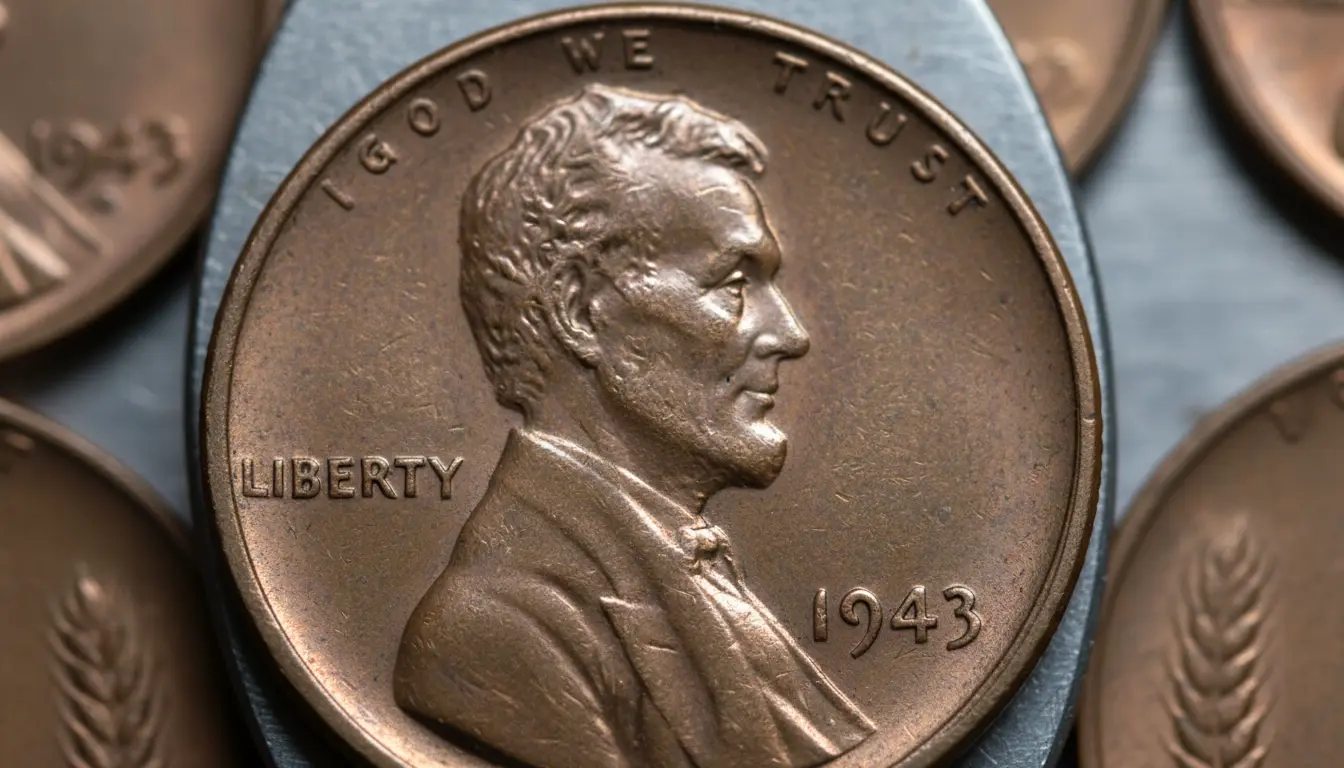
Rare 1943 Copper Lincoln Penny: What It Is
The Rare 1943 Copper Lincoln Penny refers to a small group of 1943-dated cents struck on bronze planchets instead of the steel planchets used that year. During World War II copper was conserved for war materials, so almost all 1943 cents were made of zinc-coated steel.
Because bronze planchets were normally used in other years, any authentic 1943 cent in copper is an unusual error and can attract strong interest from collectors and dealers.
How Rare Is a 1943 Copper Lincoln Penny?

Authentic 1943 copper cents are extremely uncommon. Only a small number of verified examples are known, and each has a documented chain of custody or credible authentication record.
Rarity is a major reason these coins can command very high auction prices. Value depends heavily on authenticity, grade, and provenance.
Why 1943 Was Different
In 1943 the U.S. Mint switched to zinc-coated steel cents to preserve copper for wartime use.

If a bronze planchet was accidentally struck with a 1943 die, the result is a rare bronze (copper alloy) 1943 cent rather than the common steel variety.
How to Check if Your 1943 Penny Is Copper
Follow these practical steps before assuming you have a high-value coin.
- Visual inspection: A bronze cent will look brown or reddish, not silver-gray like the steel cent.
- Magnet test: Steel 1943 cents are magnetic. If a coin is strongly attracted to a magnet, it is steel and not copper.
- Weight test: Bronze Lincoln cents weigh about 3.11 grams. Steel cents weigh about 2.7 grams. Use a precise digital scale (0.01 g resolution).
- Surface signs: Look for red-brown toning and the absence of rust. Steel coins often show surface corrosion; bronze coins do not rust in the same way.
Important: Do Not Clean the Coin
Cleaning can damage surfaces and remove evidence used by graders to determine authenticity. Leave the coin as found and handle it by the edges only.
Authentication Steps

If preliminary checks suggest a bronze 1943 cent, get professional help. Follow this process:
- Document: Take clear photos of both sides and note where and how the coin was found.
- Local dealer: Visit a reputable coin dealer for a first look. Ask about their experience with 1943 bronze cents.
- Third-party grading: Submit the coin to a major grading service (PCGS, NGC, ANACS) for authentication and grading.
- Provenance check: Gather any paperwork or previous auction records related to the specimen.
Realistic Value Ranges
Price depends on authentication, grade, and market demand. Verified examples have sold at auction for over one million dollars. Lesser-known or suspect pieces sell for much less or bring no premium if not authenticated.
Factors that affect price:
- Authenticity and grading (certified coins fetch top prices)
- Grade: higher grade (MS, PR) commands higher prices
- Provenance: well-documented history increases buyer confidence
- Market conditions: collector demand and auction interest fluctuate
Case Study: Auction Process for a 1943 Copper Cent
A collector found a brown-toned 1943 cent in a jar of inherited change and suspected it might be bronze. They did not clean the coin and visited a trusted dealer for a first look.
The dealer recommended submitting the piece to a major grading service. After authentication and a high grade, the coin was listed at a major auction house. Competitive bidding pushed the final price into the seven figures. This example shows why authentication and provenance matter.
Only a small number of authentic 1943 copper Lincoln cents are known, which is why authenticated examples are closely studied and often sold at high-profile auctions.
Where to Sell If Your Coin Is Authentic
If grading confirms a bronze 1943 cent, your options include auction houses, specialist rare-coin dealers, and private sales to collectors. Each route has trade-offs in speed, fees, and final price.
Consider these tips:
- Use a reputable auction house with experience selling high-value coins.
- Compare offers from multiple dealers and consignors.
- Keep documentation of grading reports and provenance visible to buyers.
Practical Advice for Finders and Collectors
If you think you found a 1943 copper Lincoln penny, stay calm and follow best practices.
- Do not clean the coin.
- Handle only by the edges and store in a protective holder.
- Take high-resolution photos under good lighting.
- Get a preliminary opinion from a trusted dealer, then seek third-party authentication.
Resources and Contacts
Useful resources include major grading services (PCGS, NGC, ANACS), local numismatic clubs, and established coin auction houses. These organizations can help with authentication, grading, and sales.
Final Thoughts
While headlines may highlight eye-popping sale prices, most 1943 cents in circulation are the common steel variety. If you do find a brown, non-magnetic 1943 cent, it could be significant — but proper authentication and grading are essential before assigning a high value.
Follow the steps above, document everything, and consult experts. That approach gives you the best chance to confirm whether your coin is one of the rare 1943 copper cents that collectors prize.