
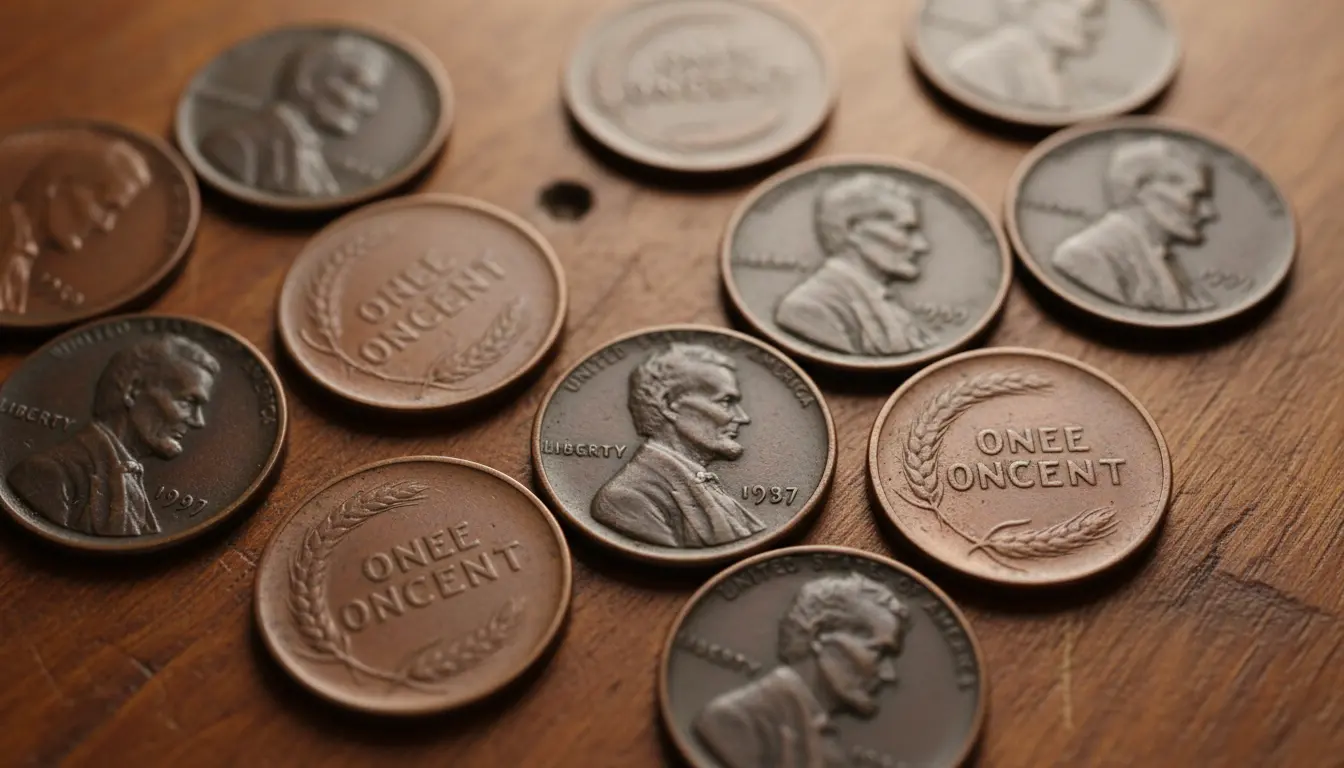
How a Lincoln Wheat Penny Can Be Worth $10,000
Not every Wheat penny in your jar will be worth thousands, but a few specific dates, mint marks, and conditions can push a coin’s value into five figures. Knowing what to look for helps you pull the right pieces from pocket change and estate lots.
This guide explains practical identification tips, grading basics, and when to seek professional help so you can spot a Lincoln Wheat penny worth $10,000 or more.
Key Dates and Mint Marks for a Lincoln Wheat Penny Worth $10,000

Some Lincoln Wheat pennies are common, while others are rare due to low mintage or errors. Focus on these high-value dates and marks:
- 1909-S VDB — Early and rare with designer initials VDB on the reverse.
- 1909-S — Without VDB, also scarce in higher grades.
- 1914-D — Very low mintage and high demand among collectors.
- 1931-S — Another date known for scarcity in higher grades.
- 1922 Plain (no mint mark) — Key variety when die characteristics line up.
Look for the mint mark under the date (S for San Francisco, D for Denver). The presence or absence of small initials and specific die traits can change value dramatically.
How to Inspect a Wheat Penny Quickly
Do a two-minute check before you set a coin aside. Handle coins by the edge to avoid oils on the surface. Use a good light and, if possible, a 10x loupe.
- Check the date and mint mark clearly.
- Look for the letters VDB on the 1909 reverse lower rim.
- Note heavy wear versus clear details like Lincoln’s hair and the wheat stalks.
How Grading Affects a Lincoln Wheat Penny Worth $10,000

Condition (grade) is often the biggest factor in turning a rare date into a five-figure coin. A rare date in poor condition may be worth only hundreds, while the same date in high grade can exceed $10,000.
Basic grade categories to know:
- Poor to Good (heavily worn) — Low collector value even for scarce dates.
- Fine to Extremely Fine (moderate detail) — Mid-level values.
- About Uncirculated to Mint State (very high detail) — Top values and the range where coins reach $10,000.
If you think you have a valuable coin, consider submitting it to a reputable grading service (PCGS, NGC). A professional grade provides market confidence and typically increases sale price.
Common Errors and Varieties That Increase Value

Error coins and unique die varieties can be sought-after. Examples include double dies, repunched mint marks, and off-center strikes. These are often worth more than standard examples in the same condition.
Some Lincoln Wheat pennies were struck with the designer V.D.B. initials only in 1909 and then removed. Finding that VDB on a 1909-S in good condition can push the value dramatically.
Practical Steps to Find a Lincoln Wheat Penny Worth $10,000
Follow a simple process when sorting coins to improve your chances of discovering a high-value piece.
- Separate all pre-1959 pennies. Wheat reverse was used from 1909 to 1958.
- Set aside any with clear dates and visible mint marks.
- Use a loupe to inspect suspect coins for VDB, double dies, or unusual features.
- Photograph and catalog potential finds before sending for grading.
When to Consult an Appraiser or Dealer
Talk to a reputable coin dealer or appraiser if you find a candidate that might be rare. A professional eye can spot subtle varieties and help determine whether grading is worth the cost.
Avoid quick sales to unknown buyers; research prices on major auction sites and recent sale records first.
Small Real-World Case Study
A local collector bought an old coin roll from an estate sale for $20. Inside he found a worn 1914-D penny. He had it cleaned gently to reveal more detail and then sent it to a trusted grading service. The coin received a collector-grade that matched auction listings and later sold for over $10,000 at a specialist sale.
This example shows that careful inspection, professional grading, and patience can turn a small purchase into a significant return.
Practical Tips and Examples
- Example: 1909-S VDB in high grade regularly appears in price guides as a high-value coin; anything with clear VDB should get attention.
- Tip: Keep a small magnifier and a dated price guide app on your phone when sorting coins.
- Tip: Join a local coin club to learn from experienced collectors and avoid mistakes.
Final Checklist: Could Your Lincoln Wheat Penny Be Worth $10,000?
- Is the date one of the known rare dates (1909-S VDB, 1914-D, 1931-S, 1922 Plain)?
- Is the mint mark clear and correct for a rare version?
- Does the coin have error characteristics or unusually sharp detail for its age?
- Would professional grading likely place it in About Uncirculated or higher?
If you answer yes to several items, consider photographing the coin and contacting a reputable dealer or grading service. Even if it is not a $10,000 piece, learning to identify valuable wheat pennies improves your collecting and resale chances.