
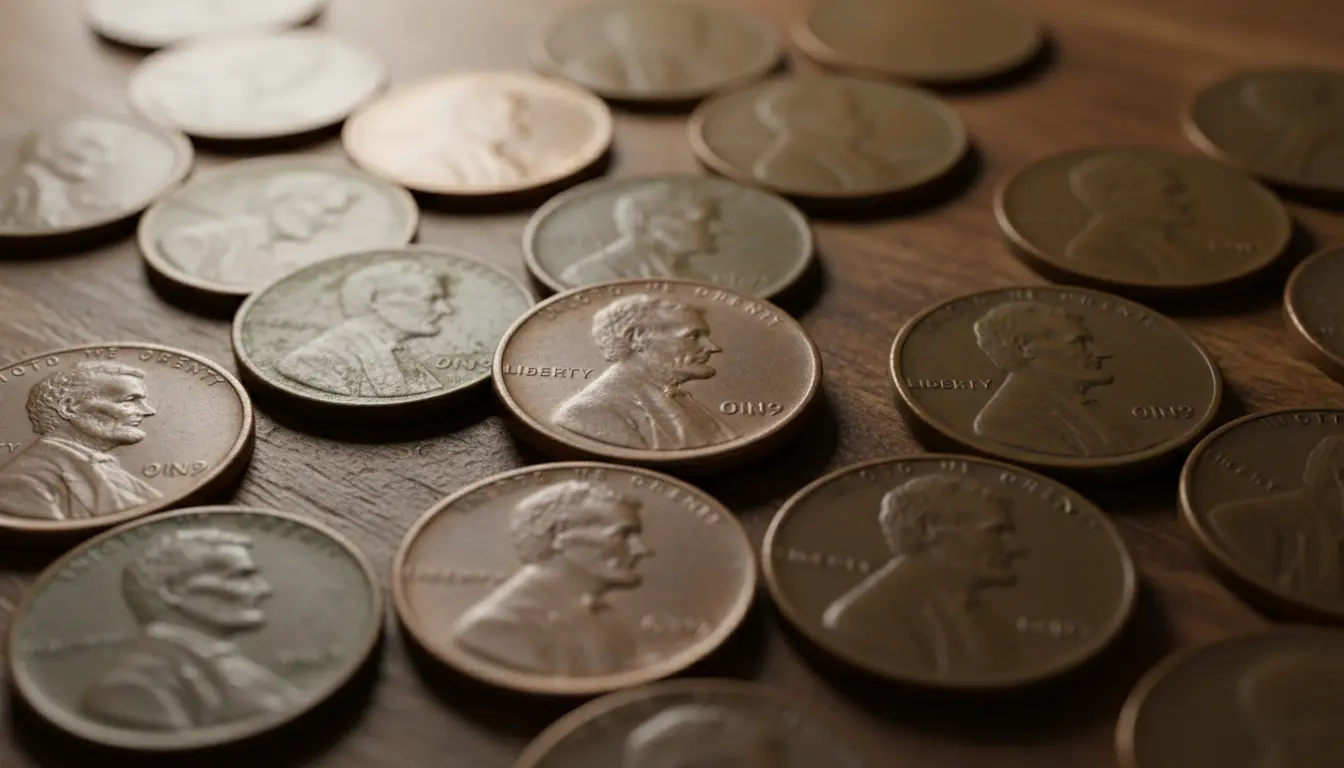
Understanding Valuable Lincoln Pennies By Year
Lincoln cents have been struck since 1909 and a few specific years and varieties are consistently the most valuable to collectors. Value depends on year, mint mark, condition, and whether the coin has an error or a rare variety.
This guide explains the key Lincoln pennies by year you should know, how to identify them, and what to look for when evaluating condition and authenticity.
How to Identify Valuable Lincoln Pennies

Start by checking the date and the mint mark (small letter near the date). Some rare varieties are identified by missing mint marks or unusual die characteristics.
Key identification steps:
- Inspect the date and mint mark with a loupe or magnifier.
- Look for doubled features, missing letters, or off-center strikes.
- Note metal composition — copper versus steel is important for 1943 cents.
Top Lincoln Pennies By Year and Why They Matter
The following years and varieties are frequently valuable. Condition and provenance can multiply value dramatically, so always consider grading for high-grade pieces.
1909 VDB and 1909-S VDB

1909 introduced the Lincoln cent and the initials VDB (designer Victor David Brenner) were on early coins. The Pittsburgh (Philadelphia) and San Francisco issues with VDB are prime collector targets.
The 1909-S VDB is especially scarce and sought after in higher grades. Even worn examples attract interest from serious collectors.
1914-D
The 1914-D is a classic key date. Denver mintage was low and the issue is scarce in all but the lowest grades.

Collectors looking to complete Wheat Cent sets almost always need a 1914-D.
1922 Plain (No D)
In 1922 some coins were struck without a visible Denver mintmark. These plain 1922 cents are a recognized variety and are rarer than the typical 1922-D.
Careful examination of the mint mark area can reveal residues or re-punched marks that affect identification.
1931-S
The 1931-S Lincoln cent has lower mintage and can be difficult to find in higher grades. It’s a useful target for date-complete sets from the early 20th century.
1955 Double Die Obverse
This is one of the most famous modern Lincoln cent errors. The doubling on the date and lettering is dramatic and easy to see without high magnification.
Well-documented and confirmed examples bring significant collector interest, especially in uncirculated grades.
1943 Copper and 1944 Steel Errors
Most 1943 cents were struck on steel because copper was reserved for wartime needs. Very few 1943 copper pieces exist and they are extremely valuable.
Conversely, a small number of 1944 or 1946 cents struck on steel (anomaly) are also prized as rarities. Metal testing and professional authentication are essential for these coins.
1969-S Double Die
The 1969-S Double Die Obverse (San Francisco) is another error that commands attention, particularly in higher mint-state grades. The doubled details appear on the date and motto.
Basic Grading and When to Get Professional Help
Grading ranges from Poor (P) to Mint State (MS) with many intermediate levels. Wear, scratches, luster, and strike quality all influence grade and value.
Get professional grading when a coin is suspected to be a high-value variety or when sale value would justify grading fees. Certification also helps with auction or dealer sales.
Practical Tips for Finding and Preserving Valuable Lincoln Pennies By Year
- Check pocket change and old coin jars — valuable examples still surface in circulation.
- Handle coins by the edges to avoid fingerprints and damage.
- Store in acid-free holders, flips, or certified slabs for high-value pieces.
- Consult reputable price guides and current auction results to estimate value.
Did You Know?
Some of the most valuable Lincoln pennies are not the oldest, but those with manufacturing errors or unusual metal composition. A single mis-struck or mis-planchet coin can be worth many times a normal example.
Real-World Example: A Small Case Study
A collector found a worn 1955 Lincoln cent among a drawer of inherited coins and noticed the obvious doubling on the date. After sending photos to a local coin dealer, the coin was sent for professional grading and confirmed as a 1955 Double Die Obverse.
The finalized, certified coin sold through an auction to a specialized collector. The sale underlines how careful inspection of everyday collections can turn up significant finds.
Checklist Before Selling or Grading a Valuable Lincoln Penny
- Photograph obverse and reverse under good light.
- Note any mint marks, doubling, or unusual metal color.
- Compare against reputable variety guides or consult a knowledgeable dealer.
- Consider professional grading for likely high-value coins.
Final Thoughts on Lincoln Pennies By Year
Knowing the key Lincoln pennies by year helps you spot potential value quickly. Focus on dates and varieties noted above, but keep in mind condition and authenticity are critical.
Whether you are building a set, searching pocket change, or preparing to sell, careful inspection and reliable information will help you make smart decisions.