
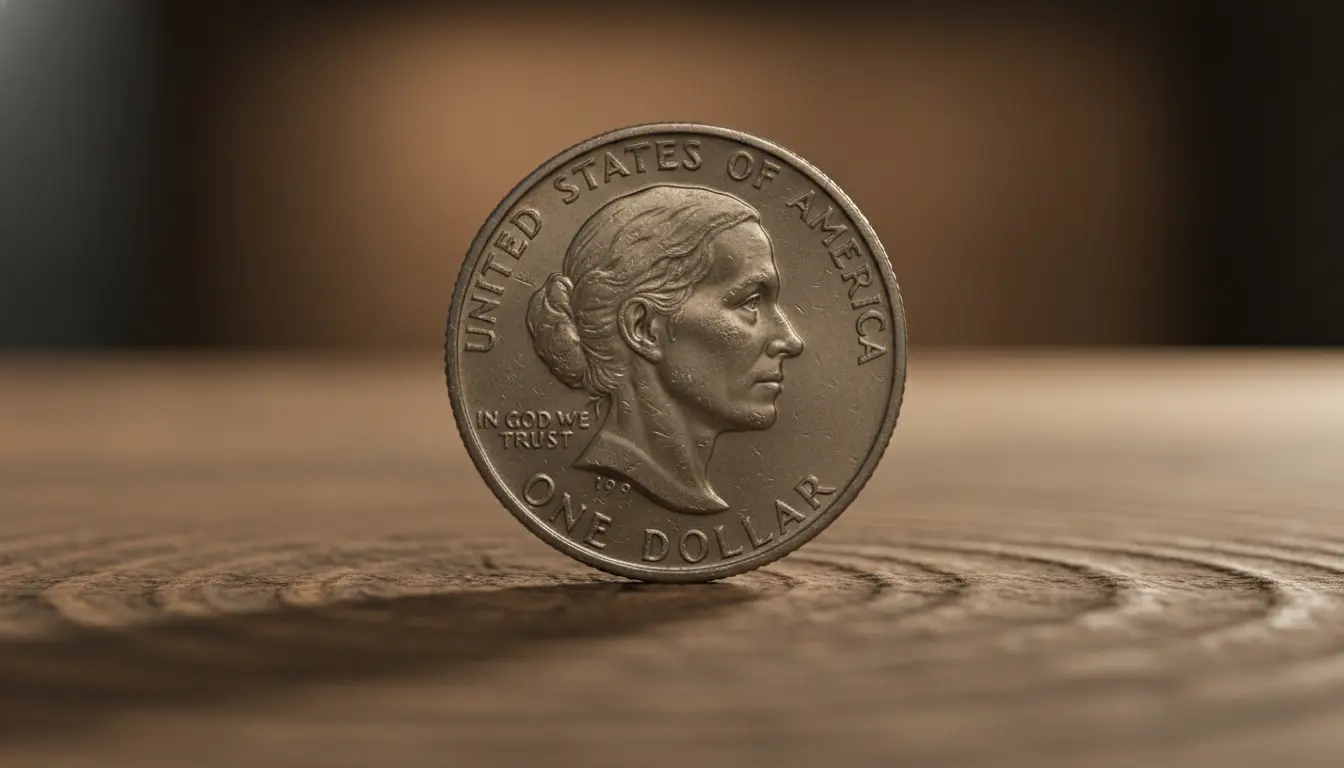
The Susan B. Anthony dollar is small and easy to miss, but some examples are rare and valuable. This guide explains why a Susan B. Anthony dollar could be worth up to $25,000, how to spot likely candidates in everyday change, and what steps to take if you think you’ve found one.
Why a Susan B. Anthony Dollar Could Be Worth $25,000
Most Susan B. Anthony dollars (1979–1981 and 1999) are common and worth only face value or a small premium to collectors. However, certain varieties and dramatic mint errors are much rarer and can command high prices at auction.

High values typically come from one of three situations: an extremely scarce die variety, a proof strike in an exceptional grade, or a major mint error (for example, an off-center strike or a coin struck on the wrong planchet). In rare, well-documented cases, such coins have attracted five-figure bids.
How to Hunt for a Rare Susan B. Anthony Dollar in Your Spare Change
Hunting doesn’t require specialized tools — just a careful eye, patience, and a few basics. Follow these steps to increase your chances of finding a valuable specimen.
- Inspect every dollar coin you get from bank rolls, change jars, or cashier tills.
- Use a magnifier (10x loupe) and strong light to check details on the obverse and reverse.
- Look at the date and mintmark closely; tiny repunched mintmarks or doubled devices can signal a variety.
- Check for prooflike mirrors or deep cameo contrast — some proof strikes are more valuable than business strikes.
- Watch for obvious errors: off-center strikes, clipped planchets, double strikes, and coins struck on the wrong metal.
Key Dates and Mintmarks to Check
Begin with the common dates — 1979 (P, D, S) and 1999 (P, D, S). While most examples are common, some proof or mint-error variants from these years are scarce.
- 1979-S (proof) — proof varieties and doubling can be valuable in high grade.
- 1979 business strikes — check for repunched mintmarks or die issues.
- 1999 issues — fewer coins were struck and some varieties draw collector interest.
Error Types That Drive Value

Large premiums often go to coins with dramatic errors. Examples that collectors pay for include:
- Off-center strikes — value rises with the degree of off-centering.
- Wrong planchet — e.g., a coin struck on a planchet intended for another denomination.
- Double strike or die doubling — visible doubling on the date, letters, or portrait.
- Severe die breaks and large cuds — visible chunks of missing die that leave raised blobs on the coin.
How to Authenticate and Grade Your Susan B. Anthony Dollar
If you think you have a rare piece, do not clean or alter it. Cleaning dramatically reduces value. Instead, document and take controlled photos and seek professional opinions.
Steps to authenticate and grade:
- Photograph the coin under good light from multiple angles.
- Compare details with reputable reference sites and variety guides.
- Visit a local coin dealer or attend a coin show for an initial appraisal.
- If promising, submit the coin to a recognized grading service (PCGS or NGC) for authentication and grading.
Where to Sell a High-Value Susan B. Anthony Dollar

For significant coins, auctions and major coin dealers are best for maximizing value. Certified coins sell better and reach more bidders.
- Online auction houses that specialize in coins
- Major numismatic auction houses (for very rare items)
- Reputable coin dealers who consign to auction
Always get multiple opinions and consider third-party grading before selling. Grading costs money but often increases final sale price enough to justify the expense.
Practical Tips for Everyday Hunting
Set realistic goals and be systematic in your searching. A few consistent habits will raise your odds over time.
- Check change from banks — ask for rolls of dollar coins or buy coin rolls at face value.
- Visit thrift shops and laundromats — people often leave mixed change behind.
- Keep a magnifier and small tray in your car or desk for quick checks.
- Join local coin clubs or online forums to learn about recent sales and new varieties.
The Susan B. Anthony dollar was the first U.S. coin to feature a real woman’s portrait on circulating currency. It was produced in 1979–1981 and briefly in 1999, and its small size is one reason many were lost in circulation instead of preserved.
Real-World Case Study
A collector who regularly checks bank rolls brought a Susan B. Anthony dollar to a dealer after spotting unusual mirror-like fields and faint doubling around the date. The dealer advised submitting the coin to a major grading service. After certification confirmed a rare proof variety with strong details, the coin sold through a specialist auction for a five-figure amount.
This case shows three key points: persistent searching pays off, professional grading matters, and even coins found in ordinary places can be valuable if they have unusual characteristics.
Final Checklist Before You Spend or Submit
- Do not clean the coin.
- Take clear photos showing obverse, reverse, rim, and edge.
- Get preliminary opinions from reputable dealers or club members.
- Consider third-party grading if the coin looks rare or has dramatic errors.
Finding a Susan B. Anthony dollar that could reach $25,000 is uncommon, but possible when a coin displays an extremely rare variety or a major mint error. With careful inspection, patience, and the right follow-up steps, your spare change hunt could turn up a surprising prize.