
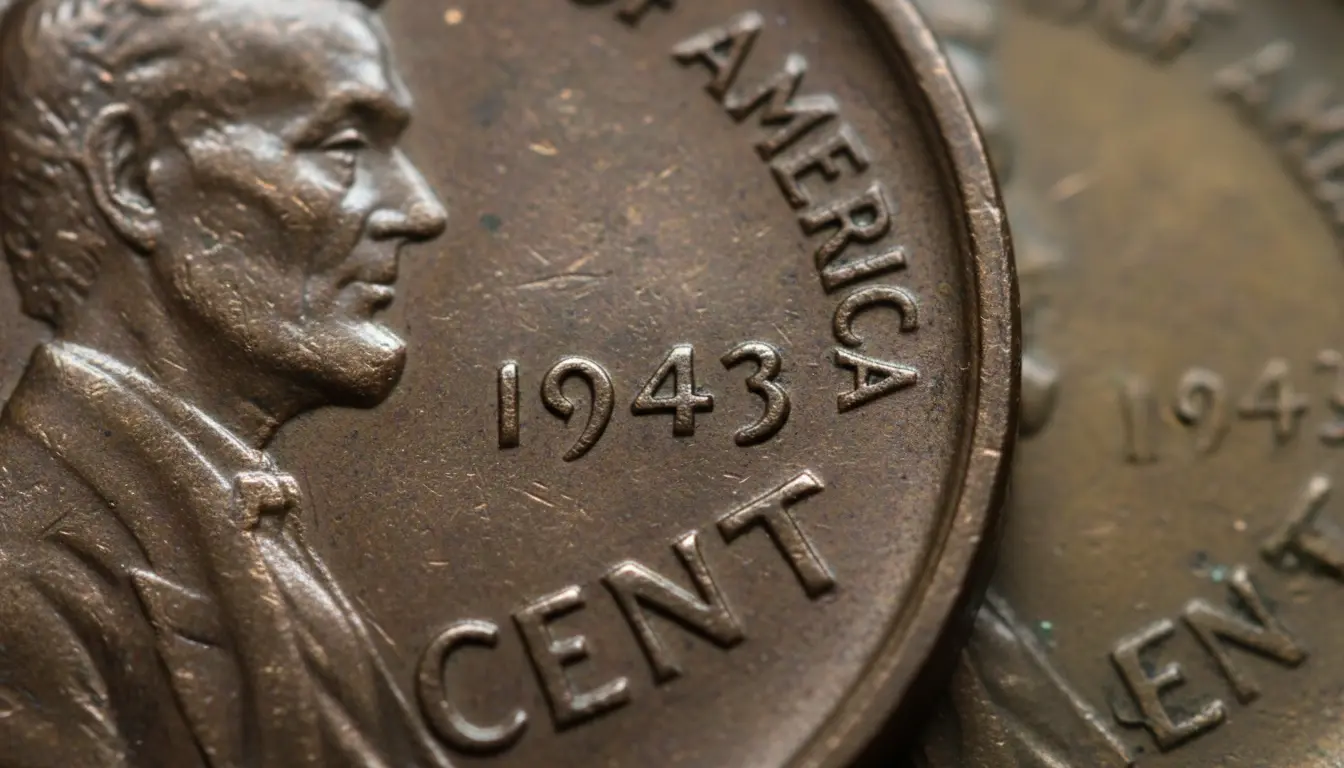
Most U.S. pennies from 1943 were struck on zinc-coated steel to save copper for World War II. A few 1943 pennies made on copper planchets instead are extreme rarities, and authenticated examples have sold for very large sums.
What is the Rare 1943 Copper Lincoln Penny?
In 1943 the U.S. Mint changed the cent composition from bronze to zinc-coated steel. A small number of 1943 pennies were struck on copper or bronze planchets by mistake, producing coins that look like prewar cents.

Collectors call these coins “1943 copper cents” or “1943 bronze cents.” They are mistakes or mix-ups in the minting process and are highly sought by numismatists because they are so scarce.
Why the 1943 Copper Penny Is Valuable
Value comes from extreme rarity, collector demand, and verified authenticity. A genuine 1943 copper penny backed by proper grading and provenance can command prices far above face value.
However, value varies dramatically by condition (grade), whether the coin has a mint mark, and whether it can be proven not to be altered or plated.
How to Check if Your 1943 Copper Lincoln Penny Is Real

If you think you have a 1943 copper penny, follow these steps before assuming it is worth a fortune. Do not clean or polish the coin.
Quick tests you can do at home
- Magnet test: Steel cents are magnetic. A true copper/bronze 1943 penny will not stick to a magnet.
- Weigh the coin: Typical weights — steel 1943 cent ≈ 2.70 g; bronze/copper cent ≈ 3.11 g. Use a precise digital scale (0.01 g resolution).
- Edge and color check: Copper/bronze has a warm brown or reddish tone. Look for flaking or differences that suggest copper plating on a steel core.
- Inspect under magnification: Check for plating lines, seams, or odd surface textures that indicate alteration.
Professional checks
If initial tests suggest a copper planchet, the next step is professional authentication. Send the coin to a reputable grading service such as PCGS or NGC for authentication and grading.
These services will detect alterations, plating, or modern fakes, and provide a grade that helps determine market value.
Authentication Tips and Red Flags

Many fake or altered 1943 copper pennies exist. Avoid quick judgments and watch for common red flags.
- Red flag: coin sticks to a magnet or weighs too little — likely a steel cent or plated steel.
- Red flag: visible seams, flaking, or inconsistent color — possible plating.
- Safe signs: consistent bronze weight and non-magnetic behavior plus expert authentication.
Could Yours Be Worth $2.1 Million?
Top authenticated 1943 copper pennies have sold for very large sums at auction. The headline figure of $2.1 million has circulated in reports about high-end sales and claimed valuations.
Realistically, only a tiny number of authenticated, high-grade examples reach the seven-figure range. Most genuine 1943 copper cents—especially those with lower grades or uncertain provenance—sell for substantially less.
What drives a seven-figure price?
- Strong third-party authentication and high numeric grade (MS or PR grades in the upper ranges).
- Clear chain of ownership and documented discovery history.
- Interest from major collectors or institutions in a public auction setting.
Practical Steps If You Think You Have One
Follow a careful, stepwise approach to avoid damaging value or getting scammed.
- Do not clean the coin. Cleaning can destroy provenance and reduce value dramatically.
- Run the home tests: magnet, weight, visual inspection under magnification.
- Photograph the coin clearly from both sides with scale reference.
- Submit images to a reputable coin forum or local dealer for a preliminary opinion.
- If promising, send the coin to a trusted grading service (PCGS, NGC) for full authentication and grading.
- If authenticated, consider selling through a major auction house or a specialist dealer in rare U.S. coins.
Most 1943 pennies were zinc-coated steel to conserve copper for WWII. The copper examples are mint errors and not normal circulation issues.
Real-World Example
A private collector found a 1943 penny in a jar of old change and noticed it did not stick to a magnet. After weighing it and getting a preliminary opinion from a dealer, the collector submitted the coin to a grading service.
Authentication confirmed the coin was struck on a copper planchet. The graded coin later sold at auction for a six-figure sum after attracting bids from multiple collectors. The sale shows the importance of expert authentication and using the right sales channel.
Bottom Line
A genuine 1943 copper Lincoln penny can be extremely valuable, but most alleged finds turn out to be plated or altered steel cents. Careful testing, documentation, and third-party authentication are essential to determine real value.
If you suspect you have one, protect the coin, follow the practical steps above, and consult reputable graders and auction houses before selling.