
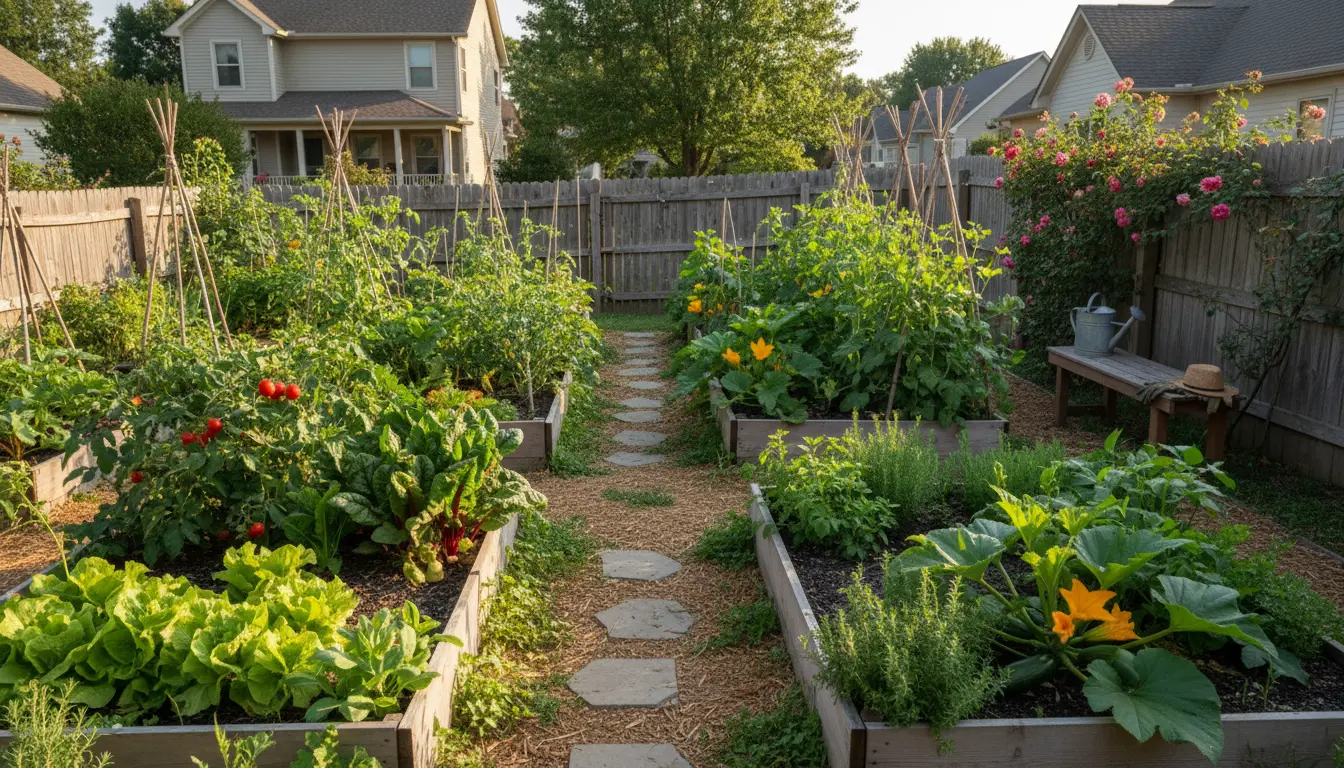
Starting a vegetable garden is a practical way to grow fresh food, save money, and enjoy an outdoor hobby. This guide gives clear, step-by-step instructions to help beginners plan, plant, and maintain a productive garden.
Why start a vegetable garden
A vegetable garden provides fresh produce and control over growing methods. You can reduce grocery trips and know where your food comes from.

Gardening also builds skills in soil care, seasonal planning, and pest management. Even small spaces can yield meaningful harvests with the right approach.
How to start a vegetable garden: Choose the right site
Location determines how well plants will grow. Look for a spot that gets at least 6 hours of direct sunlight per day for most vegetables.
Consider these site factors:
- Sun exposure: Full sun is ideal; partial shade works for leafy greens.
- Drainage: Avoid low spots where water pools after rain.
- Access: Place the garden near a water source and the house for easy care.
- Wind: Use a windbreak or fence if the area is very exposed.
How to start a vegetable garden: Prepare soil and beds

Good soil is the foundation of a productive garden. Prepare beds before planting to ensure roots establish quickly.
Steps to prepare soil:
- Clear grass and weeds from the bed area.
- Loosen soil to 8–12 inches with a fork or tiller.
- Add 2–3 inches of compost and mix well to improve structure and nutrients.
- Apply a balanced organic fertilizer if a recent soil test shows deficiencies.
Best soil for starting a vegetable garden
Vegetables prefer loose, well-draining soil with a pH between 6.0 and 7.0. If your soil is heavy clay or very sandy, amend with organic matter and compost.

Consider raised beds or containers if native soil is poor. They warm earlier in spring and offer better control over soil mix.
How to start a vegetable garden: Choose plants and timing
Select vegetables that match your climate, space, and experience level. Beginners benefit from easy, forgiving crops.
- Easy starters: Lettuce, radishes, cherry tomatoes, bush beans, zucchini, and herbs.
- Consider season: Plant cool-season crops (spinach, peas) in early spring or fall; warm-season crops (tomatoes, peppers) after last frost.
- Use transplants for longer-season plants to get a head start.
Follow seed packet timing and local planting calendars. Stagger plantings to extend harvests over weeks rather than all at once.
How to start a vegetable garden: Watering and maintenance
Consistent water is more important than frequent shallow watering. Aim for deep, infrequent watering to encourage strong roots.
- Water early morning to reduce evaporation and disease risk.
- Mulch beds with straw or shredded leaves to retain moisture and suppress weeds.
- Hand-pull weeds or use shallow cultivation; avoid disturbing roots near plants.
Pest and disease basics for a vegetable garden
Watch for common pests like aphids, slugs, and cucumber beetles. Start with nonchemical controls: row covers, hand-picking, and beneficial insects.
Rotate crops yearly to reduce soil-borne diseases and avoid planting related species in the same spot each year.
Adding a 2–3 inch layer of compost to your garden each year can improve soil structure and nutrient levels without synthetic fertilizers.
Small real-world example
Case study: Maria, an apartment balcony gardener, converted a 6-foot railing area into a container vegetable garden. She planted tomatoes, basil, and leaf lettuce in 12-inch containers.
In her first season she harvested fresh salad greens weekly and three tomato flushes. Her initial setup cost under $150, and she estimates saving about $200 on grocery greens and herbs that year.
Quick checklist to start a vegetable garden
- Pick a sunny site near water.
- Decide on beds, raised beds, or containers.
- Test soil or use well-mixed potting soil for containers.
- Add compost and prepare the planting area.
- Choose beginner-friendly vegetables and note planting dates.
- Install drip irrigation or plan a watering schedule.
- Mulch and monitor for pests; harvest regularly.
Starting a vegetable garden is manageable with a little planning and steady care. Follow these steps, adjust to your local climate, and learn from each season to improve yields and reduce effort.