
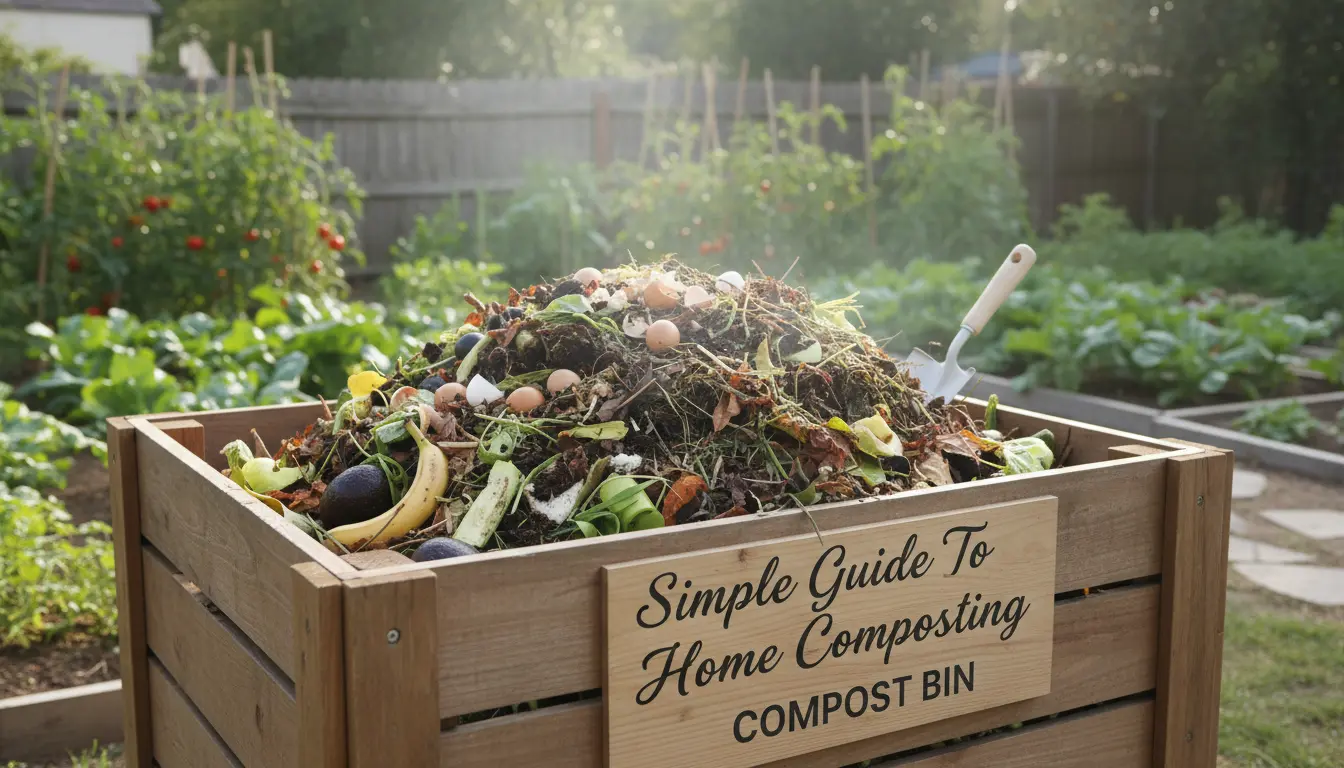
Why Home Composting Matters
Home composting turns kitchen and yard waste into a useful soil amendment. It reduces landfill waste, improves garden soil structure, and returns nutrients to the soil.
For beginners, composting may seem technical, but the basics are straightforward. This guide focuses on practical steps you can follow this week.
Getting Started with Home Composting

Choose a compost method that fits your space and time. Common options include a simple compost pile, a stationary bin, or a tumbling compost bin for faster results.
Select a location that is convenient and has some drainage and shade. Place the bin on soil rather than concrete to allow worms and microbes to join the process.
Essential Materials for Composting
- Brown materials (carbon): dry leaves, straw, cardboard, paper
- Green materials (nitrogen): vegetable scraps, coffee grounds, grass clippings
- Water: to keep the pile moist like a wrung-out sponge
- Air: turn or mix to add oxygen for aerobic decomposition
Step-by-Step: How to Start a Compost Bin
Start with a 6–12 inch layer of coarse brown material to help drainage. Add alternating layers of green and brown materials to balance carbon and nitrogen.

Aim for roughly 25–30 parts carbon to 1 part nitrogen by volume; in practice this means more browns than greens. If the pile smells, add browns. If it is dry and slow, add greens and water.
How to Maintain Your Compost
- Turn the pile every 1–2 weeks to add oxygen and speed decomposition.
- Keep moisture like a wrung-out sponge. Add water during dry spells; add browns if too wet.
- Chop or shred large pieces to speed up breakdown.
- Cover with a lid or tarp in heavy rain to prevent leaching and waterlogging.
Troubleshooting Common Compost Problems
Bad smells: Usually caused by too much wet, nitrogen-rich material or lack of air. Solution: add dry browns and turn the pile.
Pile not heating: Could be too small, too dry, or lacking nitrogen. Solution: add greens, water, and increase pile size to at least 1 cubic meter (if possible).

Pests: Avoid adding meat, dairy, oily foods, or pet waste. Use closed bins or bury scraps in the middle of the pile to reduce attraction.
Compost can increase soil water retention by up to 20 percent and reduce the need for chemical fertilizers. Adding 1 inch of finished compost to the top 6 inches of soil can improve soil structure and fertility.
When Is Compost Finished and How to Use It?
Finished compost is dark, crumbly, and smells earthy. It usually takes 2–6 months depending on materials, turning frequency, and temperature.
Use finished compost as a soil amendment, top-dressing, or potting mix ingredient. Apply a 1–3 inch layer to garden beds or mix into soil before planting.
Quick Uses for Finished Compost
- Top-dress vegetable beds to add nutrients slowly.
- Mix 20–30% compost into potting soil for improved drainage and nutrition.
- Create a compost tea by steeping compost in water and using it as a diluted liquid feed.
Small Real-World Case Study
Case: Sarah, a city homeowner, started a 60-liter tumbling compost bin on her balcony. She added kitchen scraps and shredded cardboard and turned the tumbler twice weekly.
After 4 months, Sarah produced about 30 liters of dark, crumbly compost. She mixed it into two raised vegetable beds and reported healthier tomato plants and reduced watering needs by about 10 percent the first season.
Tips for Success in Home Composting
- Keep a small countertop compost catcher to collect kitchen scraps and empty it daily.
- Shred or chop materials to speed decomposition.
- Balance greens and browns; when in doubt, add more brown material.
- Record a simple log for temperature and turning dates to monitor progress.
Quick Start Checklist for Home Composting
- Choose bin type: open pile, stationary bin, or tumbler.
- Place bin on soil in partial shade.
- Layer browns and greens; maintain moisture and airflow.
- Turn regularly and check for odor or pests.
- Harvest finished compost and use in the garden.
Home composting is a simple, practical way to manage organic waste and improve garden health. Start small, follow these steps, and adjust based on what your pile needs. With a little attention, you can produce rich compost even in a small space.