
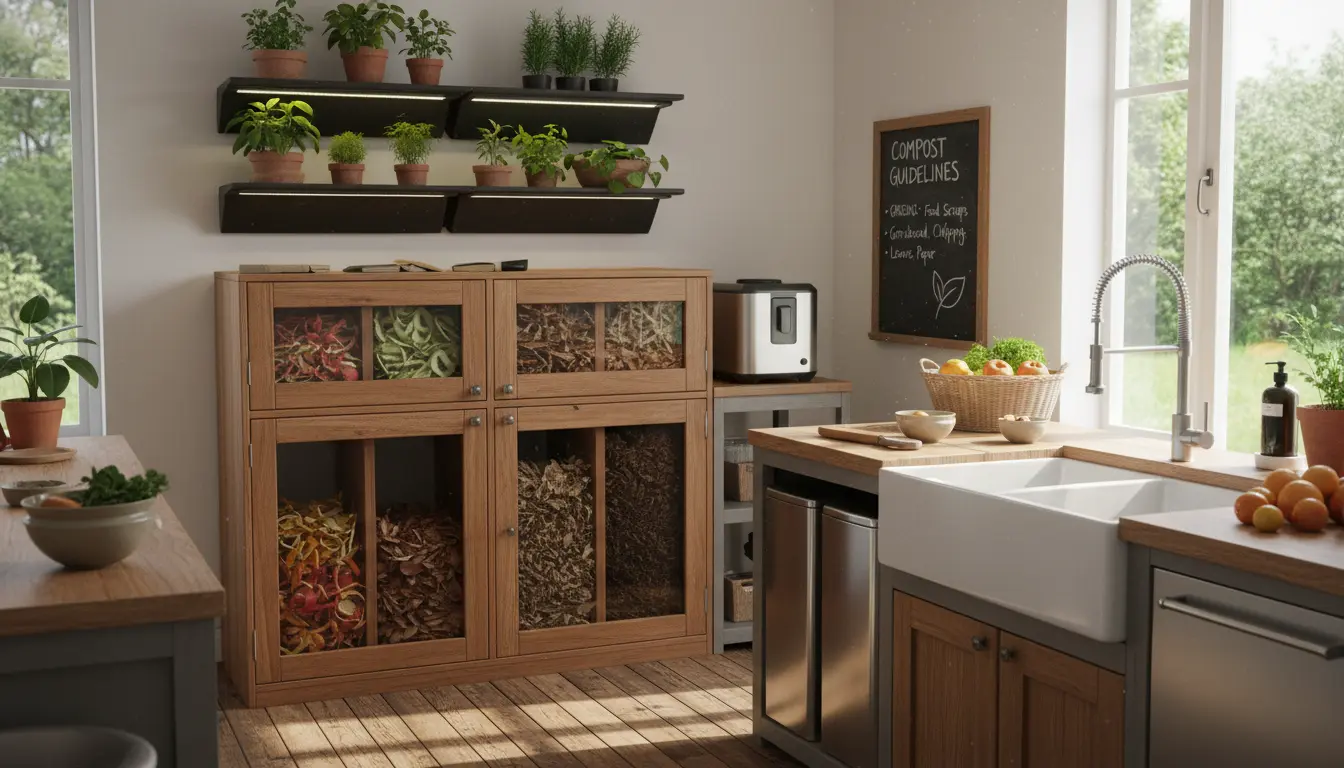
Why Indoor Composting Matters
Indoor composting turns food scraps into a useful soil amendment and reduces household waste. It is ideal for apartment dwellers and anyone without outdoor garden space.
This guide explains practical indoor composting methods, setup steps, maintenance, and common problems. Follow the steps that best match your living situation and time availability.
Choose an Indoor Composting Method

Different systems work better for different households. Choose one based on space, effort, and the type of scraps you produce.
- Worm bin (vermicompost) — Best for steady kitchen scraps and produces rich castings.
- Bokashi — Fermentation system that handles meat and dairy; needs later burial or mixing with soil.
- Tumbler or insulated bin — Small, aerobic systems that need occasional turning.
- Compost pail with pickup — For those who want to collect scraps and have them taken to a municipal or community compost site.
Which method suits you?
Consider these quick checks before buying equipment. Worm bins need moderate attention and a cool spot. Bokashi requires airtight buckets and some oversight. Tumblers need room to rotate and a balanced mix.
Getting Started With a Worm Bin
Worm bins are a popular indoor option because they are compact and quiet. Start with a plastic or wooden bin with a lid and drainage holes.

Follow these setup steps to begin:
- Drill small ventilation holes near the top and a drainage hole near the bottom for excess liquid (tea).
- Add bedding: shredded cardboard, paper, and coconut coir moistened to the feel of a wrung-out sponge.
- Introduce composting red worms (Eisenia fetida) — start with about 1 pound for moderate kitchen waste.
- Feed gradually: bury small amounts of food under the bedding to avoid fruit flies and odors.
Feeding and maintenance for worm bins
Feed kitchen scraps in small, mixed batches. Avoid citrus in large amounts, oily foods, and onion peels at first.
Check moisture weekly; the bin should be damp but not soggy. Harvest castings every 3–6 months depending on worm population.
Setting Up a Bokashi System

Bokashi is an anaerobic fermentation process that can handle meat, dairy, and cooked foods. It uses bran inoculated with beneficial microbes.
To start, use two stacked airtight buckets with spigots for drainage. Add scraps in layers, sprinkle bokashi bran, and press down to remove air.
- Seal the bucket after each addition.
- Drain fermented liquid every few days; dilute and use as a fertilizer or down the drain.
- After 2–4 weeks, bury the fermented mass in soil or add it to a garden bed to complete decomposition.
Basic Indoor Composting Rules
Follow these simple rules to avoid odors and pests and to speed decomposition.
- Balance greens (vegetable scraps, coffee grounds) with browns (paper, cardboard, dry leaves).
- Avoid large whole items; chop or blend scraps to increase surface area.
- Keep the system aerated if aerobic (turn or mix every 1–2 weeks).
- Monitor moisture: too wet leads to anaerobic odors; too dry slows breakdown.
Troubleshooting Common Problems
Even simple systems can encounter issues. Here are quick fixes for the most common problems.
- Bad odors: Add more browns and aerate; check for buried pans of rotting food.
- Fruit flies: Bury fresh scraps, use tight lids, or add a layer of damp paper on top.
- Slow breakdown: Chop scraps smaller, increase temperature slightly, or add a handful of finished compost or soil to inoculate microbes.
Real-World Example: Small Apartment Worm Bin
Case study: A two-person household in a 600 sq ft apartment started a 10-liter worm bin. They began with 0.9 kg of red worms and added about 500–700 g of mixed kitchen scraps per week.
Within four months they harvested roughly 6 liters of worm castings. Their kitchen waste to landfill decreased by about 60% and they used castings for potted herbs and a small balcony garden.
Practical Tips to Keep Going
Start small and build habits. A compact countertop pail helps collect scraps and removes the friction of composting regularly.
Label lids, keep a small shredder for paper browns, and set a weekly reminder to check moisture and rotation. Small, consistent actions prevent most failures.
When to Consider Outsourcing
If you produce large volumes of food waste or prefer a low-maintenance option, look into municipal compost pickup or community compost sites. Some cities accept mixed food waste and reduce the need for home management.
Summary: Indoor Composting Basics
Indoor composting is achievable in small spaces and offers environmental and gardening benefits. Pick a method—worm bin, bokashi, or tumbler—based on your needs.
Maintain balance, monitor moisture, and troubleshoot early. With modest effort you can convert kitchen scraps into valuable soil amendment all year round.