
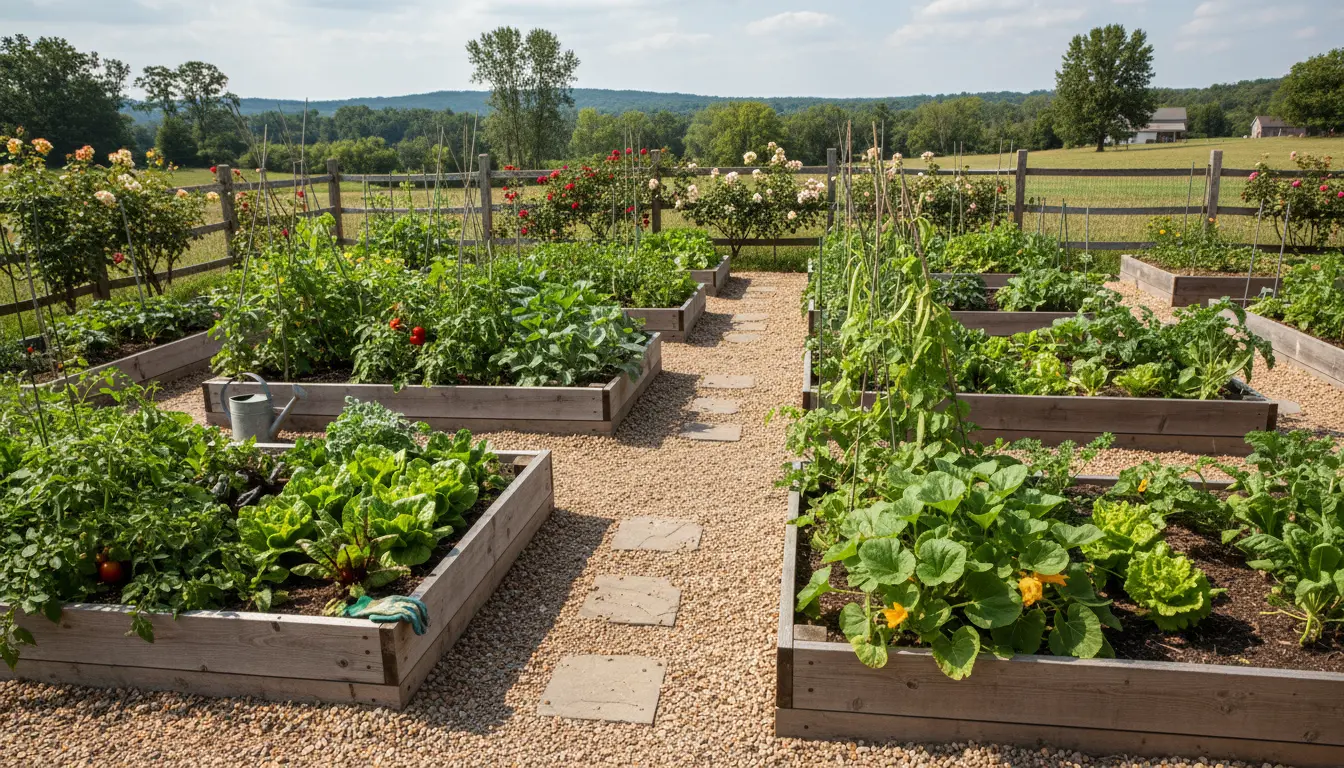
Why start a small vegetable garden
Starting a small vegetable garden is a practical way to grow fresh food, save money, and learn sustainable habits. A compact plot or a few containers on a balcony can produce meaningful yields with modest effort.
This guide shows clear steps to plan, prepare, plant, and maintain a productive small vegetable garden you can manage year-round.
Plan your small vegetable garden

Good planning makes planting easier and reduces mistakes. Begin by choosing a location that receives at least 5–6 hours of sun daily for most vegetables.
Decide on a format: in-ground bed, raised bed, or containers. Each has trade-offs in cost, soil control, and drainage.
Site selection for a small vegetable garden
Check sunlight, water access, and protection from strong winds. Avoid low spots that collect cold air or water.

Measure the space and sketch a simple layout. Small gardens benefit from compact, square-foot or intensive planting designs.
Prepare soil for a small vegetable garden
Soil quality determines success. Test soil with a simple kit or send a sample to a local extension for pH and nutrient analysis.
For raised beds or containers, choose a mix of quality topsoil, compost, and a light amendment like perlite for drainage.
Soil preparation steps
- Remove weeds and debris. Turn or loosen soil to 8–12 inches deep.
- Add 2–4 inches of compost and mix thoroughly for nutrients and structure.
- Adjust pH if needed: lime raises pH, sulfur lowers it. Follow test recommendations.
Choose plants suited for a small vegetable garden

Pick vegetables that match your climate, season length, and available sun. For small spaces, prioritize high-value, compact crops.
Good options include tomatoes (determinate or patio varieties), peppers, lettuce, spinach, bush beans, radishes, and herbs.
Plant selection tips
- Use dwarf or bush varieties to save space.
- Stagger plant maturity dates for continuous harvests.
- Choose disease-resistant cultivars listed on seed packets.
Planting and spacing in a small vegetable garden
Proper spacing reduces competition and disease. Follow seed packet or plant tag spacing, but consider intensive techniques where compatible.
Square-foot gardening places 1–16 plants in one square foot depending on size. Interplant fast-maturing greens between slower crops.
Example planting layout
- 4 ft x 4 ft raised bed: tomatoes (2), basil (2), leaf lettuce (6–9), radishes (8–10), and bush beans (6).
- Containers: one tomato per 5-gallon pot, herbs in 2–3 gallon pots.
Watering and maintenance for a small vegetable garden
Consistent moisture is vital. Water deeply and less frequently to encourage strong roots rather than light daily sprinkling.
Mulch with straw or shredded leaves to retain moisture, suppress weeds, and moderate soil temperature.
Weekly care checklist
- Check soil moisture and water if the top 1–2 inches are dry.
- Remove weeds and dead plant material promptly.
- Pinch or prune tomatoes and peppers to improve airflow if overcrowded.
- Fertilize lightly mid-season with a balanced organic fertilizer.
Manage pests and diseases in a small vegetable garden
Use integrated pest management: monitor, identify, and use the least invasive control first. Encouraging beneficial insects reduces pest pressure.
Row covers, handpicking, neem oil sprays, and biological controls can be effective and safe for small gardens.
Common issues and quick fixes
- Aphids: spray with water or introduce ladybugs.
- Slugs: set beer traps or use copper barriers.
- Fungal spots: improve airflow, avoid overhead watering, and remove infected leaves.
Many leafy greens can be harvested as cut-and-come-again crops. You can harvest outer leaves repeatedly instead of pulling the whole plant.
Case study: Sarah’s balcony small vegetable garden
Sarah had a 6-foot balcony and wanted fresh herbs and salad greens. She used three 10-inch pots and a 2 ft x 2 ft raised box.
She planted cherry tomatoes, basil, arugula, and leaf lettuce. With weekly watering and monthly compost tea, she harvested enough greens for salads three times a week and several pints of tomatoes over the season.
Her key success points were choosing compact varieties, mulching, and harvesting regularly to encourage regrowth.
Final tips to start a small vegetable garden
Start small and expand as you learn. Track what grows well in your microclimate and keep notes on planting dates and varieties.
Remember: regular care, good soil, and appropriate plant choices are the most important factors for a productive small vegetable garden.
Quick starter checklist
- Choose a sunny spot and format (bed, raised bed, or containers).
- Test and amend soil; add compost.
- Select compact, short-season varieties.
- Plant with proper spacing and mulch deeply.
- Water consistently and monitor for pests.
With these steps you can start a small vegetable garden that delivers fresh produce and gardening enjoyment without overwhelming time commitments.