
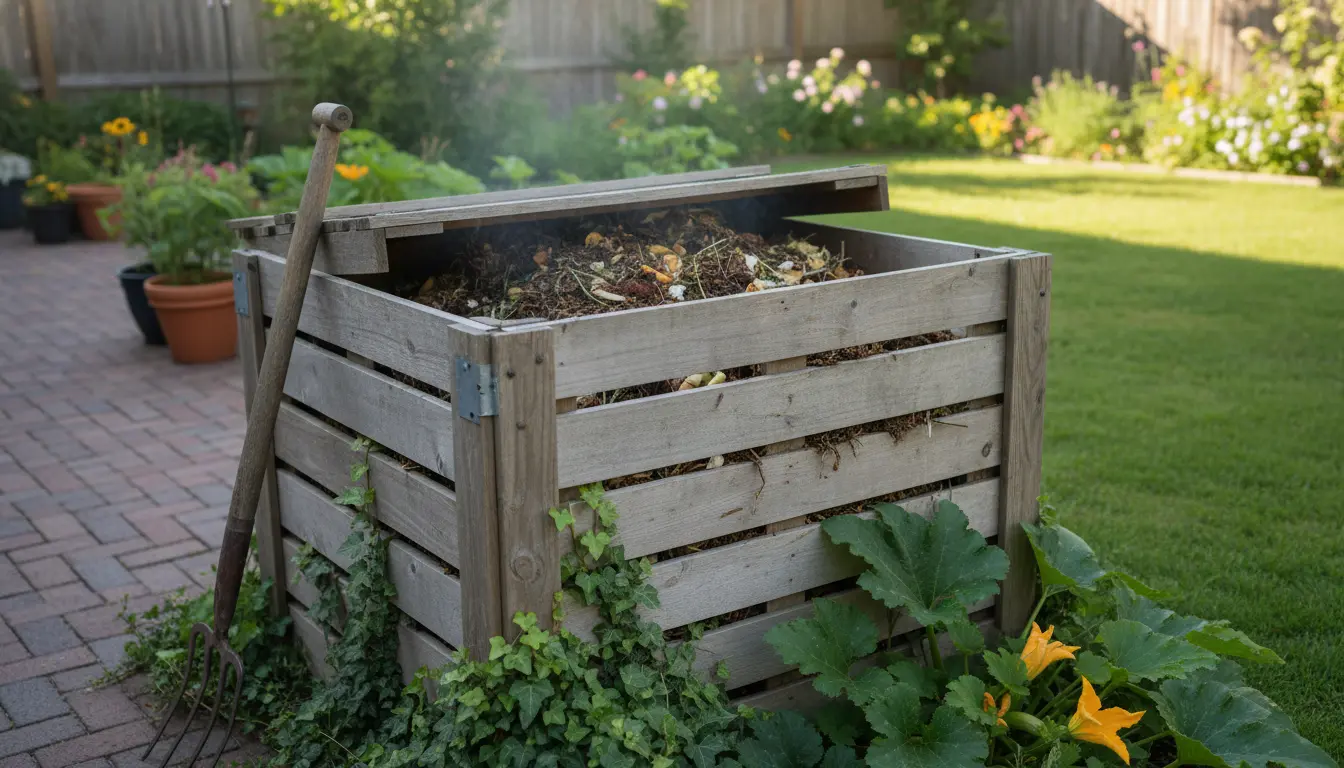
Home composting is a low-cost way to turn kitchen scraps and yard waste into rich soil. This guide explains practical steps to start composting at home and keep the process healthy and fast.
How Home Composting Works
Composting is the controlled breakdown of organic material by microbes and worms. The process needs the right balance of carbon, nitrogen, moisture, and air to produce humus.

Understanding these four elements helps you manage a compost pile so it breaks down quickly without odors or pests.
Essential Materials for Home Composting
Start with simple materials you already have. Use a mix of green and brown items to keep the carbon to nitrogen ratio balanced.
- Green materials: vegetable scraps, coffee grounds, fresh grass clippings.
- Brown materials: dry leaves, shredded paper, straw, small twigs.
- Optional additions: finished compost or garden soil to introduce microbes.
How to Start Home Composting
Choose a container or space: a compost bin, tumbler, or a corner of the yard works well. Location should be convenient and have some shade.

Follow these basic steps to build your first pile.
Step 1: Prepare the Base
Lay down a layer of coarse material like twigs or straw to improve drainage and airflow. This helps prevent a waterlogged bottom.
Step 2: Layer Greens and Browns
Add a 2–3 inch layer of brown materials, then a thinner layer of greens. Repeat until the bin is about 60–75% full.

Aim for roughly a 3:1 ratio of browns to greens by volume for a balanced mix.
Step 3: Maintain Moisture and Air
The pile should be as damp as a wrung-out sponge. Too dry and decomposition slows; too wet and odors can appear.
Turn the pile every 1–2 weeks with a pitchfork or use a tumbling bin to aerate and speed up decomposition.
Troubleshooting Home Composting
Common problems are simple to fix once you know what to check. Use small adjustments rather than a full restart.
- Bad smell: Add brown materials and turn the pile. Odors usually come from too much wet green material or lack of air.
- Pests: Avoid adding meat, dairy, or oily foods. Use a closed bin or bury food scraps inside the pile.
- Slow breakdown: Check moisture and add more greens or a scoop of finished compost to add microbes.
How Long Does Home Composting Take?
Times vary by method and conditions. A well-managed hot pile can produce compost in 2–3 months. A slower, cold compost method may take 6–12 months.
Turning the pile and maintaining moisture speeds things up. Consistency matters more than aggressive inputs.
Uses of Finished Compost
Finished compost is dark, crumbly, and smells earthy. Use it to improve soil structure, water retention, and nutrient content.
- Mix into garden beds at planting time.
- Topdress lawns and container plants with a thin layer.
- Create potting mixes by blending compost with sand or coconut coir.
Quick Tips for Busy Beginners
- Keep a small counter bucket for kitchen scraps and empty it regularly into the outdoor bin.
- Shred or chop brown materials to increase surface area and speed decomposition.
- Use a compost thermometer if you want to manage a hot compost pile precisely.
Small Case Study: A Backyard Compost Win
Maria, a homeowner with a small yard, started a 3-bin system using kitchen scraps and autumn leaves. She turned each bin weekly and kept a spray bottle to maintain moisture.
In four months, Maria had enough finished compost to refresh two raised beds. Her vegetables produced larger yields and required less watering the following season.
Safety and Local Rules for Home Composting
Check local regulations, especially in apartments or communities with HOA rules. Keep compost bins tidy to avoid neighbors’ concerns.
Avoid adding diseased plants, invasive weeds, or pet waste to prevent spreading pathogens or weed seeds.
Final Checklist to Start Home Composting
- Choose a bin type and location with some shade.
- Collect greens and browns and aim for a 3:1 brown to green ratio.
- Monitor moisture and aerate by turning the pile every 1–2 weeks.
- Use finished compost to improve garden soil and reduce waste.
Getting started with home composting takes a little planning but delivers continuous benefits for your garden and reduces household waste. Follow the steps above, adjust for your climate, and expect better soil and healthier plants within months.