
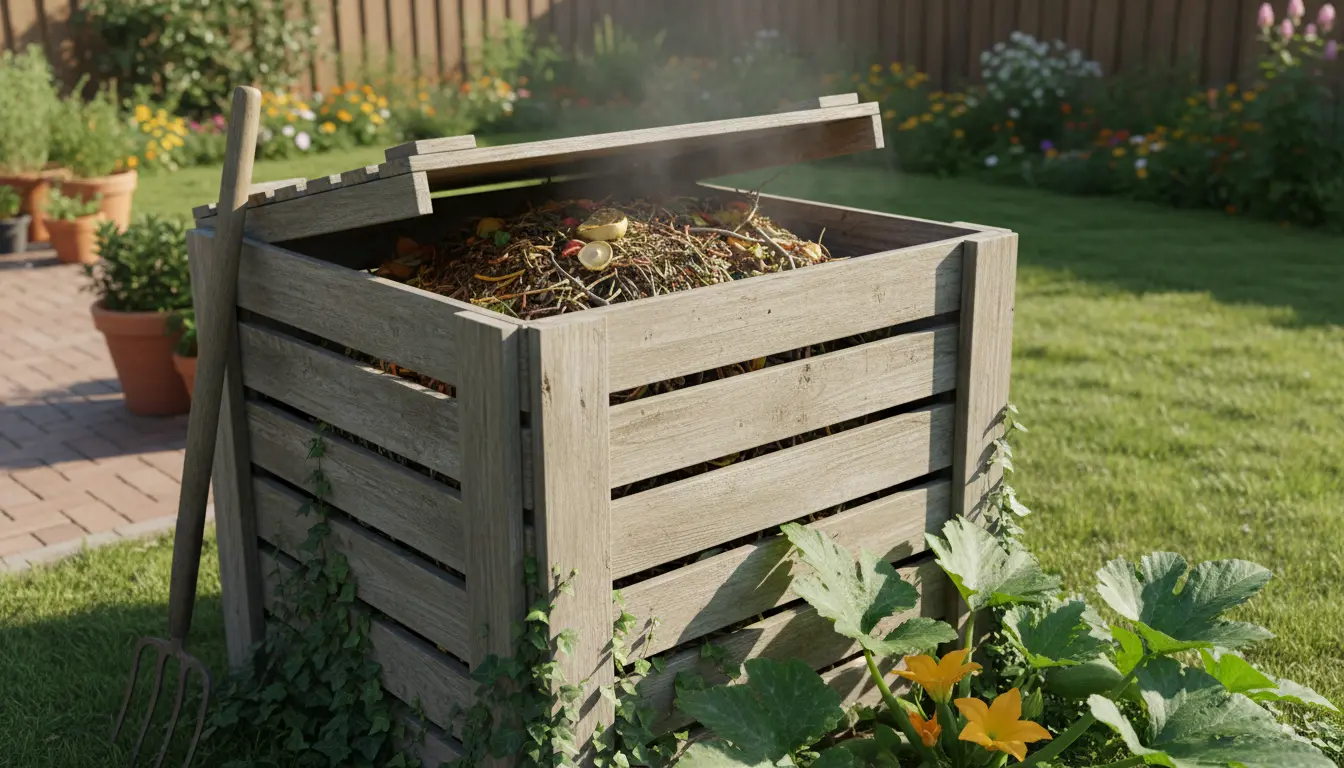
Why Composting at Home Matters
Composting at home turns food scraps and yard waste into nutrient-rich soil. It reduces landfill waste and lowers household emissions.
Home compost supports gardens, saves money on soil amendments, and encourages healthier soil structure for plants.
How to Start Composting at Home: Step-by-Step

Starting composting at home is simple if you follow a consistent routine. You need a container, a mix of materials, and occasional maintenance.
Choose a Location
Select a well-drained spot with partial shade. A location near the kitchen or a backyard corner makes it easy to add materials regularly.
Pick a Compost System
Choose a bin that fits your space and needs. Options include tumblers, stationary plastic bins, wooden enclosures, and worm bins for indoor use.
Layering Greens and Browns

Start with a base layer of coarse brown materials like twigs to aid airflow. Alternate layers of greens and browns to balance carbon and nitrogen.
- Greens: fruit and vegetable scraps, coffee grounds, fresh grass clippings
- Browns: dry leaves, cardboard, shredded paper, straw
Moisture and Aeration
A healthy compost pile is as moist as a wrung-out sponge. If it is too wet, add more browns and turn the pile to increase airflow.
Turn or tumble the pile every 1–2 weeks to introduce oxygen and speed decomposition.
When to Use Finished Compost

Finished compost looks dark, crumbly, and earthy-smelling. Depending on conditions, this can take 2–6 months for hot composting and longer for slower methods.
Use finished compost as mulch, a soil amendment, or to enrich potting mixes.
Choosing a Compost Bin for Home Composting
Select a bin based on space, budget, and the speed you want. Tumblers are faster but costlier, while simple piles or bins are cheap and low-tech.
- Small apartment: worm bin or enclosed countertop compost collector paired with municipal composting if available.
- Backyard: 3-bin system or large enclosed bin for larger volumes and better heat retention.
- Cold climates: insulated bins or composting with extra browns to help retain heat.
What to Compost and What to Avoid
Knowing acceptable inputs prevents odors and pests. Stick to the right mix of materials and avoid problematic items.
- Good: fruit and vegetable scraps, coffee grounds, eggshells, yard trimmings, shredded paper
- Avoid: meat, dairy, oils, diseased plants, pet waste, and cooked foods that attract pests
Troubleshooting Common Home Composting Problems
Bad Odor
Smells usually mean too much moisture or too many greens. Add dry browns, turn the pile, and check drainage.
Pests and Rodents
If pests appear, avoid adding meat and dairy, keep the bin sealed, and bury new food scraps under browns. Consider using a rodent-proof bin.
Slow Decomposition
Slow activity often results from insufficient nitrogen, oxygen, or moisture. Add fresh greens, mix the pile, and ensure it’s moist but not soggy.
Case Study: Small Apartment Home Composting Setup
Maria, a city dweller with limited balcony space, started a worm bin using a 10-liter plastic container. She added kitchen scraps and shredded cardboard as bedding.
Within three months she produced enough compost to top-dress three potted herbs and reduced weekly trash by one bag. Key actions included weekly feeding, maintaining moisture, and occasional harvesting of castings.
Practical Tips for Success with Home Composting
- Start small: begin with a manageable bin and gradually add capacity as you learn.
- Record a simple schedule: note when you add materials and turn the pile to track progress.
- Use a kitchen caddy: keep a small container with a lid to collect scraps before transferring them outdoors.
- Temporarily store seasonal browns like dry leaves to ensure supply.
Composting reduces household waste by up to 30% and can cut methane emissions from landfills. A well-managed compost pile also improves soil water retention.
Final Checklist for Starting Home Composting
- Choose a bin and location suitable for your space.
- Gather a balance of greens and browns before you begin.
- Maintain moisture and turn the pile regularly.
- Monitor for odors, pests, and moisture issues and adjust accordingly.
Composting at home is practical and scalable. Begin with simple steps, learn from small experiments, and expand your system as you gain confidence. With regular attention, you’ll produce valuable compost that benefits your plants and the environment.