
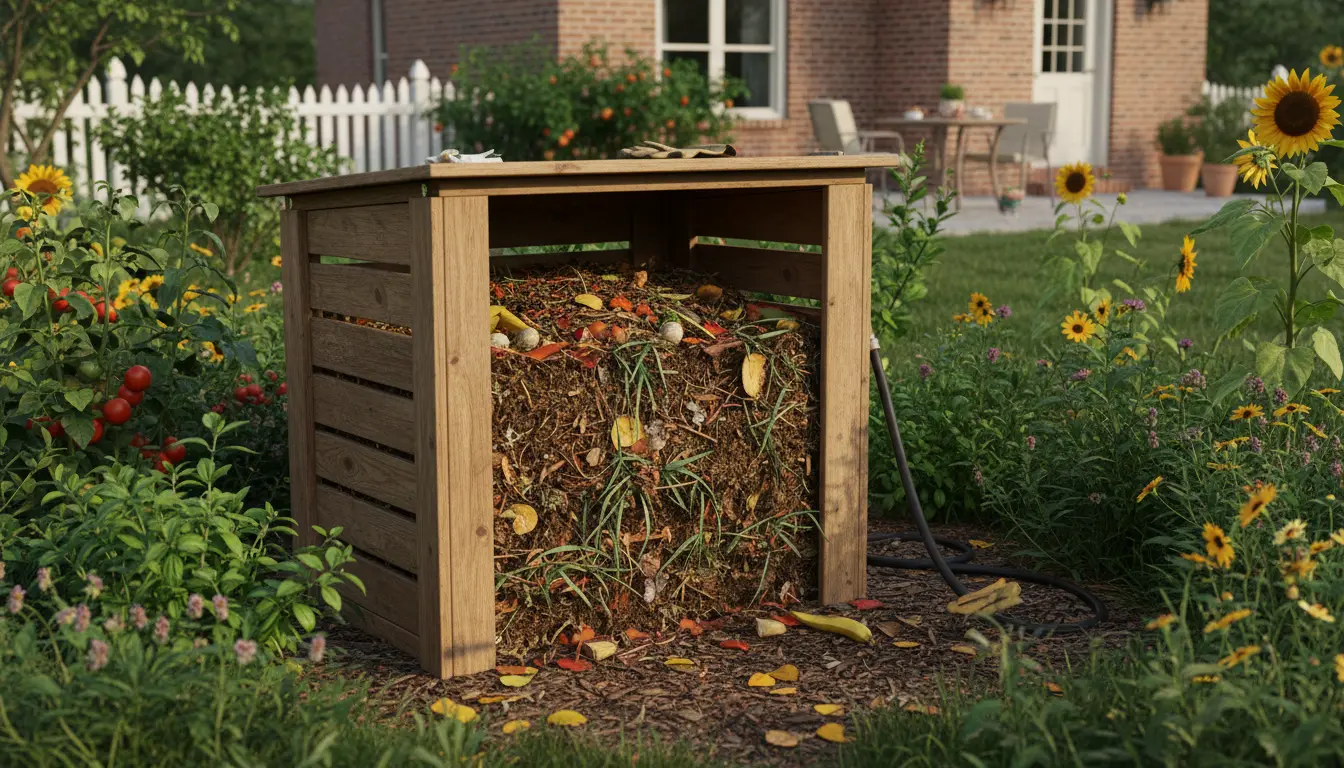
Composting at home turns organic waste into valuable soil amendment and reduces trash. This guide shows practical steps you can follow to start, manage, and troubleshoot a home compost system.
Why Composting at Home Matters
Home composting reduces landfill waste and lowers methane emissions from garbage. It also produces nutrient-rich compost that improves soil structure and plant health.

For gardeners and non-gardeners alike, compost adds organic matter that retains moisture and supports beneficial microbes. Getting started requires minimal tools and some simple rules.
How to Start Composting at Home
Follow a few clear choices when you begin composting at home: select a system, gather materials, and balance greens and browns. Small planning up front saves time and avoids common problems.
Choose a Compost System for Home Composting
Select a setup based on space, budget, and effort. Common systems work well for most households.
- Tumbler: Enclosed drum that you turn; faster and neater but costs more.
- Compost bin: Stationary bin or wooden frame; affordable and simple.
- Pile/heap: No container needed; best if you have space and patience.
- Vermicompost (worms): Uses red worms for kitchen scraps; great for apartments or limited space.
What to Add and What to Avoid When Composting at Home

Balance nitrogen-rich ‘greens’ and carbon-rich ‘browns’ to keep the process moving. Aim for a general ratio of about 1 part greens to 2–3 parts browns by volume.
- Greens (nitrogen): vegetable peels, fruit scraps, coffee grounds, fresh grass clippings.
- Browns (carbon): dry leaves, shredded paper, cardboard, straw, wood chips.
- Avoid: meat, dairy, oily foods, diseased plants, weeds with seeds, and pet feces.
Managing Your Compost Pile
Proper management keeps composting at home effective and low-maintenance. Focus on aeration, moisture, and particle size.
- Turn regularly: Every 1–2 weeks for active piles, less often for slow systems.
- Maintain moisture: Compost should feel like a wrung-out sponge — damp but not soggy.
- Shred materials: Smaller pieces decompose faster; shred or chop large scraps and cardboard.
Speeding Up Composting at Home
To accelerate decomposition, increase surface area and oxygen. Mixing in finished compost or garden soil adds microbes that help break down materials faster.

Use a compost thermometer if you want precise tracking. Hot composting reaches 131–160°F (55–70°C) and kills many seeds and pathogens.
Troubleshooting Common Problems in Home Composting
Even a simple compost pile can show issues. Identifying symptoms helps fix them quickly and keeps your system healthy.
- Bad odors: Usually from too much wet green material or poor aeration. Add browns and turn the pile.
- Pile too dry: Add water and more greens to rehydrate microbes.
- Slow decomposition: Chop materials smaller, increase moisture, or add more nitrogen-rich greens.
- Pests: Avoid adding meat and oily foods. Use a closed bin or cover food scraps with browns.
Small Real-World Example: A 6-Month Case Study of Home Composting
Case: Two-person household with a 35-gallon tumbler and a small garden. They started with a base of shredded leaves and finished compost.
Process: They added daily kitchen scraps covered with dry leaves or shredded newspaper. They turned the tumbler twice a week and monitored moisture.
Results: After six months they produced about 40 liters of dark, crumbly compost. The compost improved their soil, reduced watering needs, and cut garbage volume by about 25 percent.
Practical Tips for Long-Term Success with Composting at Home
Consistency and simple habits produce the best results. Set a routine for adding materials and maintaining the pile.
- Keep a small counter bin with a tight lid for kitchen scraps; empty it into your compost system every 1–3 days.
- Store a supply of dry browns near your compost site for easy layering.
- Label bins and rotate piles: Let one pile mature while starting another for continuous supply.
- Test your compost: Finished compost is dark, crumbly, and earthy-smelling. It should not smell sour or rotten.
Composting at home is a practical way to reduce waste and improve soil. Start with a simple system, learn by doing, and adjust as you go. Small daily choices quickly add up to healthier gardens and less trash.