
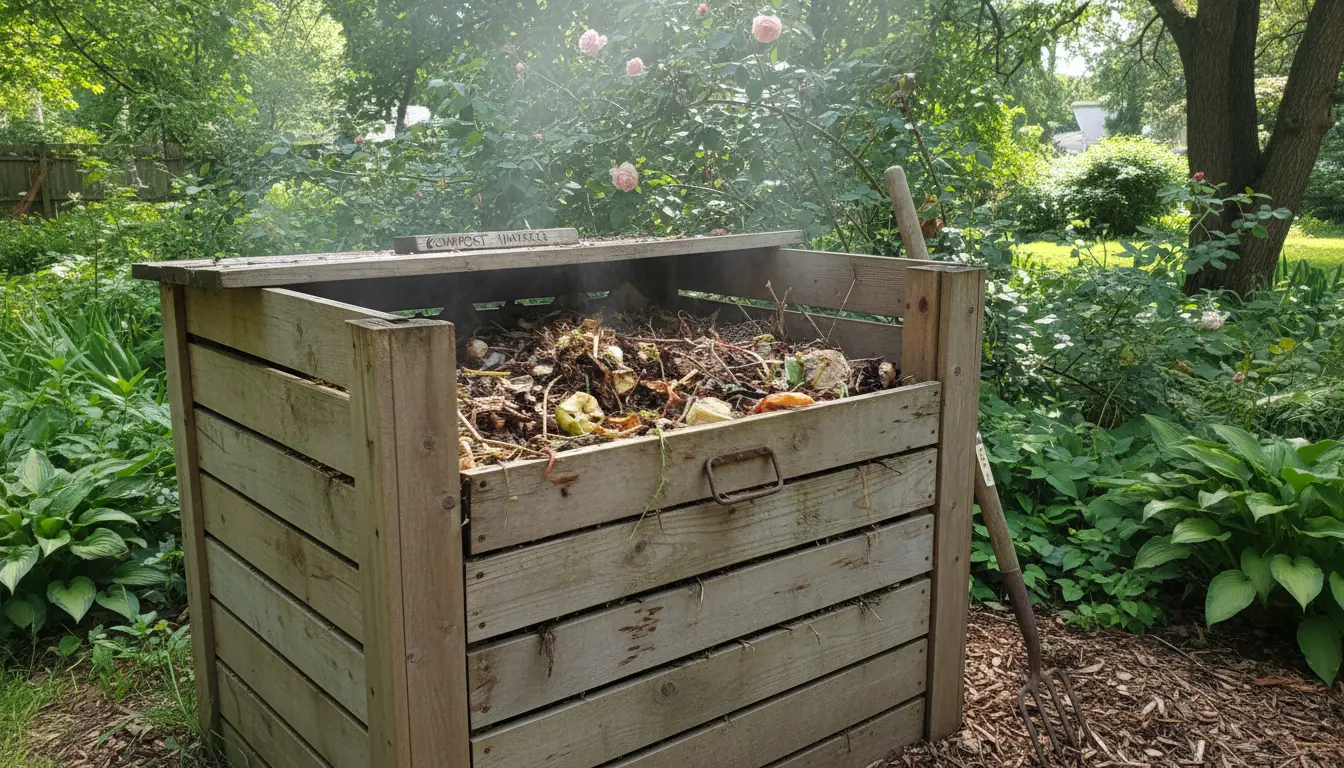
Backyard composting turns kitchen scraps and yard waste into a useful soil amendment. This guide gives a clear, practical path to start and maintain a backyard compost system that works for small yards and urban homes.
Why Backyard Composting Matters
Backyard composting reduces landfill waste and returns nutrients to the soil. It saves money on fertilizer and improves garden soil structure and water retention.

Composting also lowers methane emissions from landfills, making it a simple climate-friendly practice anyone can adopt.
Key Benefits of Backyard Composting
- Reduces household waste and trash costs.
- Improves soil fertility and plant health.
- Conserves water by increasing soil organic matter.
- Offers a low-cost source of garden amendment.
Getting Started with Backyard Composting
Decide what kind of backyard composting setup fits your space and needs. Options range from simple piles to enclosed bins and tumblers.
Choose a Bin Type for Backyard Composting
- Open pile: Cheapest and easiest. Works well if you have space and no rodent issues.
- Stationary bin: Keeps material contained and looks tidy. Available in plastic or wood designs.
- Tumbler: Speeds up mixing and aeration. Good for small yards and frequent turning.
Where to Place Your Compost
Choose a level, well-drained spot with partial shade. Close proximity to the kitchen makes adding scraps easier.

Avoid placing compost directly against wooden structures to prevent moisture damage. Leave access for turning and harvesting.
What to Compost in Your Backyard
Successful backyard composting depends on balancing carbon-rich and nitrogen-rich inputs. Think of them as browns and greens.
Examples of Browns and Greens
- Browns (carbon): Dry leaves, straw, shredded paper, cardboard.
- Greens (nitrogen): Vegetable scraps, coffee grounds, grass clippings, fresh garden trimmings.
Maintain roughly a 3:1 ratio of browns to greens by volume for a stable, odor-free pile.
How to Build and Maintain a Backyard Compost Pile

Follow simple steps to start a pile that heats up, decomposes quickly, and produces rich compost.
Step-by-Step Backyard Composting Process
- Layer a 6–8 inch base of coarse browns like twigs to help drainage and airflow.
- Add alternating layers of greens and browns, keeping the pile moist like a wrung-out sponge.
- Turn or mix the pile every 1–2 weeks for aerobic decomposition. Use a pitchfork or tumbler.
- Monitor temperature: warm piles (110–150°F / 43–66°C) break down faster and kill seeds and pathogens.
- When material is dark, crumbly, and earthy-smelling, it is finished and ready to use.
How Long Does Backyard Composting Take?
Time varies by method. Regularly turned hot piles can finish in 2–3 months. Slow cold composting takes 6–12 months.
Troubleshooting Backyard Composting Problems
Common issues are easy to fix with small adjustments.
Common Problems and Fixes
- Bad odor: Add more browns and turn the pile to increase aeration.
- Slow breakdown: Chop materials smaller and increase moisture and nitrogen-rich greens.
- Pests: Bury food scraps beneath browns or use a rodent-proof bin. Avoid meat, dairy, and oily foods.
- Dry pile: Water lightly and mix to redistribute moisture.
Small Real-World Case Study
A family in a suburban townhouse started backyard composting in a 110-gallon bin. They collected kitchen scraps and yard waste and followed a 3:1 browns-to-greens rule.
Within five months they harvested dark compost and reduced weekly trash by one-third. They used the compost on potted tomatoes and saw stronger growth and fewer fertilizer purchases.
Did You Know?
Composting can reduce household waste volume by up to 30 percent and significantly cut methane emissions from landfills.
Using Finished Compost in Your Backyard
Incorporate finished compost into garden beds at a rate of 1–2 inches and mix into the topsoil. Use as a potting mix amendment or top dressing for lawns.
Compost improves soil structure, adds nutrients, and supports beneficial microorganisms.
Quick Checklist to Start Backyard Composting
- Choose bin type: pile, bin, or tumbler.
- Pick a spot with partial shade and easy access.
- Collect both browns and greens and keep a 3:1 balance.
- Keep moisture like a wrung-out sponge and turn regularly.
- Harvest finished compost when crumbly and earthy-smelling.
Backyard composting is a practical, low-cost way to manage organic waste and improve your garden. Start small, observe the pile, and adjust materials and aeration until you find a routine that fits your schedule and yard.