
Why Home Composting Matters
Home composting turns kitchen and yard waste into nutrient-rich soil. It reduces household trash and supports healthier plants without chemical fertilizers.
For beginners, composting is a straightforward practice once you understand the basic inputs and process. This guide walks through clear, practical steps to start composting at home.
Home Composting Basics
What Is Home Composting

Home composting is the controlled decomposition of organic materials in a bin or pile. Microbes break down items into humus, which improves soil structure and water retention.
It requires a balance of carbon-rich and nitrogen-rich materials, moisture, and occasional turning to keep the process moving.
Essential Ingredients for Home Composting
- Carbon ‘browns’: dry leaves, shredded paper, straw, cardboard.
- Nitrogen ‘greens’: vegetable scraps, coffee grounds, fresh grass clippings.
- Water: keep the pile as moist as a wrung-out sponge.
- Air: turning introduces oxygen for aerobic decomposition.
Step-by-Step Home Composting Guide
1. Choose a Location and Container
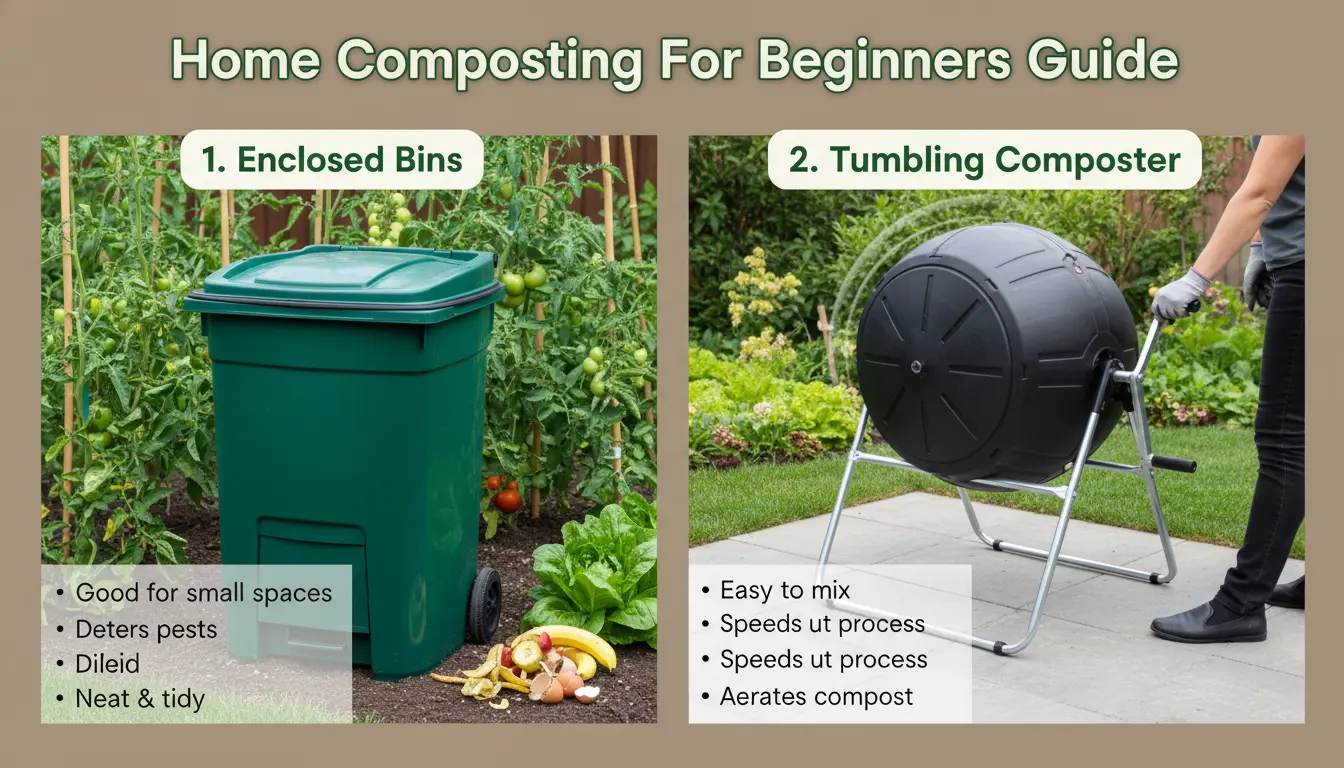
Select a shaded, well-drained spot near your kitchen or garden. Containers can be a purchased bin, a DIY wooden crate, or a simple pile with a wire enclosure.

Bins help retain heat and moisture and keep pests out. Open piles work well for larger yards and gradual additions.
2. Build the Right Layers
Start with a 4-6 inch layer of coarse material for drainage and airflow. Alternate thin layers of browns and greens to maintain balance.
A typical ratio is about 3 parts carbon to 1 part nitrogen by volume. If the pile is too wet and smelly, add more browns.
3. Maintain Moisture and Aeration

Water the pile when it feels dry but avoid waterlogging. Turning the pile every 1-2 weeks speeds decomposition and reduces odors.
A compost thermometer helps: aim for internal temperatures between 110°F and 160°F during active breakdown.
4. Troubleshoot Common Problems
- Smell: too much nitrogen or poor aeration — add browns and turn the pile.
- Slow decomposition: insufficient moisture, oxygen, or nitrogen — add greens and turn more often.
- Pests: use a closed bin and bury food scraps under a layer of browns.
Home Composting Materials: What to Include and Avoid
Safe to Compost
- Vegetable and fruit scraps (no large amounts of citrus).
- Eggshells, coffee grounds, tea bags (remove staples).
- Yard waste: leaves, small twigs, grass clippings in moderation.
- Shredded paper, cardboard, and untreated wood chips.
Avoid in Home Composting
- Meat, fish, and dairy (attract pests and create odors).
- Oily or greasy foods and pet waste from carnivores.
- Diseased plants, invasive weeds with mature seeds, and treated wood.
Composting can reduce household waste by up to 30 percent. A well-managed home compost pile can reach temperatures high enough to kill many common plant pathogens.
Small Real-World Example
Case Study: A two-person household in Seattle started a 3-bin compost system and tracked progress for six months. They diverted about 120 pounds of food and yard waste from the trash and produced enough finished compost to enrich two raised beds.
Their routine: collect kitchen scraps in a countertop pail, add them daily to the active bin, alternate small amounts of shredded cardboard, and turn once a week. The result was dark, crumbly compost ready for use in about four months.
Practical Tips for Beginners
- Use a small countertop container with a tight lid to reduce smells and flies.
- Chop or shred materials to speed decomposition.
- Keep a simple log: record additions and turning dates to refine your routine.
- Start with a small bin and expand once you understand the flow of materials.
How to Use Finished Compost
Finished compost looks dark and crumbly with an earthy smell. Use it as a top dressing, mix it into garden beds, or blend with potting soil for container plants.
Apply a 1-2 inch layer to vegetable beds or mix 10-20 percent compost into existing garden soil to improve fertility and structure.
Final Checklist for Home Composting
- Choose the right bin and spot in your yard.
- Balance browns and greens; aim for 3:1 carbon to nitrogen.
- Keep moisture like a wrung-out sponge and turn regularly.
- Avoid meat, dairy, and pet waste; bury scraps to deter pests.
- Use finished compost to improve your soil and reduce fertilizer needs.
Home composting is a manageable, rewarding practice that reduces waste and improves garden health. Start small, observe the process, and adjust materials and turning frequency as you learn. Within months you can produce nutrient-rich compost that benefits plants and the environment.