
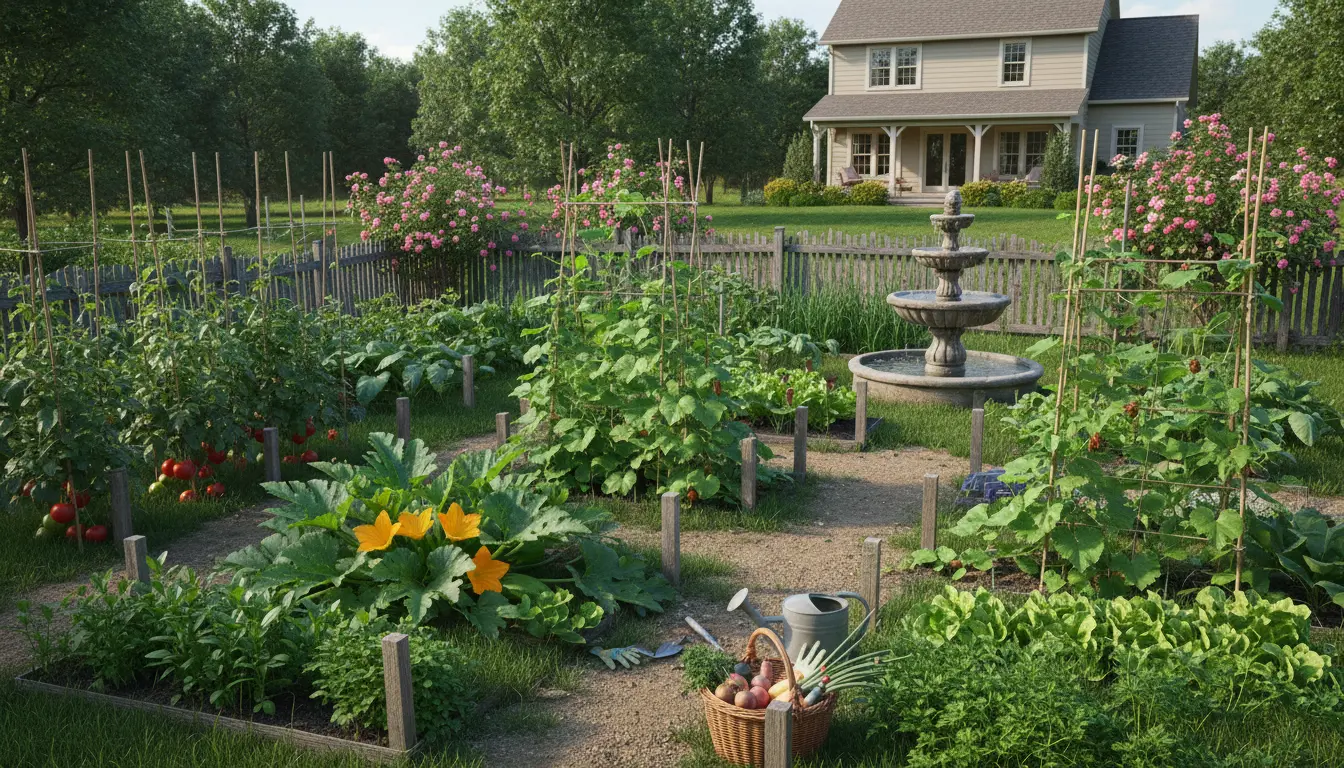
Growing your own vegetables is rewarding and practical. This guide shows clear steps to start a vegetable garden, from planning to harvest. Follow the short tasks and examples to get a garden that produces food and reduces waste.
Why start a vegetable garden
Homegrown vegetables taste fresher and often cost less than store-bought produce. A small garden also teaches seasonal planning and reduces packaging waste. Even a tiny space can yield herbs, salad greens, or cherry tomatoes.
Planning to start a vegetable garden

Good planning reduces mistakes and wasted effort. Start by assessing light, space, and time you can commit. Plan simple, realistic goals for the first season rather than trying to grow everything at once.
Choose the right location to start a vegetable garden
Most vegetables need 6–8 hours of direct sunlight. Aim for a spot with morning sun and some afternoon shade if your area gets intense heat. Good drainage is essential; avoid low areas that stay wet after rain.
Decide between ground beds, raised beds, or containers
Raised beds warm faster and give better drainage, while containers work well on patios and balconies. Choose based on soil quality, accessibility, and budget.
Pick vegetables for beginners

Select easy, low-maintenance crops to build confidence. Start with plants that reliably produce in your climate and time frame.
- Leafy greens: lettuce, spinach, kale
- Root vegetables: radishes, carrots (short varieties)
- Nightshades: cherry tomatoes (determinant varieties)
- Quick growers: bush beans, summer squash
- Herbs: basil, parsley, chives
Soil and planting basics to start a vegetable garden
Healthy soil is the foundation of a productive garden. Test and amend soil rather than guessing. A basic soil test tells you pH and nutrient levels and guides fertilizer choices.
Prepare soil and improve structure
Work in compost or well-rotted manure to increase organic matter. For clay soils, add coarse sand and organic matter to improve drainage. For sandy soils, add compost to hold moisture.
Planting tips
- Follow seed packet spacing and depth instructions — crowding reduces yield.
- Plant in blocks rather than single rows to improve pollination for many crops.
- Stagger plantings of lettuce and radishes every 2–3 weeks for continuous harvest.
Daily care and maintenance when you start a vegetable garden

Routine, short tasks keep the garden healthy. Spend 10–20 minutes most days during the growing season checking for pests, water needs, and plant health.
Watering and mulching
Water deeply and infrequently to encourage strong roots. Apply 2–3 inches of organic mulch around plants to retain moisture and suppress weeds. Avoid wetting leaves to reduce disease pressure.
Pest and disease management
Inspect plants regularly and remove damaged leaves. Use row covers for young plants and hand-pick larger pests. Choose disease-resistant varieties and rotate crops each year to limit buildup of soil-borne diseases.
Harvesting and storing vegetables
Harvest regularly when crops reach their ideal size. Frequent harvesting often encourages more production, especially for beans and lettuce. Store produce properly to extend freshness.
- Leafy greens: keep cool and moist in the fridge.
- Tomatoes: ripen on the counter away from direct sun.
- Root vegetables: store in a cool, dark place or root cellar.
Companion planting, like planting basil near tomatoes, can improve flavor and reduce some pests. Small changes in plant placement often help pollinators and beneficial insects.
Small case study: Urban balcony garden to start a vegetable garden
Maria, an apartment resident, started a vegetable garden on a 6-foot balcony. She used three 12-inch deep containers and potting mix with compost. In her first season she grew cherry tomatoes, basil, and leaf lettuce.
Her routine: water in the morning, pinch back tomato suckers weekly, and harvest lettuce leaves every two weeks. The balcony setup yielded fresh salads all summer with minimal space and an initial cost under $150.
Common mistakes when you start a vegetable garden and how to avoid them
- Overplanting — start small and expand next season.
- Skipping soil tests — know your soil before adding fertilizers.
- Ignoring drainage — raised beds or containers solve poor drainage.
Quick start checklist to start a vegetable garden
- Choose a sunny spot with good drainage.
- Select 3–5 beginner-friendly crops.
- Test and amend soil; add compost.
- Plant according to spacing and depth guidelines.
- Set a daily 10–20 minute garden check routine.
Starting a vegetable garden is manageable with small, consistent steps. Focus on location, soil, and a short maintenance routine. With patience, you will harvest fresh produce and learn improvements for the next season.