
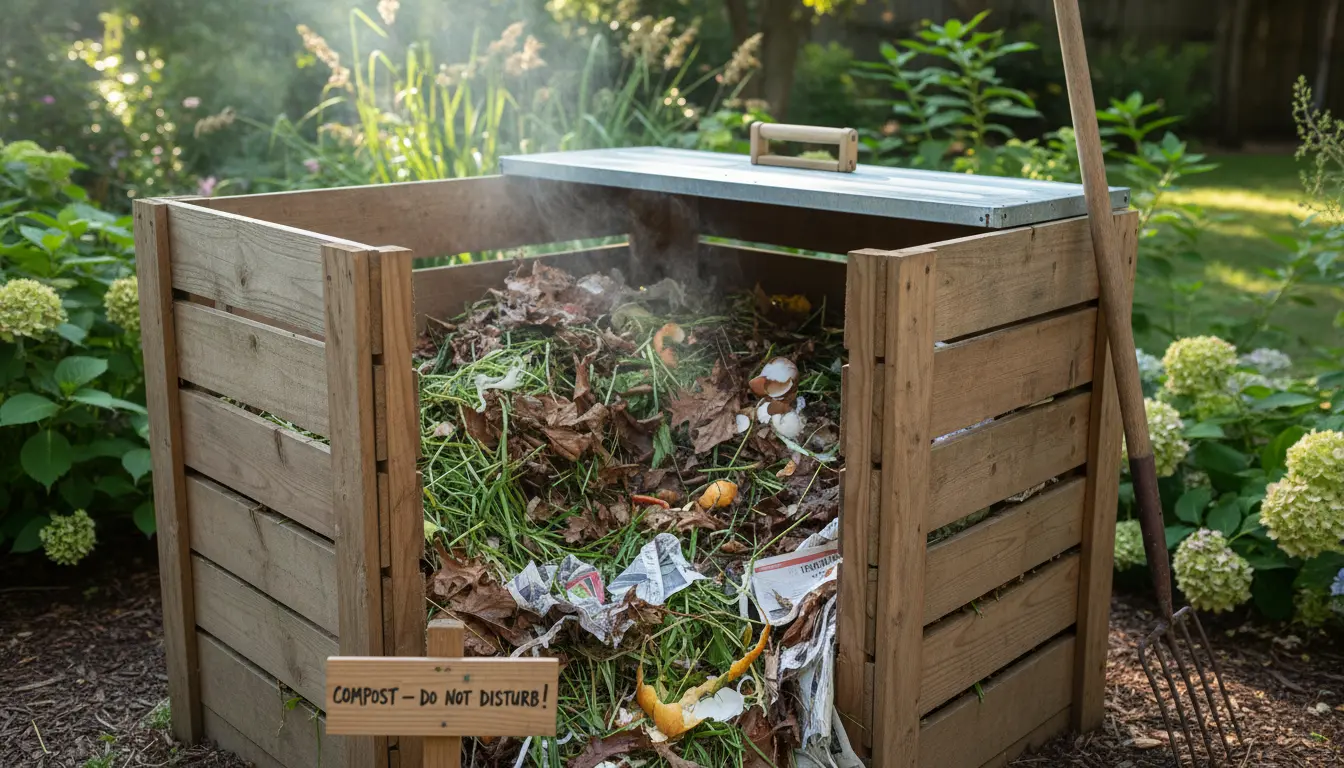
Why Home Composting for Beginners Matters
Home composting reduces kitchen and yard waste while producing rich soil for gardens and potted plants. For beginners, the process can seem technical, but basic composting follows simple rules anyone can apply.
What You Need to Start Home Composting for Beginners
Gather a few items before you begin. You do not need expensive equipment; many households start with a simple bin or pile.
- Compost bin or designated area (tumbler, plastic bin, or open pile).
- Mix of greens (nitrogen) and browns (carbon).
- Water source and a garden fork or aerator tool.
- Optional: thermometer, mesh to keep pests out.
Greens and Browns: Basic Ingredients

Balance is the key. Greens are moist, nitrogen-rich materials like fruit scraps, vegetable peels, coffee grounds, and grass clippings. Browns are dry, carbon-rich items such as dry leaves, cardboard, shredded paper, and straw.
Aim for roughly a 2:1 to 3:1 ratio of browns to greens by volume for a reliable decomposition process.
Step-by-Step: How to Start Home Composting for Beginners
Follow these steps to set up a working bin and create compost safely.
- Choose a spot: Pick a level, well-drained area with partial shade.
- Prepare the base: Add a 4–6 inch layer of coarse browns (twigs or straw) to help drainage and airflow.
- Add materials in layers: Alternate greens and browns. Chop larger pieces to speed decomposition.
- Moisten: Keep the pile as damp as a wrung-out sponge. Water lightly if it gets dry.
- Aerate regularly: Turn the pile every 1–2 weeks with a fork or tumbler to add oxygen.
- Monitor temperature: A hot pile (130–160°F / 55–70°C) composts faster, but backyard piles often work fine at lower temps.
How Long Will It Take?

Compost can be ready in as little as two months for hot, actively managed piles. Typical backyard composting for beginners takes 4–12 months depending on materials, size, moisture, and turning frequency.
Troubleshooting Common Problems in Home Composting for Beginners
Beginners often run into a few consistent issues. Fixes are straightforward and fast.
- Bad odor: Usually too many greens or lack of oxygen. Add browns and turn the pile.
- Pile is dry: Add water and some greens, then cover to retain moisture.
- Slow decomposition: Chop materials finer, add more greens, or increase turning frequency.
- Pests or rodents: Avoid meat, dairy, and oily foods. Use a closed bin or secure mesh.
Using Finished Compost
Finished compost is dark, crumbly, and smells earthy. Use it to enrich garden beds, top-dress lawns, mix with potting soil, or make compost tea for seedlings.

Apply a 1–3 inch layer to garden beds in spring or fall, or mix 10–30% compost into potting mixes for container plants.
Adding crushed eggshells to your compost increases calcium content, which helps prevent blossom end rot in tomatoes and peppers.
Small Real-World Example: A City Apartment Compost Setup
Case study: Emma, a renter in a small apartment, reduced her weekly trash by about 60% by using a countertop bokashi bin and an outdoor tumbler. She started with kitchen scraps and coffee grounds in the bokashi bin, then buried the fermented material in a tumbler outside with shredded cardboard. Over nine months she produced enough compost to refill three large pots and enrich a community garden plot.
Key takeaways from Emma’s approach: use two-stage systems for small spaces, avoid raw meat, and prioritize regular emptying to prevent odors.
Practical Tips for Success with Home Composting for Beginners
- Keep a small kitchen caddy with a lid for daily scraps to reduce trips to the bin.
- Shred or chop larger materials to speed breakdown.
- Store a supply of dry browns (cardboard or leaves) so you can balance greens quickly.
- Label your bin and keep a simple log: additions, turning dates, and moisture notes.
Final Checklist Before You Start
- Bin or space selected and prepared.
- Supply of greens and browns on hand.
- Plan for aeration and moisture control.
- Accept a learning period; expect to adjust ratios and turning frequency.
Home composting for beginners is accessible and rewarding. Start small, observe the process, and adjust. Within months you’ll turn household waste into a valuable soil amendment and cut your contribution to the landfill.