
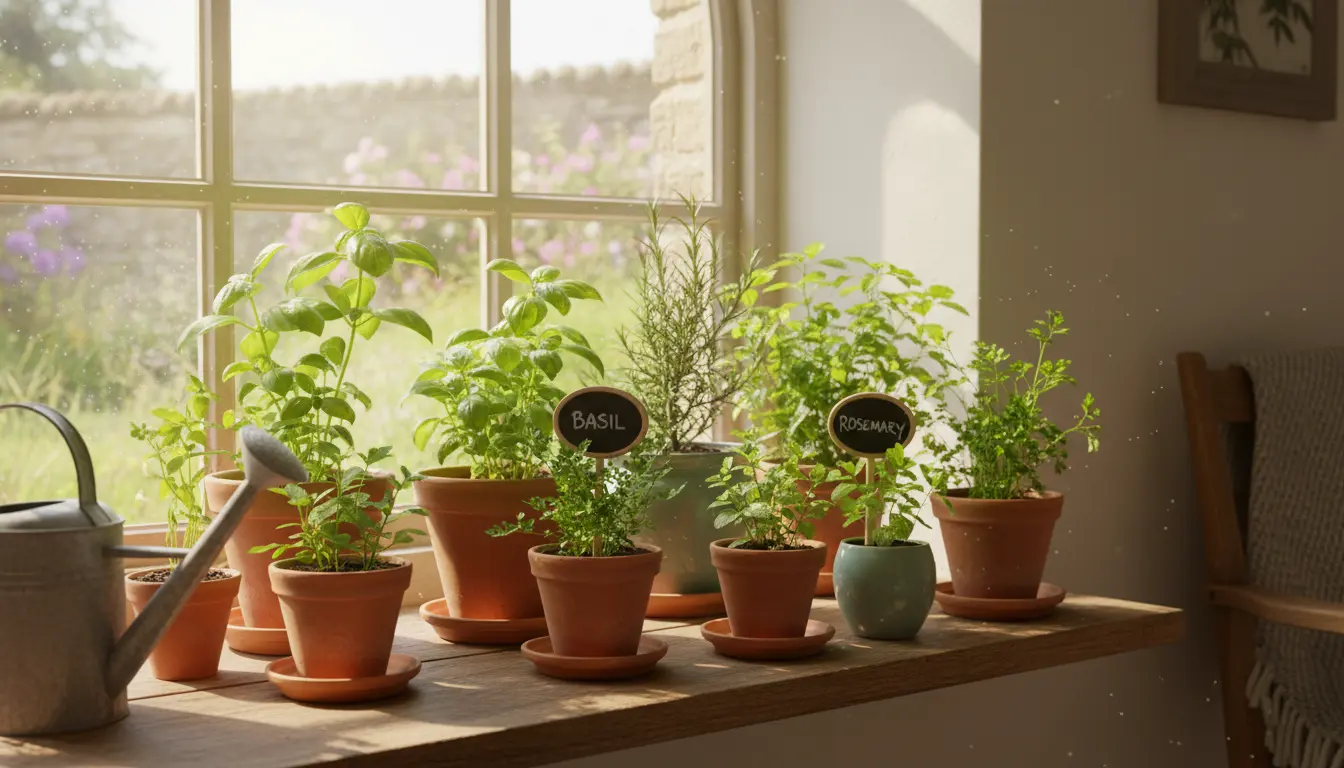
Start a Small Herb Garden: Simple First Steps
Starting a small herb garden at home is practical and rewarding. You can grow flavorful herbs on a windowsill, balcony, or small patio with minimal cost.
This guide explains the essential steps to start a small herb garden, from choosing herbs to routine care and troubleshooting common issues.
Choose the Right Location and Light

Most culinary herbs need at least six hours of light per day. South- or west-facing windows work best for indoor setups.
If natural light is limited, use an LED grow light on a timer to provide consistent brightness. Adequate light prevents leggy growth and maintains flavor.
Light Tips for a Small Herb Garden
- 6–8 hours of direct or bright indirect light for basil, rosemary, and thyme.
- 4–6 hours for mint and parsley; they tolerate some shade.
- Rotate pots weekly so plants grow evenly toward the light source.
Pick Easy Herbs to Start
Choose herbs that match your kitchen needs and light conditions. Start with forgiving varieties to build confidence.
- Basil: Fast-growing and great for warm, sunny spots.
- Mint: Hardy and can tolerate lower light, but grows vigorously.
- Parsley: Slow to start but reliable and versatile.
- Thyme and Rosemary: Drier soil lovers for sunny locations.
Containers and Soil for a Small Herb Garden

Containers should have drainage holes to prevent root rot. Use pots that are large enough for the herb’s growth—6–8 inch pots for single herbs work well.
Use a well-draining potting mix, not garden soil. A mix with perlite or coarse sand improves drainage and suits many herbs.
Container Options
- Terracotta pots for good air flow and drying between waterings.
- Plastic pots retain moisture and are lighter for balconies.
- Window boxes for multiple herbs in one place; ensure proper drainage.
Planting and Watering Basics
When planting, loosen roots gently and set the plant at the same depth as in its nursery pot. Fill around roots and press lightly to remove air pockets.

Water thoroughly after planting, then let the top inch of soil dry before watering again. Overwatering is the most common mistake with container herbs.
Watering Schedule Examples
- Indoor herbs in moderate light: water every 5–7 days, adjusting for pot size and temperature.
- Outdoor summer herbs: check moisture daily and water when soil surface feels dry.
- Use a saucer to catch excess water but empty it to avoid stagnant moisture.
Feeding and Pruning Your Herb Garden
Fertilize lightly every 4–6 weeks during the growing season with a balanced, diluted liquid fertilizer. Herbs prefer modest feeding over heavy fertilizers.
Regular pruning encourages bushier growth and prevents flowering that can reduce leaf flavor. Harvest by cutting just above a leaf node.
Troubleshooting Common Problems
Yellowing leaves often indicate overwatering or poor drainage. Check roots and reduce watering frequency.
Leggy growth usually means insufficient light. Move plants to a brighter spot or add supplemental lighting.
Most herbs are at peak flavor right before flowering. Regular harvesting delays flowering and keeps the leaves more flavorful for cooking.
Design Ideas for a Small Herb Garden
Plan your layout based on how you cook. Keep frequently used herbs like basil and parsley within arm’s reach of the kitchen.
Group plants with similar water and light needs to simplify care. Use plant markers to label herbs until you memorize them.
Container Layout Example
- Single pot: one herb such as rosemary or basil for focused care.
- Mixed window box: parsley, thyme, and chives—same sun needs and tidy growth.
- Hanging pots: mint in a hanging container to control its spread.
Case Study: Sarah’s Window Herb Garden
Sarah had a small kitchen window with four hours of afternoon sun. She chose parsley, mint, thyme, and basil in 6-inch pots and used a south-facing sill.
She started with a well-draining potting mix and watered when the top inch felt dry. After six weeks, she harvested several times a week and noticed fuller, bushier plants.
Lessons learned: group herbs by light needs, avoid overwatering, and harvest often to promote growth. Sarah reduced grocery herb purchases and enjoyed fresher flavors.
Quick Checklist to Start a Small Herb Garden
- Choose a bright spot or buy an LED grow light.
- Select easy herbs that match your light conditions.
- Pick containers with drainage and use well-draining potting mix.
- Water when the top inch of soil is dry and fertilize lightly.
- Prune and harvest regularly to keep herbs productive.
Final Tips for a Successful Small Herb Garden
Start small and expand once you gain confidence. A few healthy pots will teach you light, water, and harvest rhythms quickly.
Keep notes on watering frequency and harvest yields to refine care over seasons. With minimal effort, a small herb garden can supply fresh flavors year-round.