
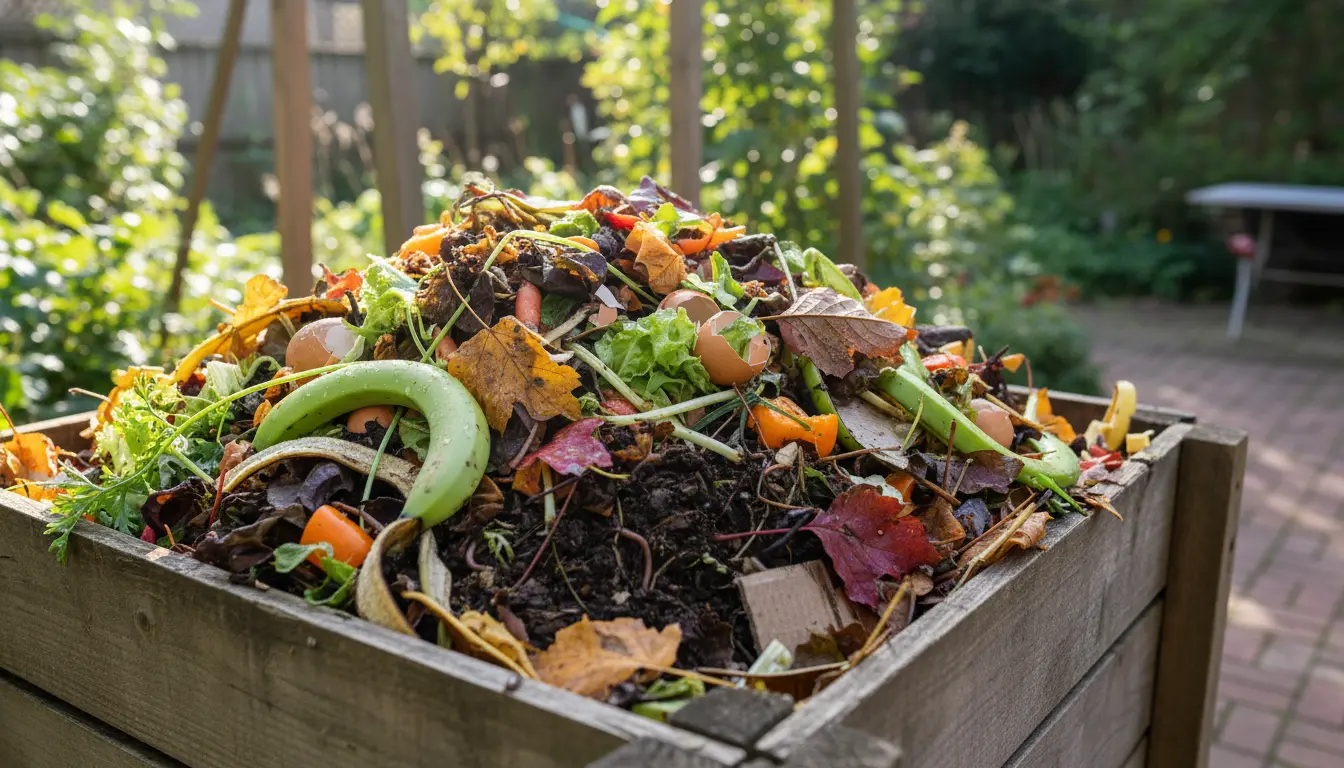
Composting turns kitchen scraps and yard waste into rich soil you can use in pots and gardens. This guide explains how to start composting at home in simple, practical steps. Follow these instructions to reduce waste and improve soil health.
How to Start Composting at Home: Choose a Method
Decide which composting method fits your living situation. The three most common methods are backyard piles, compost bins, and vermicomposting with worms.
- Backyard pile: Good if you have space and want a low-cost option.
- Compost bin: Neat and faster than a loose pile; available in many sizes.
- Vermicomposting: Best for apartments and indoor use; uses worms to speed decomposition.

Choose a bin or spot that drains well and gets partial sun. This helps maintain the right moisture and temperature.
How to Start Composting at Home: Gather Materials
Compost needs a balance of carbon-rich (brown) and nitrogen-rich (green) materials. Aim for a rough 3:1 ratio of browns to greens by volume.
Examples of Green Materials
- Fruit and vegetable scraps
- Coffee grounds and tea leaves
- Fresh grass clippings
Examples of Brown Materials
- Dry leaves and straw
- Shredded cardboard and paper
- Wood chips and small twigs
Do not add meat, dairy, oils, or diseased plants. These items attract pests and slow decomposition.
How to Start Composting at Home: Building Your Pile

Start with a base layer of coarse browns like small branches to improve airflow. Add alternating layers of greens and browns, keeping each layer a few inches thick.
- Layer greens (kitchen scraps) and cover with browns (dry leaves or shredded paper).
- Keep the pile moist like a wrung-out sponge; water lightly if it’s dry.
- Turn the pile every 1–2 weeks to speed up decomposition and reduce odors.
Troubleshooting: Common Problems and Fixes
Knowing how to start composting at home includes learning to fix common issues. Here are frequent problems and easy solutions.
Smelly Compost
Bad smells usually mean too many greens or poor airflow. Add more browns and turn the pile to introduce oxygen.
Slow Decomposition

If compost is slow, add greens to boost nitrogen or chop materials into smaller pieces. Ensure the pile is moist but not waterlogged.
Pests and Rodents
Avoid meat and dairy. Use a closed bin or wire mesh around the base. Bury food scraps in the center of the pile to reduce attraction.
How to Start Composting at Home: Vermicomposting Option
Vermicomposting uses red wiggler worms in a bin to turn food scraps into worm castings. It’s ideal for small spaces and provides nutrient-rich compost quickly.
- Use a shallow bin with drainage and bedding such as shredded paper.
- Add food scraps in small amounts and cover them with bedding.
- Keep the bin in a cool, dark place and maintain moisture like a damp sponge.
How to Use Finished Compost
Compost is ready when it looks dark and crumbly and you can no longer identify the original materials. Use finished compost in several practical ways:
- Mix into potting soil for containers.
- Top-dress garden beds to improve soil structure and nutrients.
- Use as mulch around shrubs and trees to retain moisture.
Small Real-World Case Study
Jane, a city resident with a small backyard, started a 3-bin compost system. She collected kitchen scraps in a countertop caddy and added dry leaves from her neighbor’s yard. After six months of weekly turning, Jane produced enough compost to top-dress her vegetable beds and saw improved tomato growth the next season. Her household reduced landfill waste by about 30 percent.
Composting can divert up to 30 percent of household waste from landfills. Rich compost also helps soil retain water, reducing garden irrigation needs.
How to Start Composting at Home: Final Tips
Start small and keep it simple. Consistency matters more than perfection. Monitor moisture, balance browns and greens, and turn the pile occasionally.
Track what you add and how often you turn the pile for the first few months. This helps you learn what works in your climate and with your available materials.
Composting at home is a practical step toward reducing waste and creating healthy soil. Follow these instructions and adjust based on your experience to succeed.