
Working remotely offers flexibility but also new distractions and boundary challenges. This guide gives clear, practical steps you can apply today to improve remote work productivity and maintain work life balance.
Remote Work Productivity: Set Up Your Workspace
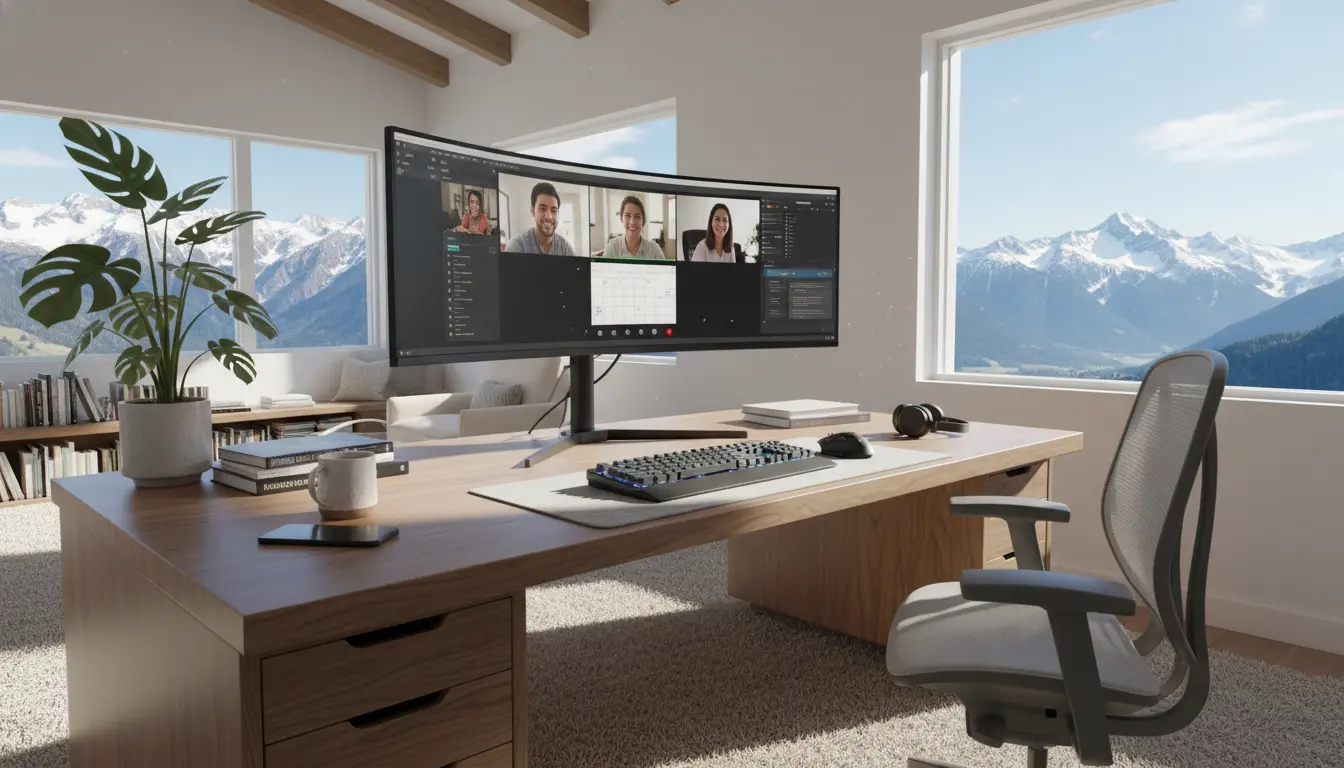
Your environment affects focus and output. Create a dedicated workspace that separates work from personal life, even if it’s a small corner of a room.

Choose an ergonomic chair and desk at the right height. Good lighting and minimal visual clutter cut cognitive load and reduce fatigue.
Essential tools for productivity
- Reliable internet and a second monitor for multitasking.
- Headphones with noise cancellation for calls and deep work sessions.
- A simple task manager or digital to-do list to track priorities.
Remote Work Productivity: Structure Your Day
Structure reduces decision fatigue. Use a consistent daily routine that signals when work begins and ends.
Block your calendar with focused work intervals and breaks. This helps maintain momentum and prevents overwork.
Time-blocking method

Time blocking organizes the day into segments for focused work, meetings, and admin tasks. Try 60–90 minute focused blocks with 10–20 minute breaks.
- Morning: review tasks and tackle the most important item first.
- Midday: schedule meetings and collaborative work.
- Afternoon: finish medium-effort tasks and plan for tomorrow.
Remote Work Productivity: Manage Tasks and Priorities
Clear priorities prevent reactive work. Use a simple framework to decide what to do next and why it matters.
Rank tasks by impact and urgency. Focus first on high-impact work that moves projects forward.
Simple prioritization steps
- List tasks each morning or the night before.
- Mark the top 1–3 priorities for focused execution.
- Defer or delegate low-value items.
Remote Work Productivity: Reduce Distractions

Digital and household distractions are the biggest productivity killers for remote workers. Use tools and habits to minimize interruptions.
Turn off non-essential notifications and set clear expectations with household members about your work hours.
Practical distraction controls
- Use app timers or “Do Not Disturb” during focus blocks.
- Create a meeting-free time window for deep work.
- Communicate availability clearly in your calendar and status messages.
Short breaks after focused work increase retention and creativity. The brain responds well to periodic downtime, which improves long-term productivity.
Remote Work Productivity: Communication and Boundaries
Clear communication prevents unnecessary meetings and confusion. Define how and when you will be reached for different types of work.
Set rules for internal team communication, such as when to use instant messages versus email versus project tools.
Example rules for teams
- Use chat for quick questions and urgent items.
- Use email for formal updates and decisions that should be recorded.
- Reserve video calls for complex discussions that need real-time collaboration.
Remote Work Productivity: Track and Improve
Measure what matters. Track hours spent on tasks for a week to find where time is leaking and where improvements are possible.
Review outcomes regularly. Weekly reviews help you adjust priorities and workflows to stay aligned with goals.
Metrics to watch
- Time spent on high-priority tasks.
- Number and length of meetings.
- Task completion rate versus planned work.
Case Study: Small Design Team Boosts Productivity
A four-person design team moved to a permanent remote setup and struggled with constant interruptions and long meetings. They implemented time blocking and a meeting-free focus window from 9:30 to 11:30 a.m.
Within three weeks, the team reported a 30% reduction in meeting hours and a noticeable increase in deliverable completion. Clear calendar rules and a shared task board helped maintain transparency.
Quick Checklist to Improve Remote Work Productivity
- Create a dedicated workspace and set office hours.
- Use time blocks and define top daily priorities.
- Limit notifications and set meeting-free focus time.
- Agree on team communication norms and tools.
- Track work patterns and iterate weekly.
Improving remote work productivity is an ongoing process. Apply a few of these practical steps, measure the result, and refine your approach. Small consistent changes lead to better focus, less stress, and higher output.