
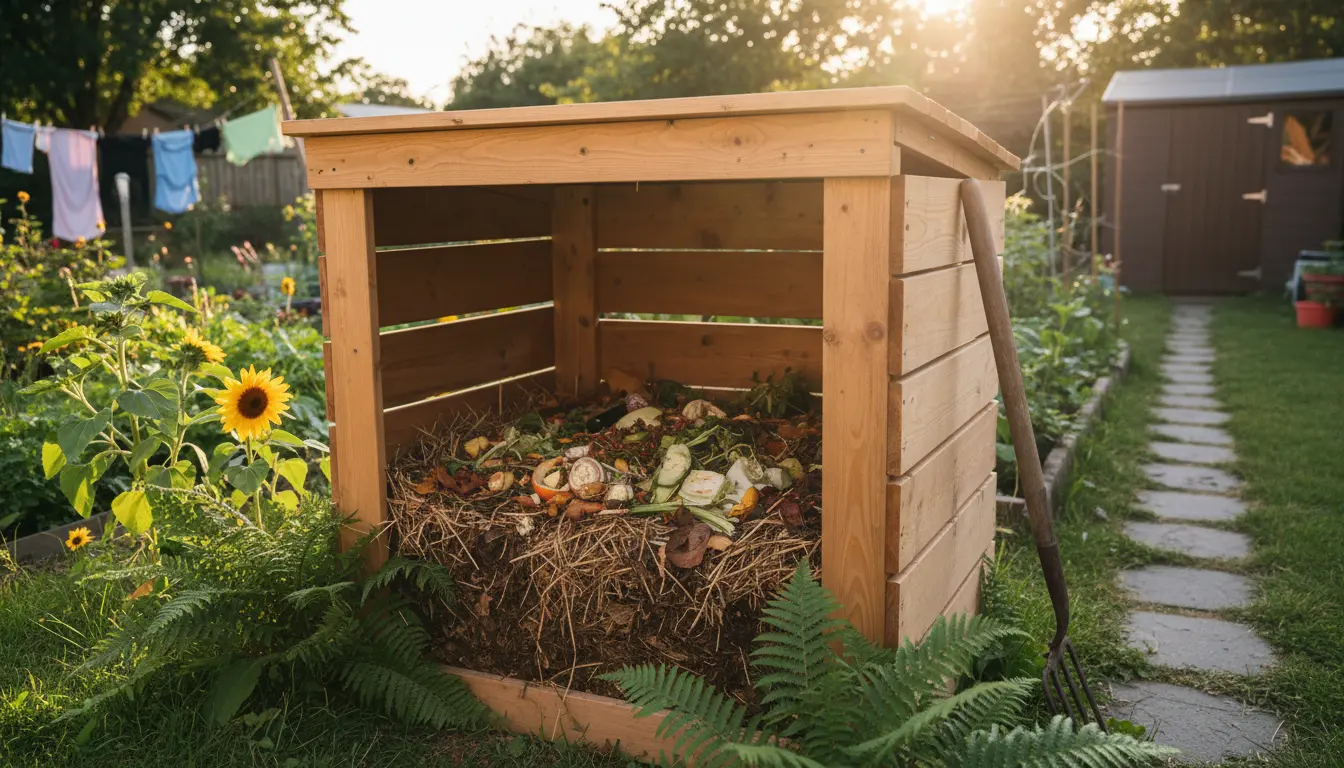
Home composting turns kitchen scraps and yard waste into rich soil amendment. This practical guide shows step-by-step actions, common pitfalls, and how to use finished compost in your garden.
Why Home Composting Matters
Home composting reduces household waste and returns nutrients to your soil. It lowers garbage volume, cuts methane from landfills, and supports healthier plants.
Benefits of home composting
- Reduces household trash and disposal costs.
- Improves soil structure, water retention, and plant growth.
- Helps close the nutrients loop by recycling organic matter.

Composting just one pound of food waste saves about 0.7 pounds of carbon dioxide equivalent compared with landfill disposal.
How to Start Home Composting
Starting is simple: pick a method, gather materials, and maintain the pile. You can use a bin, tumbler, pile, or indoor solution depending on space and needs.
Step-by-step home composting process
- Choose a location: a shaded spot near water access works best.
- Select a system: bin, tumbler, worm bin (vermicompost), or bokashi for small kitchens.
- Collect materials: separate greens (nitrogen) and browns (carbon).
- Layer and maintain: alternate browns and greens, keep moist, and turn occasionally.
- Harvest: remove finished compost when dark, crumbly, and earthy-smelling.
Choosing the right bin for home composting
Select a container that fits your space and activity level. Tumblers speed up aeration. Stationary bins are low-cost and easy to install.

For apartments, try a worm bin or bokashi bucket to manage small volumes indoors.
What to Compost and What to Avoid
Knowing what to add avoids pests and odors. Good choices promote fast decomposition.
Compostable items
- Greens: vegetable peels, fruit scraps, coffee grounds, grass clippings.
- Browns: dry leaves, shredded paper, cardboard, straw.
- Small amounts of eggshells and wood ash (use sparingly).
Items to avoid
- Meat, dairy, and oily foods (attract pests and smell).
- Diseased plants or invasive weeds with seeds.
- Coal ash, treated wood, and pet waste from carnivores.
Balancing Greens and Browns in Home Composting
A balance of greens and browns keeps the pile active without bad odors. Aim for a rough ratio and adjust by observation.
Practical ratio tips
- Start with about 3 parts browns to 1 part greens by volume.
- If it smells, add more browns and turn the pile to increase aeration.
- If it’s dry and slow, add more greens or a little water.
Troubleshooting Common Problems

Problems are usually easy to fix. Check moisture, particle size, and airflow first.
Common issues and fixes
- Bad odor: add dry browns and turn the compost to add oxygen.
- Slow decomposition: chop materials finer and keep the pile moist.
- Pests: remove meat and dairy, secure the bin, and bury food scraps under browns.
- Too wet: add more dry browns and mix to increase air pockets.
When and How to Use Finished Compost
Finished compost is dark, crumbly, and smells like earth. Use it to enrich potting mixes, topdress lawns, or improve garden beds.
Application tips
- Mix 10–25% compost into potting soil for container plants.
- Topdress vegetable beds with a 1–2 inch layer and lightly work it in.
- Use as a mulch around shrubs and trees to retain moisture and add nutrients.
Small Real-World Case Study
Case: Sarah, a city apartment gardener, started a worm bin under her kitchen sink. She collected fruit and vegetable scraps and added shredded paper as browns.
Within three months she produced several liters of worm castings. She mixed the castings into potting soil and reported healthier tomato plants and fewer fertilizer purchases.
Quick Checklist to Start Home Composting
- Choose a compost method that fits your space.
- Gather container and a mix of greens and browns.
- Maintain moisture and turn regularly for aerobic decomposition.
- Troubleshoot odors, pests, and slow breakdown by adjusting balance.
- Harvest and apply finished compost to garden or containers.
Home composting is a low-effort habit that yields big environmental and gardening benefits. Start small, observe the pile, and adjust as you learn what works for your household.