
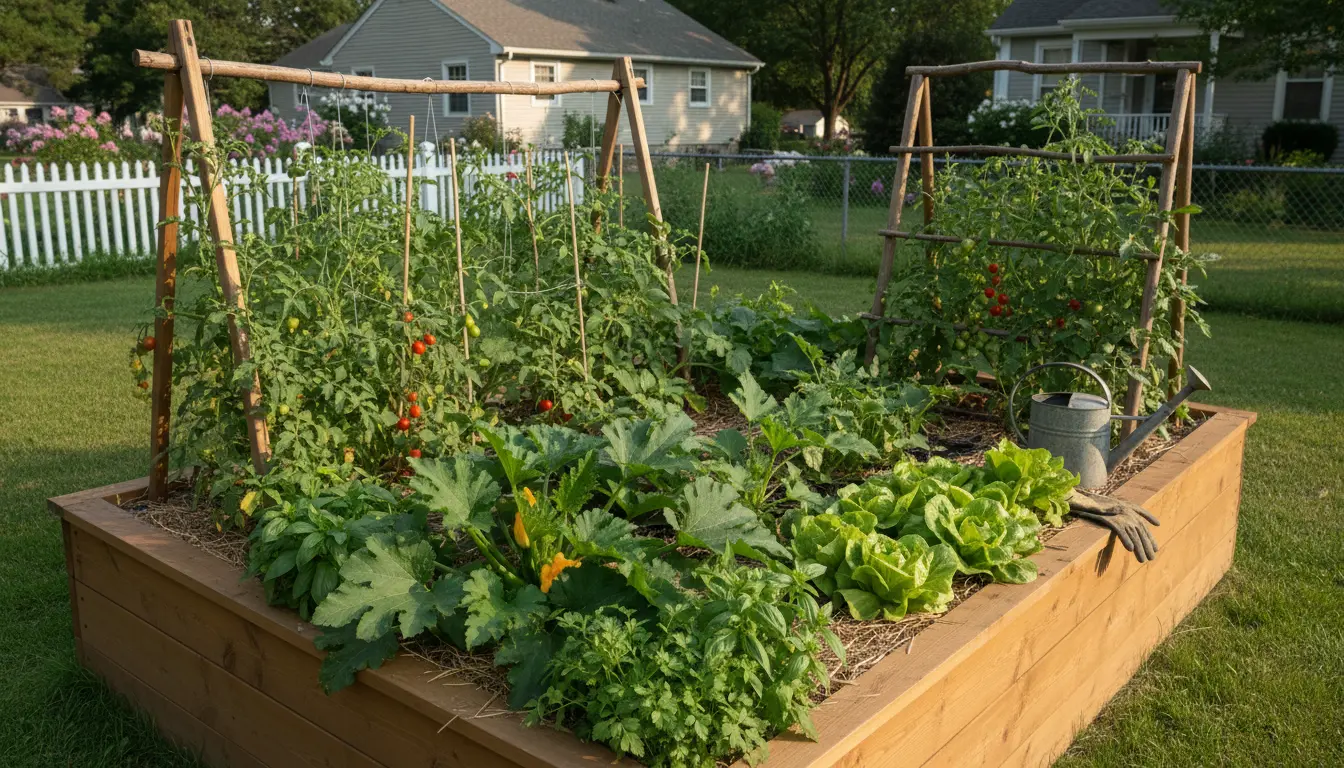
Starting a vegetable garden at home is a practical way to grow fresh food, save money, and enjoy a hands-on hobby. This guide breaks down the essential steps into clear actions you can take this season.
How to Start a Vegetable Garden: Choose the Right Location
Good location matters for a productive vegetable garden. Pick a spot that gets at least 6 hours of direct sunlight a day for most vegetables.

Consider access to water, soil quality, and convenience. A garden near a hose or rain barrel is easier to maintain than one far from your house.
Vegetable Garden Site Checklist
- 6+ hours of sunlight: tomatoes, peppers, and cucurbits need full sun.
- Level ground or raised beds for good drainage.
- Close to a water source to simplify watering.
- Avoid low spots that collect frost or flood water.
Prepare Soil Before You Plant Your Vegetable Garden
Healthy soil is the foundation of a stable vegetable garden. Test and improve your soil before planting to give seedlings a strong start.
At minimum, perform a simple soil test for pH and nutrient levels. Most vegetables prefer slightly acidic to neutral soil (pH 6.0–7.0).
Simple Soil Improvement Steps
- Add compost or well-rotted manure to increase organic matter.
- Work in 2–4 inches of compost into the top 6–8 inches of soil.
- Use coarse sand or grit only if your soil is very heavy clay to improve drainage.
- Consider raised beds if soil is poor or contaminated.
Plan What to Plant in Your Vegetable Garden

Choose vegetables that match your climate, space, and family preferences. Start with a few reliable crops and expand over time.
For beginners, easy and productive choices include lettuce, radishes, beans, tomatoes, and zucchini.
Companion Planting and Crop Rotation Tips
- Group plants with similar water and light needs together.
- Avoid planting tomatoes in the same spot each year to reduce disease pressure.
- Use quick-growing crops (radishes, lettuce) between slower crops to maximize space.
Planting and Early Care in Your Vegetable Garden
Follow seed packet or plant tag instructions for spacing and depth. Overcrowding reduces air flow and increases disease risk.

Water newly planted seeds and transplants gently but deeply to encourage root growth. Aim for consistent soil moisture, not soggy soil.
Watering and Mulching Practices
- Water at the base of plants in the morning to reduce evaporation and disease.
- Apply 2–3 inches of organic mulch (straw, wood chips) to conserve moisture and suppress weeds.
- Check soil moisture by feeling 2 inches below the surface; water when it feels dry.
Maintain Your Vegetable Garden: Simple Weekly Tasks
Consistent, small tasks keep a garden productive. Spend time weeding, checking for pests, and harvesting ripe produce.
Inspect plants weekly for signs of pests or disease, and act early with hand-picking or organic controls when needed.
Seasonal Maintenance Checklist
- Weed beds to reduce competition for nutrients.
- Prune and stake tall plants like tomatoes to keep fruit off the ground.
- Rotate crops each season to reduce pests and nutrient depletion.
Adding binoculars of compost each year can increase yields and soil water retention. Healthy soil stores more water and reduces your watering needs.
Small Real-World Example: Balcony Vegetable Garden Case Study
Jacob had a 6×3 foot balcony and wanted fresh herbs and salad greens. He used two 12-inch deep containers and a 4-foot raised trough for tomatoes.
By choosing compact varieties and a morning-sun location, he harvested basil, lettuce, and cherry tomatoes all season. Regular feeding with a balanced liquid fertilizer improved yields.
Common Problems and Quick Fixes for Vegetable Gardens
Pests, poor growth, and blossom drop are frequent issues. Identify the cause before applying treatments to avoid wasting time or harming beneficial insects.
Quick Troubleshooting Guide
- Yellow leaves: check for nutrient deficiency or overwatering.
- Slow growth: improve soil organic matter and ensure adequate sunlight.
- Pests: hand-pick larger insects and use insecticidal soap for soft-bodied pests.
Wrap Up: Keep Your Vegetable Garden Simple and Productive
Starting a vegetable garden at home is a step-by-step process: pick the right spot, improve soil, choose suitable crops, and maintain with weekly care. Small, regular actions lead to steady improvements and better harvests.
Begin with a manageable plot, learn from one season, and expand as you gain confidence. A little planning and care will reward you with fresh, homegrown produce.