
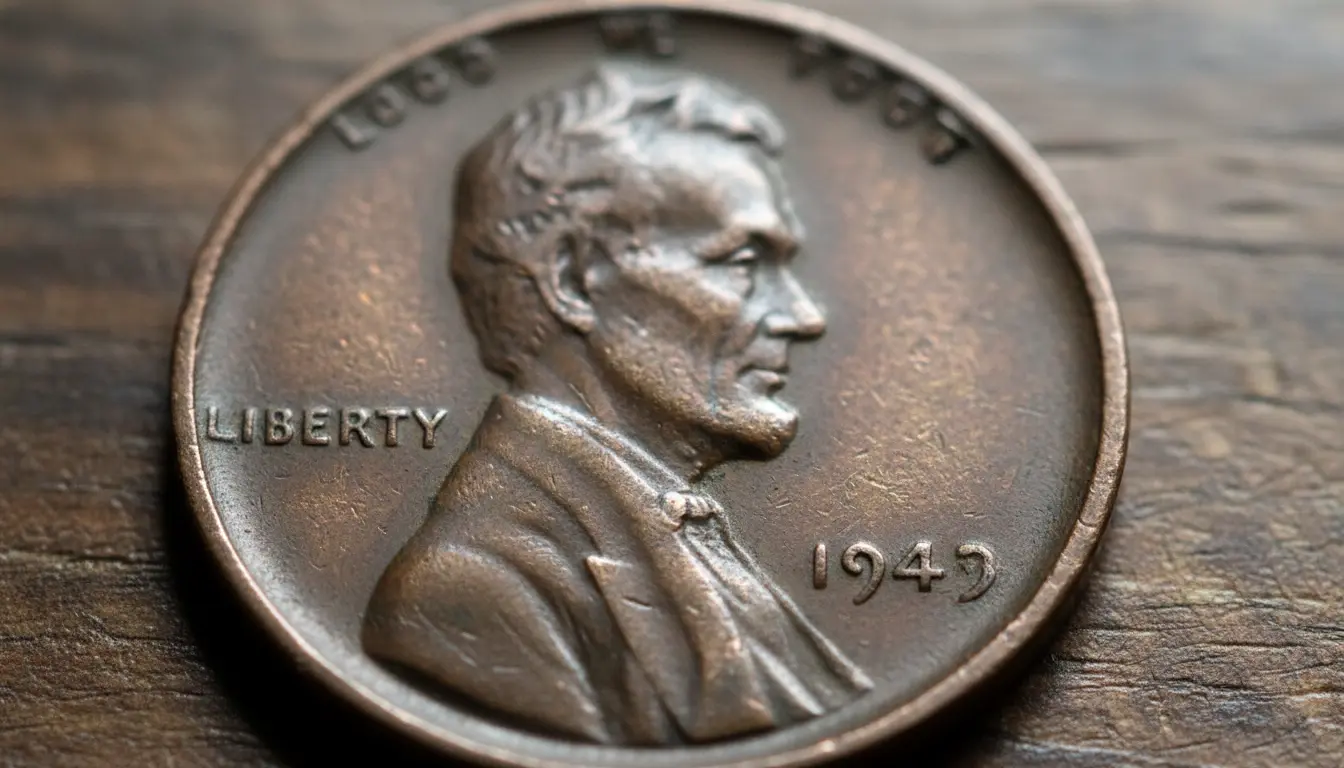
The 1943 copper Lincoln wheat penny is one of the most talked-about rarities in U.S. numismatics. A genuine copper example from that year is extremely rare and can attract multimillion-dollar attention from serious collectors and museums.
Why the 1943 copper Lincoln wheat penny matters
The U.S. Mint produced most 1943 cents in steel because copper was reserved for wartime industry. A copper 1943 cent indicates a striking or planchet error that slipped through production controls.

Because of that history, authentic 1943 copper Lincoln wheat pennies are prized. They can alter a collection’s value dramatically and require careful handling and authentication.
History of the 1943 copper Lincoln wheat penny
During World War II the Mint switched to zinc-coated steel cents to save copper for war needs. Some copper planchets remained in use or were struck accidentally, producing rare copper cents in 1943.
Collectors call attention to those pieces because they are mistakes from a major historical shift in coinage composition.
Why are 1943 copper pennies rare?

Rarity comes from a mix of production oversight and survival. Very few copper planchets remained in the Mint in 1943, and even fewer escaped melting or were preserved.
Confirmed examples are limited and heavily scrutinized, which is why authentication and grading are essential.
How to spot a 1943 copper Lincoln wheat penny
Finding a potential 1943 copper penny is only the first step. Use a methodical approach to reduce the risk of misidentifying plated or altered coins.
- Check the date and design: It must read 1943 and show the Lincoln obverse and wheat reverse.
- Visual color test: Copper has a warmer brown or reddish tone versus the gray of steel.
- Magnet test: A true copper coin will not stick to a magnet. Steel cents will be magnetic.
- Weight test: A 1943 copper cent weighs about 3.11 grams. Steel cents weigh about 2.7 grams with zinc coating added later; use a precise scale.
- Edge and surface inspection: Look for signs of plating, seam lines, or unusual chemistry that suggest alteration.

These checks are quick but not definitive. Many counterfeit or altered coins are made to appear as copper 1943s, so proceed to professional verification.
Verifying and protecting a 1943 copper Lincoln wheat penny
Authentication is the single most important step if you believe you have a 1943 copper penny. Professional grading services and experienced numismatists are the only reliable path to confirmation.
Steps to verify a suspected 1943 copper Lincoln wheat penny
- Do initial tests yourself: magnet, weight, and careful visual inspection under a loupe.
- Document the coin with photos from multiple angles and lighting conditions.
- Contact a reputable third-party grading service (PCGS, NGC, ANACS) for submission. Follow their submission guidelines and use insured shipping.
- Avoid selling privately before getting an authentication; many buyers assume fakes and offer low prices.
Once authenticated and slabbed, the coin’s marketability and insurance options improve. Keep original documentation, receipts, and grading certificates together.
Value and sale considerations for a 1943 copper Lincoln wheat penny
Values for authentic 1943 copper cents vary widely based on grade and provenance. While headlines sometimes cite a $5 million ceiling for theoretical top-tier specimens, most pieces sell for lower but still significant sums.
When selling, consider these options and tips:
- Auction houses experienced with rare U.S. coins can reach wider, deep-pocketed buyers.
- Use multiple professional opinions if a private offer seems low or suspicious.
- Factor in grading, auction fees, insurance, and secure shipping when estimating net proceeds.
Common scams and pitfalls
Counterfeiters may plate steel or zinc coins to mimic copper or chemically alter surfaces. Quick cash offers from unknown buyers are common—avoid pressure to sell before authentication.
Always get independent verification and multiple appraisals before transferring ownership of a possible rare coin.
Most 1943 cents were struck on zinc-coated steel planchets to preserve copper for World War II. This makes genuine 1943 copper cents true minting anomalies and extremely rare in certified form.
Case study: A careful find and the right process
A hobbyist found a 1943-looking penny in an old family jar and suspected it might be copper. He did not sell immediately; instead he ran initial tests at home and took high-quality photos.
He then contacted a local coin club, which recommended a regional dealer and a submission to a third-party grading service. The coin was authenticated as a copper 1943 and slabbed with full certification.
Rather than taking the first private offer, the collector consigned the coin to a reputable auction house and received multiple competing bids. The final sale reflected both rarity and competitive collector interest, after fees and insurance were accounted for.
Practical checklist for hunters of the 1943 copper Lincoln wheat penny
- Always test with a magnet and a high-precision scale.
- Photograph and document provenance as much as possible.
- Contact experienced collectors or coin clubs for a second opinion.
- Submit suspected coins to an established grading service before attempting sale.
- Use insured shipping and work with reputable auction houses for high-value items.
If you think you’ve found a genuine 1943 copper Lincoln wheat penny, act methodically. Authentication and careful handling will protect the coin and maximize its potential market value.