
Start a Vegetable Garden at Home: First Steps
Starting a vegetable garden at home is a manageable project for beginners. This guide walks you through practical steps, from picking a spot to first harvests.
Follow these steps in order for the best chance of success, and adapt them to your climate and available space.
Choose a Good Location for Your Vegetable Garden at Home

Sunlight is the most important factor. Most vegetables need 6–8 hours of direct sun daily, so look for a bright, open area.
Also check for access to water and good drainage. Avoid low spots that stay waterlogged after rain.
Decide on Garden Type
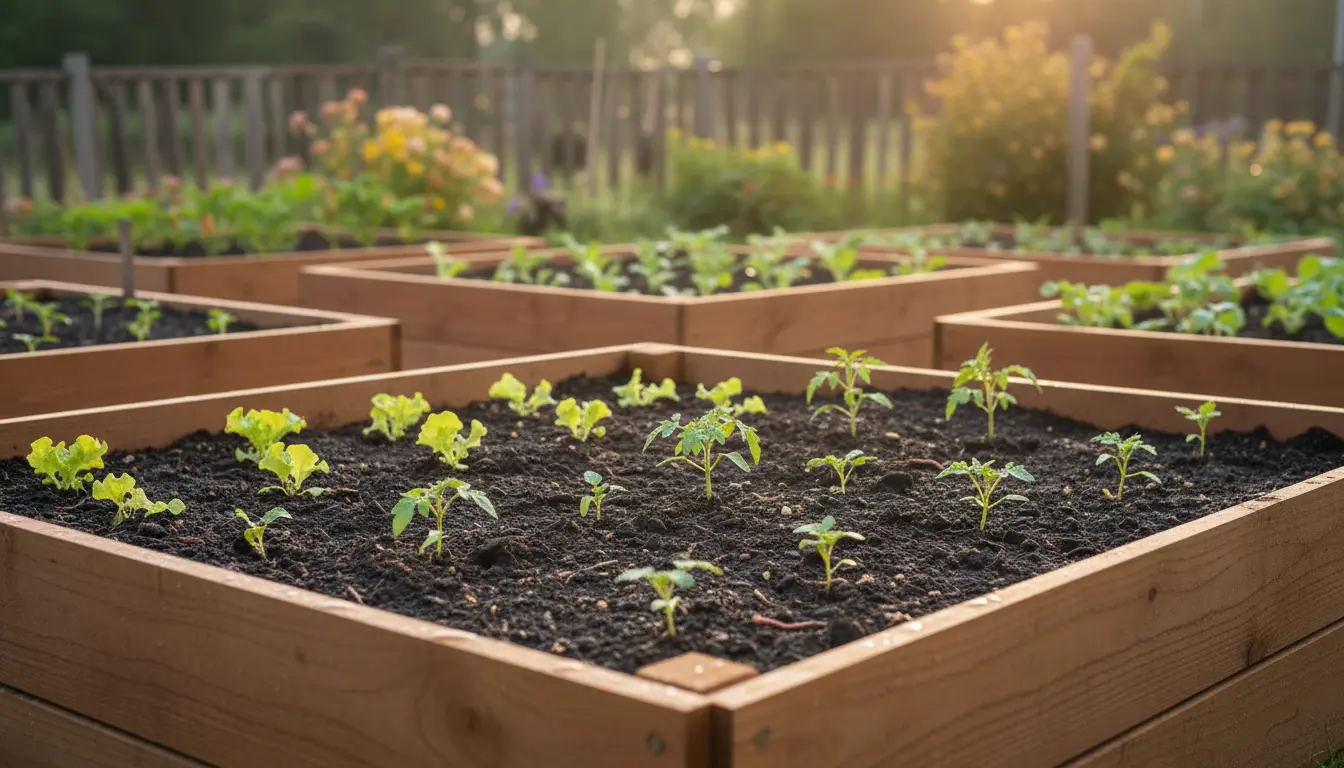
Choose from in-ground beds, raised beds, or containers based on space and soil quality. Raised beds warm earlier in spring and reduce soil compaction.

Containers are ideal for balconies or patios and are easier to control for pests and soil quality.
Prepare Soil and Tools
Healthy soil is the foundation of any productive garden. Aim to improve native soil with compost and organic matter before planting.
Basic tools include a shovel, hand trowel, rake, watering can or hose, and gloves. Clean and store them properly to extend their life.
Test and Improve Soil

Get a simple soil test kit or send a sample to your local extension service. Tests tell you pH and key nutrient levels.
Common fixes: add lime for acidic soil, sulfur for alkaline soil, and compost or aged manure to boost organic matter and nutrients.
Adding just 2–3 inches of compost to topsoil can improve water retention and soil structure in a single season.
Choose Vegetables and Planting Schedule
Select crops that match your climate and season. Cool-season crops like lettuce and peas do well in spring and fall.
Warm-season crops like tomatoes, peppers, and beans need frost-free conditions and steady warm soil.
Choosing Plants for Your Vegetable Garden at Home
Start with easy crops: lettuce, radishes, spinach, bush beans, and cherry tomatoes are forgiving for beginners. Herbs like basil and parsley are also simple to grow.
Use seed packets or plant tags to follow spacing and depth recommendations. Overcrowding reduces airflow and increases disease risk.
Planting Tips and Techniques
Follow recommended planting depths and spacing from seed packets or plant labels. Proper spacing reduces competition for nutrients and light.
Water gently after planting to settle soil around roots. Mulch with straw or shredded bark to retain moisture and suppress weeds.
- Plant seeds at the depth listed on the packet.
- Transplant seedlings on overcast days or in the evening to reduce shock.
- Install supports for vining crops early (tomatoes, peas, cucumbers).
Watering, Feeding, and Maintenance
Water deeply and less frequently to encourage strong root systems. Early morning is the best time to water to reduce disease risk.
Fertilize with a balanced organic fertilizer or compost tea as needed. Avoid over-fertilizing, which can reduce fruiting in some plants.
Pest and Disease Management in a Home Vegetable Garden
Inspect plants weekly for pests and signs of disease. Hand-pick larger pests and use row covers to protect seedlings from insects.
Encourage beneficial insects by planting flowers like marigolds and borage nearby. Rotate crops each season to reduce soil-borne disease buildup.
Harvesting and Record Keeping
Harvest regularly to encourage continued production. Pick leafy greens when young for best flavor, and harvest tomatoes when they reach full color.
Keep a simple garden journal with planting dates, varieties, and yields. Over time, this helps you learn what works in your yard.
Small Real-World Example
Case Study: Maria’s 6×4 Raised Bed. Maria used a 6×4 raised bed near a sunny south-facing wall. She filled it with a mix of topsoil, compost, and aged manure.
In her first season she planted lettuce, cherry tomatoes, basil, and bush beans. Regular watering, mulching, and weekly checks for pests produced steady harvests and taught her timing for succession planting.
Seasonal Adjustments and Scaling Up
Adjust planting times with local frost dates and consider season extenders like cold frames or row covers for early spring sowing.
If space or yields become limiting, add another raised bed or try vertical gardening to increase production without expanding footprint.
Quick Checklist to Start a Vegetable Garden at Home
- Pick a sunny, well-drained location
- Decide between in-ground, raised bed, or containers
- Test and amend soil with compost
- Choose 3–5 easy crops for your first season
- Water deeply, mulch, and monitor pests weekly
- Keep a simple journal of dates and yields
Starting a vegetable garden at home is about small, consistent steps rather than perfection. Begin with one bed or a few containers and build skills season by season.
Use local resources like extension services and gardening groups to refine your approach and share successes. With patience and simple care, a home vegetable garden can supply fresh produce and valuable learning.