
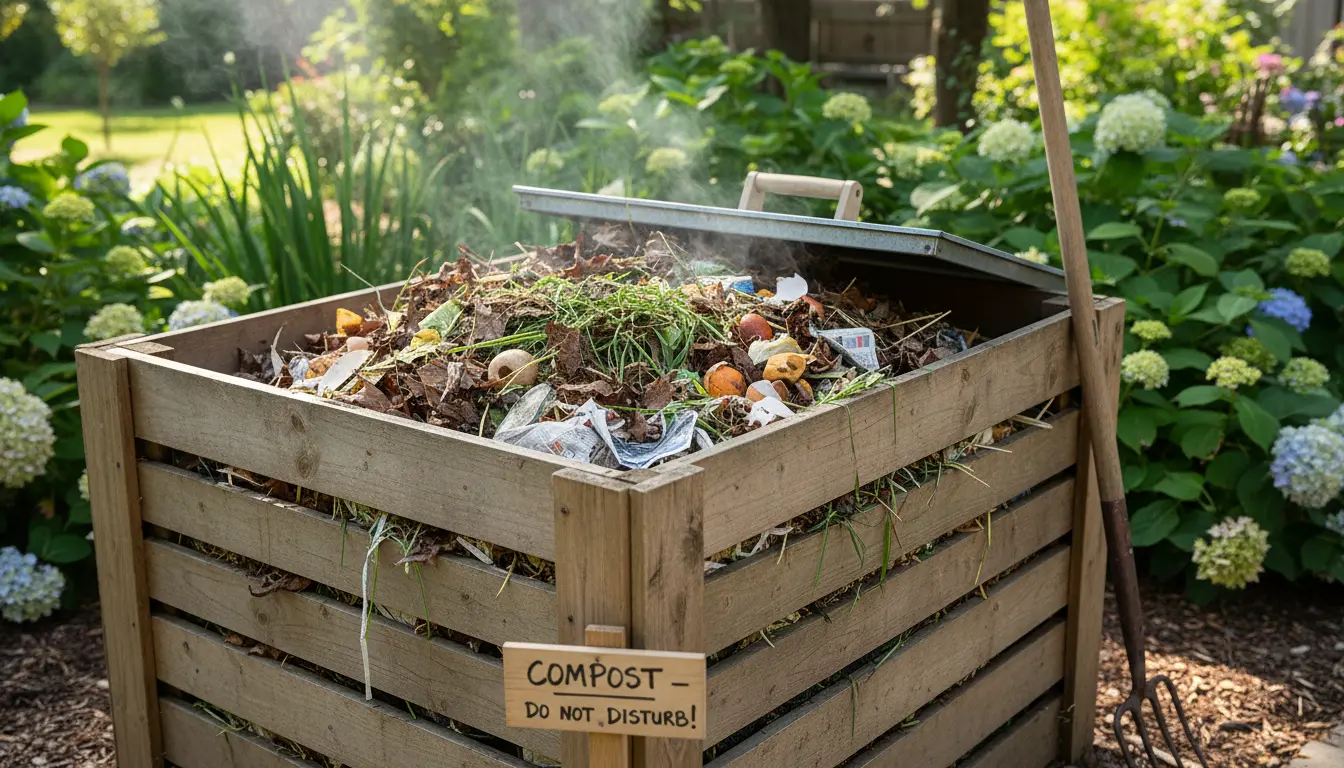
Start Home Composting Today
Home composting turns kitchen and garden waste into a useful soil amendment. This guide explains practical steps to set up, maintain, and troubleshoot a compost system at home.
Why Choose Home Composting
Composting reduces household waste and improves soil structure. It also returns nutrients to plants and lowers landfill methane emissions.
How to Start Home Composting: Step by Step

Begin with the basics: choose a location, pick a container, and learn the materials to include. These early decisions make maintenance simple and effective.
Choosing a Composter
Select a composter based on space, budget, and ease of use. Options include open piles, tumblers, and stationary bins.
- Open pile: Low cost, needs more space and management.
- Tumbler: Faster decomposition and easier turning, good for small yards.
- Stationary bin: Simple and durable, suitable for longer decomposition cycles.
Balance Greens and Browns
Compost needs a mix of nitrogen-rich “greens” and carbon-rich “browns.” Maintaining a rough balance prevents odors and speeds decomposition.
- Greens (nitrogen): vegetable scraps, coffee grounds, fresh grass clippings.
- Browns (carbon): dry leaves, straw, shredded paper, cardboard.
- Aim for about 2–3 parts browns to 1 part greens by volume.
Layering and Aeration

Layering materials and adding air are key. Create alternating layers of greens and browns and turn the pile every 1–2 weeks for faster results.
- Turn with a pitchfork or use a tumbler to aerate.
- If pile is soggy, add more browns and mix to improve airflow.
- If pile is dry and slow, add water and more greens.
Maintenance Tips for Home Composting
Routine checks keep the compost healthy. Monitor moisture, temperature, and material balance to stay on track.
- Temperature: Active piles heat to 120–160°F (49–71°C). Cooler piles still work but decompose slower.
- Moisture: Compost should feel like a wrung-out sponge—damp but not dripping.
- Turning: Regular turning reduces pests and speeds decomposition.
Adding a handful of garden soil or finished compost introduces beneficial microbes that speed up decomposition.
What Not to Compost

Some items cause problems or attract pests. Keep these out of your home compost to avoid issues.
- Meat, fish, dairy, and oily foods — attract pests and create odors.
- Diseased plants or invasive weeds — may survive the composting process.
- Pet waste — can contain pathogens unsafe for garden use.
Common Problems and Troubleshooting
Problems are usually fixable by adjusting balance, moisture, or aeration. Here are common issues and quick fixes.
- Bad smell: Add more browns and turn the pile to introduce air.
- Slow breakdown: Chop materials into smaller pieces and maintain moisture.
- Pests: Remove food scraps from the surface, use a closed bin, and bury new additions under brown material.
Finished Compost and How to Use It
Compost is ready when it is dark, crumbly, and earthy-smelling. You can screen it or use it as-is in beds and containers.
- Top dressing: Spread a thin layer around established plants to add nutrients.
- Soil mix: Blend finished compost into potting mixes at 10–30% by volume.
- Vegetable beds: Work compost into the top 4–6 inches of soil before planting.
Small Case Study: City Garden Compost Success
A family in a small urban garden switched to a 60‑liter tumbler and started composting kitchen scraps. They used shredded paper and dry leaves as browns.
Within three months they produced enough finished compost to amend two raised beds. Plant growth improved, and their weekly trash output dropped by nearly half.
Quick Checklist to Start Home Composting
- Pick a composter suitable for your space.
- Collect greens and browns and keep them separate.
- Layer materials, maintain moisture, and aerate regularly.
- Avoid meat, dairy, pet waste, and diseased plants.
- Use finished compost to enrich garden soil and potting mixes.
Final Notes on Home Composting
Home composting is low cost and adaptable to many living situations. Start small, learn the balance between greens and browns, and adjust based on results.
With a little attention, composting reduces waste and produces valuable soil that supports healthier plants.