
Beginner Vegetable Gardening First Steps
Starting a vegetable garden is straightforward when you focus on a few practical steps. This guide breaks down what to do first, how to prepare soil, what to plant, and how to maintain your patch.
Choose the Right Site for Vegetable Gardening
Pick a spot that gets at least six hours of sunlight a day. Good drainage and easy access to water are also essential for healthy vegetables.

Avoid low areas that collect cold air or stay wet after rain. If space is limited, consider raised beds or containers.
Soil Preparation for Beginner Vegetable Gardening
Healthy soil is the foundation of a productive garden. Test soil pH if possible; most vegetables prefer a pH of 6.0 to 7.0.
Improve soil structure by adding organic matter such as compost or well-rotted manure. Turn or loosen soil to a depth of 8–12 inches for root crops.
Quick Soil Checklist
- Test soil pH and nutrient levels.
- Add 2–3 inches of compost and mix it in.
- Ensure soil is loose and crumbly, not compacted.
Select Easy Vegetables to Grow

For beginners, choose crops that are forgiving and quick to harvest. Good options include lettuce, radishes, bush beans, cherry tomatoes, and zucchini.
Stagger planting times to have continuous harvests through the season. Use seed packets for timing guidance.
Planting Examples
- Lettuce: sow every 2–3 weeks for continuous leaves.
- Radishes: ready in 3–4 weeks from sowing.
- Bush beans: plant after last frost, they set pods quickly.
Watering and Feeding Your Garden
Water deeply and less often to encourage strong roots. Aim for 1–1.5 inches of water per week, adjusting for rainfall.

Mulch around plants to retain moisture and reduce weeds. Use a balanced organic fertilizer for heavy feeders like tomatoes and corn.
Pest and Disease Management for Beginners
Inspect plants regularly to catch issues early. Remove affected leaves and dispose of them away from the garden to limit spread.
Use physical barriers like row covers for insect protection, and encourage beneficial insects by planting flowers such as marigolds and calendula.
Simple Pest Checklist
- Handpick large pests like caterpillars and beetles.
- Use soapy water spray for soft-bodied pests on contact.
- Rotate crops year to year to reduce disease buildup.
Interplanting herbs like basil with tomatoes can improve flavor and help deter pests. Companion planting is a low-cost strategy used by many home gardeners.
Maintenance Tasks Throughout the Season
Keep a simple routine: water in the morning, pull weeds weekly, and harvest regularly to encourage production. Monitor for nutrient deficiencies and adjust feeding as needed.
Prune indeterminate tomatoes and support tall plants with stakes or cages to improve air flow and fruit quality.
Small Case Study: Sarahs 10×10 Raised Bed
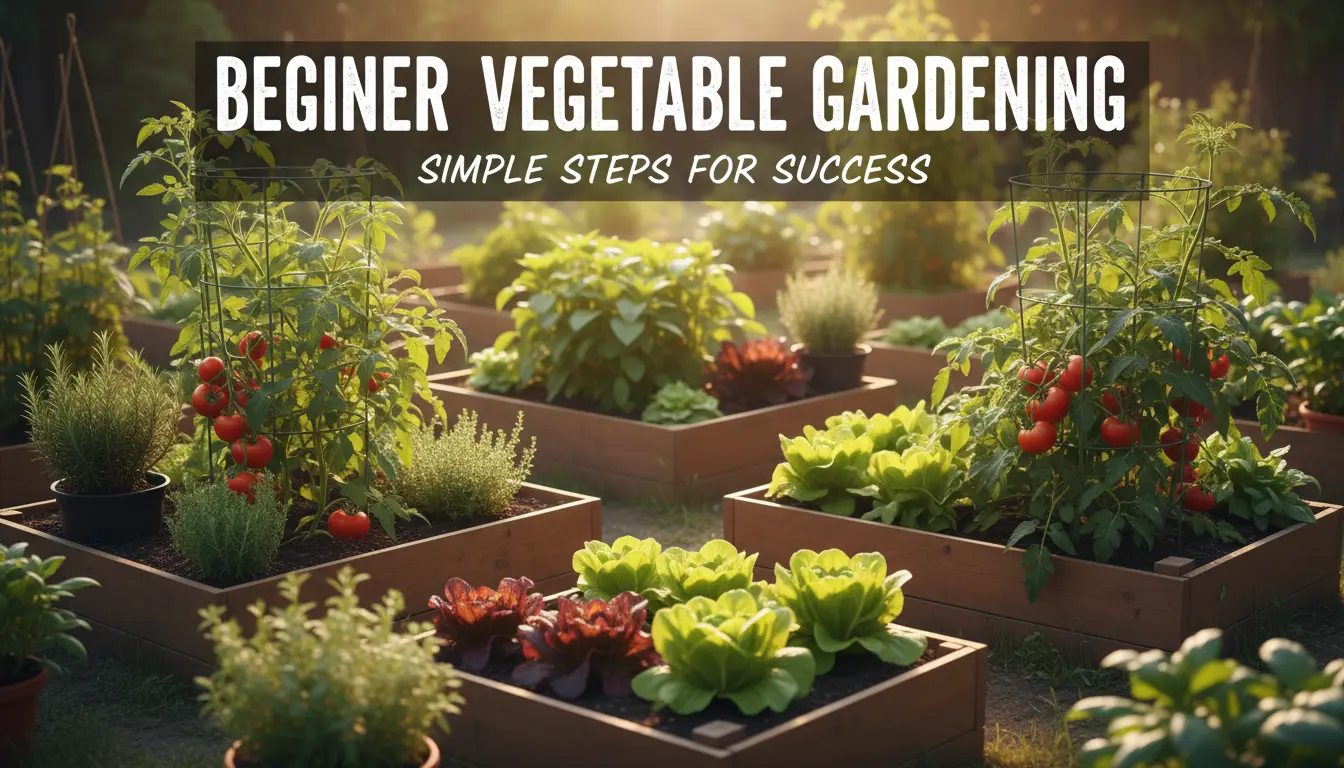
Sarah converted a 10×10 ft sunny corner into raised beds in spring. She amended the soil with compost and planted tomatoes, lettuce, beans, and herbs.
By midsummer she harvested weekly salads and a steady stream of tomatoes. Her key actions were regular watering, mulching, and harvesting at peak ripeness, which reduced pests and increased yields.
Seasonal Planning and Crop Rotation
End each season by clearing spent plants and adding compost to beds. Rotate families of vegetables so similar crops are not grown in the same spot two years running.
Use fall cover crops, like clover or rye, to protect soil and fix nutrients during the off-season.
Tools and Supplies to Get Started
- Sharp shovel and hand trowel
- Garden fork or broadfork for loosening soil
- Watering system: hose with nozzle or soaker hose
- Mulch, compost, and organic fertilizer
Final Tips for Beginner Vegetable Gardening
Start small and expand as you gain confidence. Track what you plant and when to learn what works in your microclimate.
Be patient and observe; gardening is a skill improved by experience. With consistent care, even a small plot can feed a household through the season.