
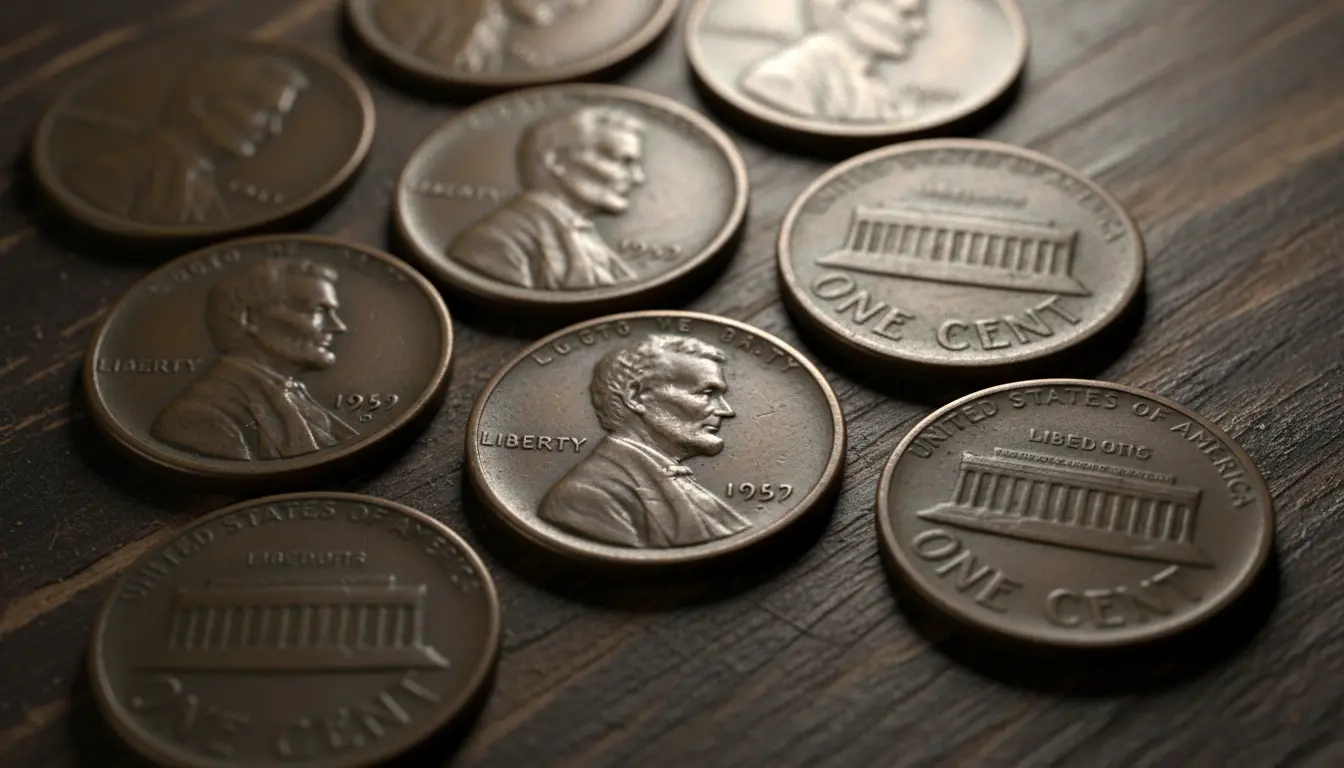
Not all pennies are created equal. Some U.S. cents are sought by collectors and investors because of errors, low mintage, early dates, or historic importance. This guide lists America’s 8 most valuable pennies and explains how to spot, authenticate, and sell them.
How pennies become valuable
Pennies gain value for a few clear reasons: rarity, historical significance, mint errors, and condition. A high-grade example of a rare date will always command more than a worn common date.

Professional grading and verified provenance also drive prices. Even a rare date can be worth little if heavily damaged or altered.
America’s 8 Most Valuable Pennies
Below are eight pennies U.S. collectors regularly list as the most valuable. Each entry notes key identification tips and typical market ranges. Values are approximate and depend heavily on grade and authentication.
1. 1943 Copper Lincoln Cent
Most 1943 cents were struck in steel. A few were accidentally struck on bronze planchets, producing extremely rare copper examples. Look for the 1943 date on a coin that looks like a typical pre-1943 bronze cent.

Value: can range from tens of thousands to over a million dollars for authenticated, high-grade pieces.
2. 1955 Doubled Die Obverse Lincoln Cent
This classic error shows strong, clear doubling of the date and lettering on the obverse. It is best identified under magnification; the doubling is obvious along the words “LIBERTY” and the date.
Value: circulated examples can be thousands; high-grade mint state examples can fetch five figures or more.
3. 1909-S VDB Lincoln Cent

The 1909-S with VDB initials (designer Victor D. Brenner) on the reverse is a key date in the Lincoln series. Low mintage and collector demand keep prices high.
Value: tens of thousands for well-preserved pieces; rarity increases steeply with grade.
4. 1914-D Lincoln Cent
Another Lincoln key date, the Denver-minted 1914-D has low survivorship in high grades. Authentication and grading make a large difference in realized price.
Value: commonly thousands in circulated grades; top mint-state examples can be dramatically higher.
5. 1877 Indian Head Cent
The 1877 Indian Head is a famous scarce date. It often appears worn, making the higher-grade specimens particularly desirable.
Value: several thousand in circulated grades, with uncirculated examples reaching into much higher ranges.
6. 1864 Indian Head Cent With Designer Initial L
In 1864 designer James B. Longacre began adding a small L on the ribbon; certain varieties including L-marked pieces are popular with collectors. Condition and verified variety matter for pricing.
Value: ranges from modest amounts in circulated condition to several thousand in mint state.
7. 1856 Flying Eagle Cent
The 1856 Flying Eagle is a pattern/experimental issue and predates the regular Flying Eagle run of 1857–1858. Genuine 1856s are scarce and instantly recognizable to specialists.
Value: often tens of thousands for authentic examples, especially those with original surfaces.
8. 1793 Chain Cent
One of the very first U.S. cents struck for circulation, the 1793 Chain Cent is historically important and extremely rare. Multiple varieties exist, and originality is key.
Value: can be extremely high; many examples trade for hundreds of thousands to over a million dollars depending on variety and condition.
How to identify and verify a valuable penny
- Use magnification to check for doubling, mint marks, and planchet color.
- Weigh and measure suspect coins; incorrect planchet or altered surfaces are red flags.
- Compare to authoritative guides or dealer databases for known varieties.
- Seek professional grading and authentication from PCGS, NGC, or ANACS for high-value candidates.
Practical steps to sell a rare penny
If you find a suspected valuable penny, follow a clear path to maximize returns. First, stop cleaning or altering the coin. Surface damage reduces value.
Next, document provenance and condition, then get at least one independent authentication and grading opinion. For the most valuable coins, auction houses with numismatic specialists often attract competitive bidding.
The 1955 doubled die was discovered early in the coin market boom and remains one of the most recognized error pennies among collectors.
Real-world example: selling a suspect penny
A collector found a worn Lincoln cent with unusual surface color and suspected it might be a 1943 copper error. Rather than cleaning it, they documented photos and had the coin examined by a local numismatist.
After initial verification, the collector submitted the coin to a major grading service. The authenticated coin was consigned to an auction specializing in U.S. coins. Professional grading and auction marketing helped attract multiple bids, resulting in a strong sale after fees.
Final tips for collectors
- Store coins properly—acid-free holders and low-humidity environments preserve value.
- Keep good records of purchase, provenance, and any prior grading to support later sales.
- Join local clubs or online communities to learn from experienced collectors before trading high-value pieces.
Understanding which pennies are valuable and why helps you make better decisions when buying, holding, or selling. When in doubt, document, avoid cleaning, and consult a trusted numismatic professional.