
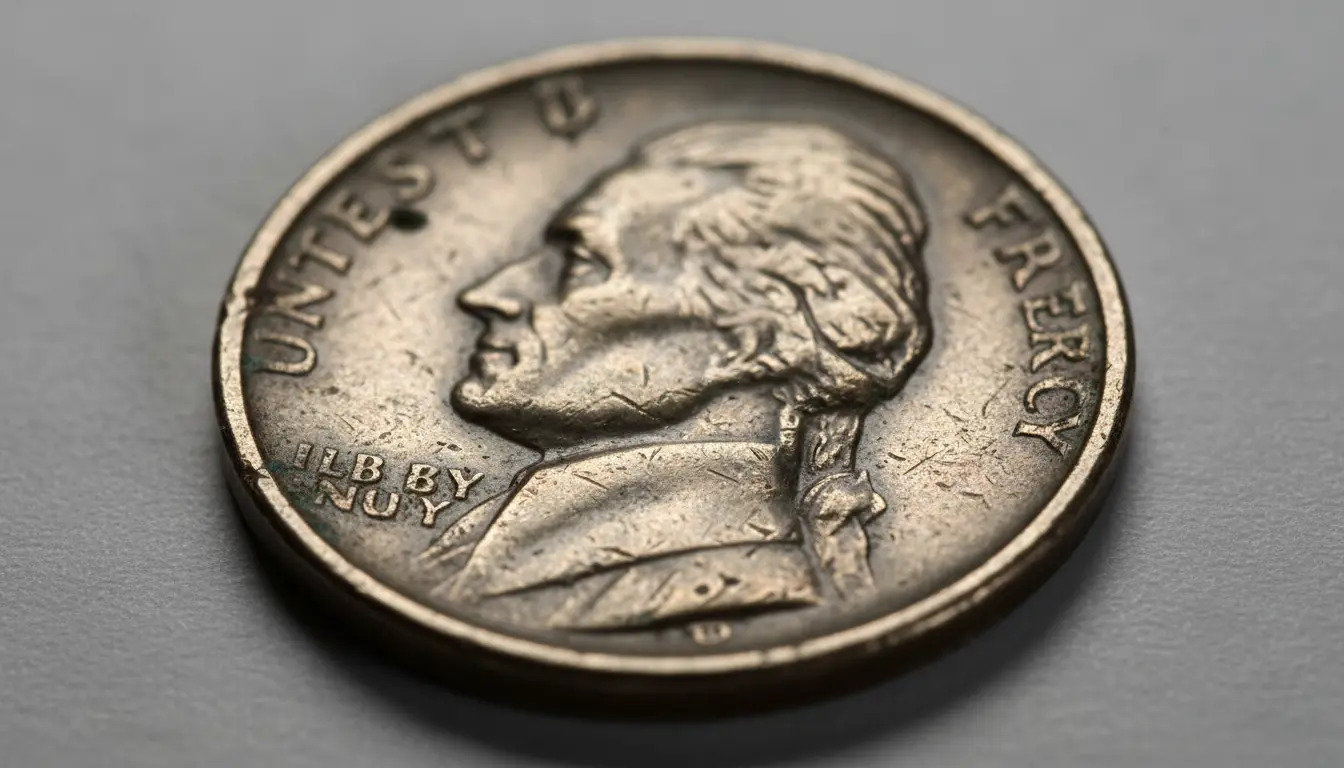
Not every valuable coin looks perfect. A Jefferson nickel that has been burnt, bent, and faded might seem ruined, but it can still be worth more than face value. This guide explains why, how to assess that value, and practical steps to document or sell the coin.
Why a burnt, bent, and faded Jefferson nickel can still have value
Collectors prize rarity, unusual history, and interesting errors. Damage normally lowers value, but coins with unusual alterations can attract niche collectors. A nickel that shows burn discoloration, bending, and faded details may be interesting as an error piece or a curiosity.

Key reasons such a Jefferson nickel can have value include rarity of the date/mint mark, error or post-mint damage that tells a story, and demand from error-coin collectors. Understanding how those factors work helps set realistic expectations.
Factors that affect value of a Jefferson nickel
- Date and mint mark: Scarcer years or mint marks raise baseline value even when damaged.
- Type of damage: Mint-era errors (off-center strikes, planchet flaws) can be desirable; post-mint burn or bending usually lowers value unless visually interesting.
- Eye appeal and uniqueness: Distinct patterns of discoloration, folding, or deformation can attract collectors of oddities.
- Provenance and documentation: Knowing how the damage occurred or having a documented find can add interest.
How to identify burn, bend, and faded features on a Jefferson nickel
Start with a careful visual inspection using good light and a 10x loupe. Look for three categories: thermal damage (burn or heat), mechanical deformation (bends or folds), and surface wear or fading of design details.
Signs of burn and heat damage
- Dark or rainbow-toned patches that follow irregular patterns.
- Surface pitting or slight blistering from high heat.
- Color changes that don’t match natural toning (blues, greens, or blackened areas).
How to tell a bend from mint error
- Post-mint bends often show scratches or abrasions along the raised rim or high points where something pressed into the coin.
- Mint-era planchet folds typically have smoother metal flow and are symmetric with the strike.
- Check the rim: a bent coin may have a distorted rim; an error fold might preserve rim continuity.
Step-by-step: Assessing a burnt, bent, and faded Jefferson nickel
- Record the date and mint mark. Some years are worth more even in low grades.
- Photograph the coin from multiple angles under neutral light. Include macro close-ups of damage areas.
- Compare with known error types in online databases and forum archives.
- Check weight and diameter if you suspect a planchet or composition issue.
- Get a second opinion from a reputable dealer or experienced collector before making sales decisions.
Some collectors specialize in damaged or altered coins. These collectors often value unique visual stories over perfect condition, so an unusual burn pattern or dramatic bend can increase interest.
Examples: Error vs damage — what buyers look for in a Jefferson nickel

Collectors of error coins look for features that happened during minting: off-center strikes, double dies, or planchet defects. Post-mint damage like a cigarette burn or being bent by a machine usually reduces value, but it can still attract curiosity collectors if the coin’s date is rare.
Example traits that can help value despite damage:
- A scarce date such as wartime issues that are already in demand.
- An intriguing burn pattern that suggests a historical incident (factory fire, personal keepsake story).
- A bent coin that also shows a minting flaw, combining two areas of interest.
How to document and sell a damaged Jefferson nickel
Proper documentation raises buyer confidence and may increase sale price. Keep records, photos, and any provenance you have. Use clear, honest descriptions when listing online.

Practical selling options:
- Specialty auction sites and forums for error coins and oddities.
- Local coin dealers — ask one who handles numismatic errors.
- General marketplaces with detailed photos and a clear description of damage.
Listing tips for a burnt, bent, and faded Jefferson nickel
- Show front and back photos, plus close-ups of all damaged areas.
- State date, mint mark, measured weight, and diameter.
- Be transparent about whether damage is post-mint or suspected mint error.
- Include keywords: Jefferson nickel, burn, bent, faded, error coin, damaged coin.
Case study: A backyard find that turned heads
A collector found a 1967 Jefferson nickel that had been badly darkened by heat, with a slight fold across the rim. Initially bought as pocket change, the coin attracted interest when posted to an error-coin forum. Two experienced collectors noted that the fold had characteristics of a post-strike planchet fold combined with later heat damage.
The finder sold it to a dealer who specializes in oddities. The sale price exceeded typical melt or face value because the buyer wanted it for a display set of altered nickels. This real-world example shows that condition alone isn’t the only determinant of value.
When to seek a professional grader or dealer for a Jefferson nickel
If you suspect a mint error, consider professional grading or at least a formal evaluation. Grading services can determine whether damage is post-mint or mint-era, which dramatically affects market value.
Seek a dealer when you want a quick, reality-checked estimate. Choose a reputable dealer with experience in error coins, and get multiple opinions for best results.
In summary, a burnt, bent, and faded Jefferson nickel is not automatically worthless. Date, mint mark, type of damage, and collector interest shape its value. With careful documentation and the right market approach, you may find that the coin is worth more than you think.